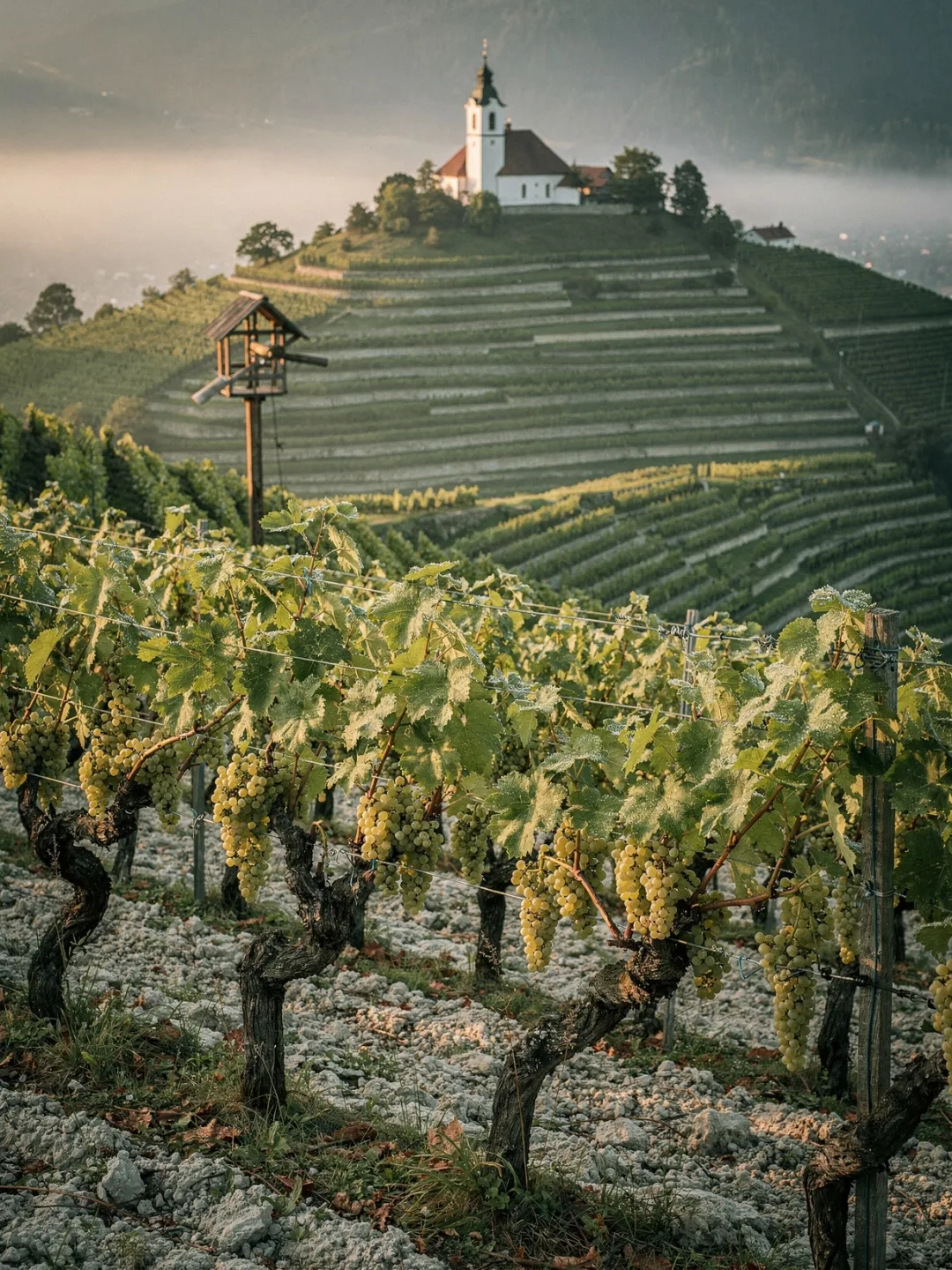
Sauvignon & Šipon
Grape Varieties
Nearly one in ten bottles of Slovenian wine comes from this region, and nine out of ten are white. Sauvignon is the variety that has made Štajerska Slovenija's name. Unlike in the Loire Valley, it rarely smells of freshly cut grass here. Instead it carries notes of elderflower and green bell pepper, sometimes with a hint of tomato leaf beneath. The cool nights in these hills are responsible for this, giving the grape's typical aromatic compounds plenty of time to form quietly instead of evaporating in the heat.
Just as important is a variety that hardly anyone elsewhere knows: Šipon, as Furmint is called here. It has grown in the Jeruzalem hills for centuries, including on the estate of the Kupljen family, who have made wine in Jeruzalem since 1836. Old vines are no rarity here. Šipon ranges from bone-dry and almost saline to thick, sweet Prädikat wines, depending on how long the grapes remain on the vine. This range within a single variety is rarely found elsewhere.
Laški rizling, also known here as Welschriesling, has always supplied the base wine: light, uncomplicated, usually drunk young. Its relative Renski rizling demands more patience and more sun, but rewards with stone-fruit flavors and greater longevity. Both need time. Then there's Rumeni Muškat with its unmistakable grapey aroma, and Traminec with notes of rose water and lychee. Chardonnay rounds out the range, fermented in Gornja Radgona mainly into sparkling wine.
Red grapes play a supporting role here, but not a small one. On the warm south-facing slopes of the Haloze, Modra Frankinja ripens into robust, dark red wine. In the center of Maribor, a single, very old vine recalls a quite different variety: Žametovka, also called Modra kavčina. This Stara trta is over four hundred and forty years old. The whole region celebrates it. It still bears grapes every autumn and has been listed in the Guinness Book of Records as the world's oldest grapevine since 2004.