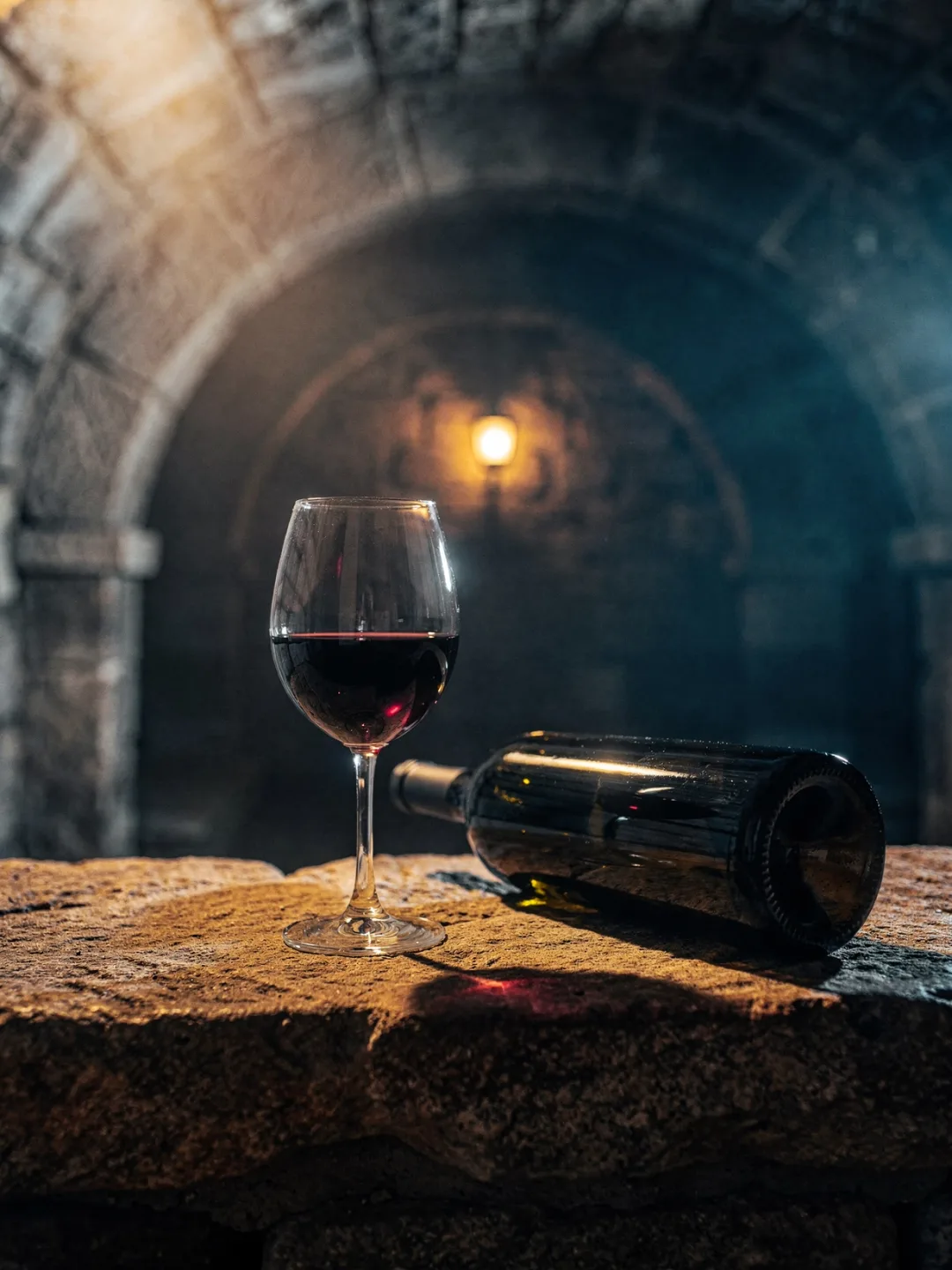
Burgundy Shape for Mencía
Glassware
Almost never is the glass that happens to sit at the front of the kitchen cupboard the right one for Mencía. Ask a wine merchant for the appropriate shape, and you'll almost always get the same answer: a Burgundy glass, bowl-shaped with a wide opening, not the tall, narrower Bordeaux glass meant for more powerful reds. That choice alone reveals something about the character of the grape.
The reason lies in the aromatics. Mencía brings violet and cherry notes that are delicate enough to get lost in a narrow glass. The wide bowl of the Burgundy shape gives the wine surface area, letting these aromas unfold. The narrowing rim then gathers them back together at the top. A glass that's too narrow, by contrast, directs the wine straight to the middle of the tongue, foregrounding the tannin without the fruit to balance it.
How much tannin actually needs carrying depends on the vineyard. An old Corullón Mencía from the slate slopes is dense and genuinely needs the large glass to show its structure. A young Mencía from Bierzo Bajo, on the other hand, does perfectly well in a smaller, simpler glass. It's built lighter anyway and wants above all to retain its fruit.
Different logic applies to Godello. A narrower white wine glass keeps the wine cooler for longer and directs its apple and apricot aromas straight to the nose, rather than losing them in a large bowl. Too warm, and Godello quickly loses its freshness, tasting heavy rather than refined.
When it comes to temperature, the usual mistake is a room that's too warm. A young, straightforward Mencía belongs in the glass at twelve to fourteen degrees Celsius. An aged one from old Corullón vineyards can be served warmer, at sixteen to eighteen degrees, since otherwise its aromas barely open up. Young Mencías and long-aged bottles both benefit from half an hour in a decanter, while an old Reserva tends to lose more than it gains there.