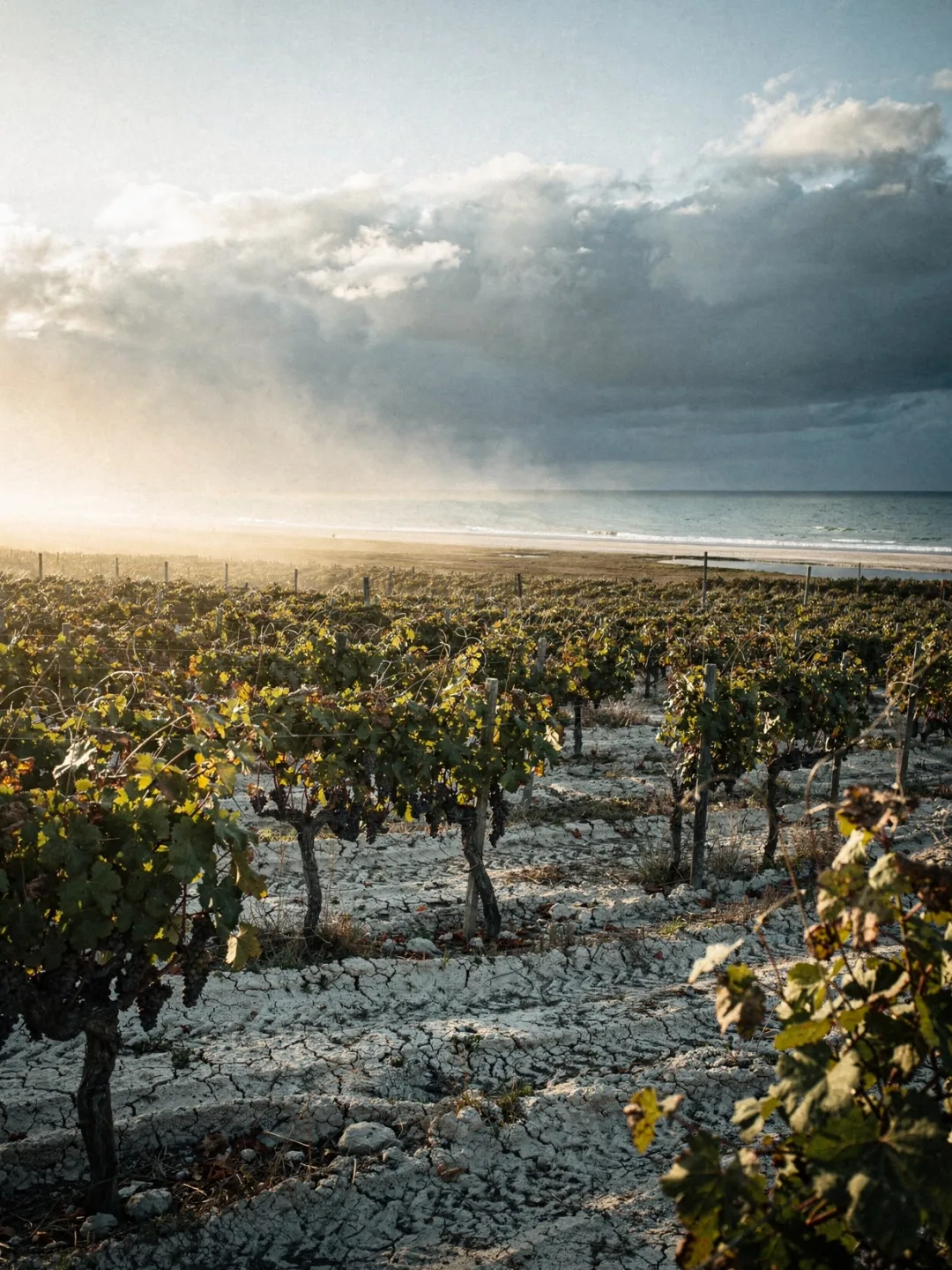
Poniente & Levante
Climate
Two winds shape almost every day in the Marco de Jerez. The Poniente blows in damp from the Atlantic, cooling the afternoons and keeping humidity high — exactly what the yeast that later carries Fino and Manzanilla needs. Its counterpart, the Levante, blows dry and hot from the east and can persist for days without letting up.
In total, the sun shines here for around three thousand hours a year, more than almost anywhere else in Spain. At the same time, rain falls almost exclusively between October and April. Around Jerez de la Frontera, El Puerto de Santa María and Sanlúcar de Barrameda, an average of about six hundred millimeters accumulates per year. Almost none of it falls in summer.
For four to five months, the vineyard gets practically no rain at all. Yet the vines still stand green, because the soil beneath has stored the winter rain like a sponge. More on that shortly. Without this reserve, the vine would die of thirst by August, long before the grapes ripen.
The heat itself is milder than one might expect, since the Atlantic is never far away. Where other regions cool through the shift between day and night, here it's mainly the wind that cools things down, almost regardless of the time of day: a Levante day in August feels like a hairdryer, a Poniente day like a sea breeze, whether at noon or midnight.
For the bodegas, the Levante is the real risk, not the heat on the grapes. If it persists for days on end, it can literally dry out the protective yeast layer on the wine in the barrels. Climate researchers warn that such long Levante spells could become more frequent in the future. For a wine whose character depends on a living yeast that needs moisture, that's no small concern.