Tannin meets alcohol
Glassware
A Monastrell from Jumilla brings together two traits that few other grape varieties show in this combination: high alcohol and high tannin at once. The glass has to balance both. Otherwise the wine tips either into harshness or into astringency, that furry sensation you feel on the gums after a sip.
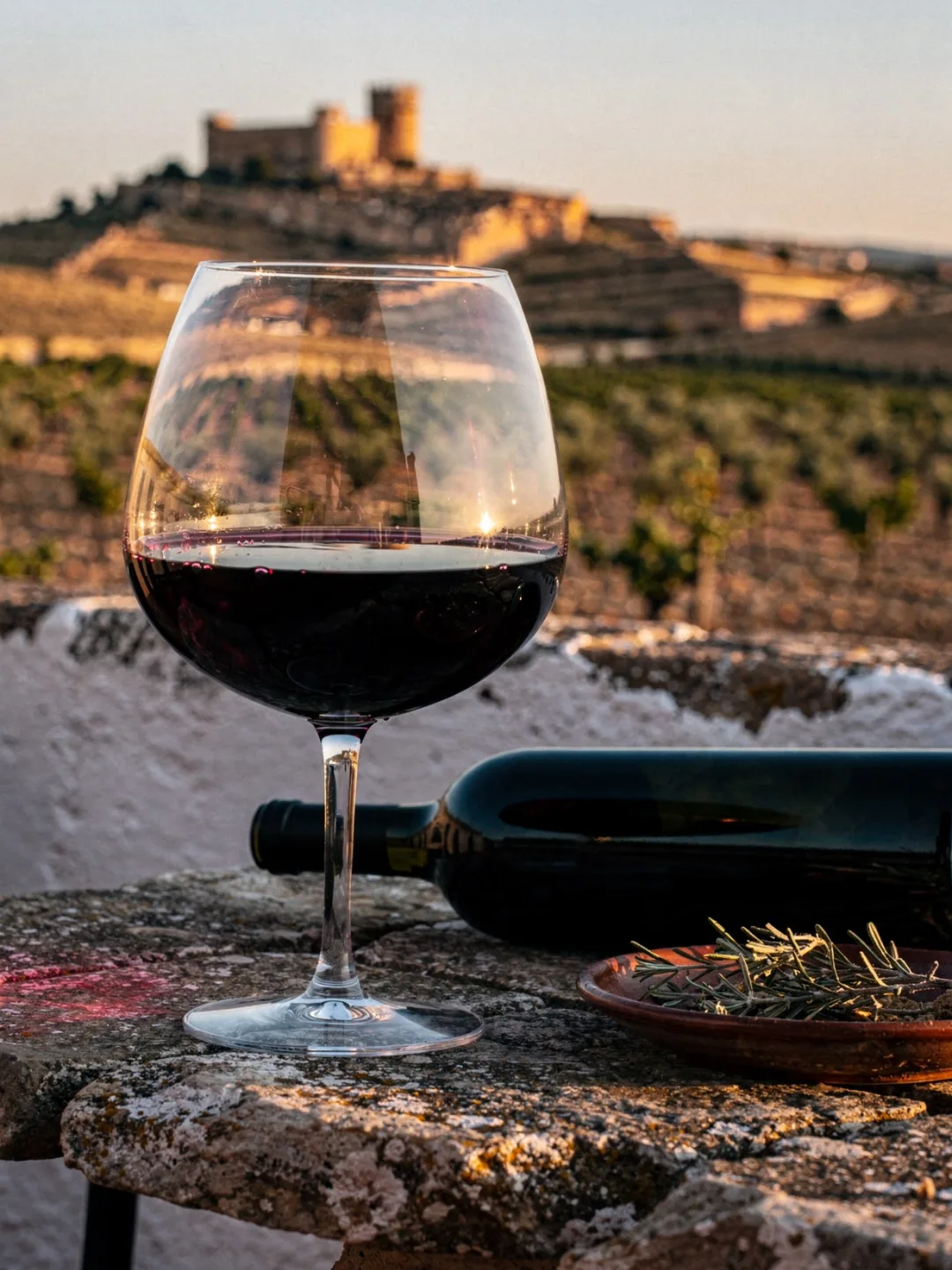
That's why this wine needs space, but not endless amounts of it. A wide Burgundy glass exposes too much surface area, and the alcohol rises up to meet you before the fruit even gets a chance. A glass with a decent, slightly rounded bowl and an opening that narrows again works better. Large enough for the dark fruit aromas and balsamic notes to unfold, narrow enough to rein in the alcohol vapor instead of funneling it straight up.
Temperature is where Jumilla surprises most people. Anyone expecting a warmly served wine because of the heat in the growing region is mistaken. Precisely because Monastrell often reaches fourteen to fifteen percent alcohol, the glass should be poured on the cooler side. Around sixteen degrees Celsius, otherwise the wine tastes hot rather than fruity. Half an hour in the fridge is usually enough to get there from room temperature.
When it comes to decanting, it's worth checking the label. A young, straightforward Jumilla can handle the carafe but doesn't strictly need it. An old Pie Franco from ungrafted vines, on the other hand, aged for years in the bottle, often carries sediment and a dense, closed bouquet. An hour of air noticeably opens it up before the first glass is poured. Either way, fill only to the widest point of the glass, never higher, or there's no room left for everything to unfold. A Monastrell from Jumilla needs nothing more than that.