Xató and Aixetonar
Wine & Food
In Penedès, an entire cuisine begins with a single gesture: aixetonar, the tapping of the first new wine barrel in late autumn. Every year anew. In the past, farmers from Alt and Baix Penedès would gather for this with fishermen from neighboring Garraf. Out of this meeting between land and coast, a signature dish was born.
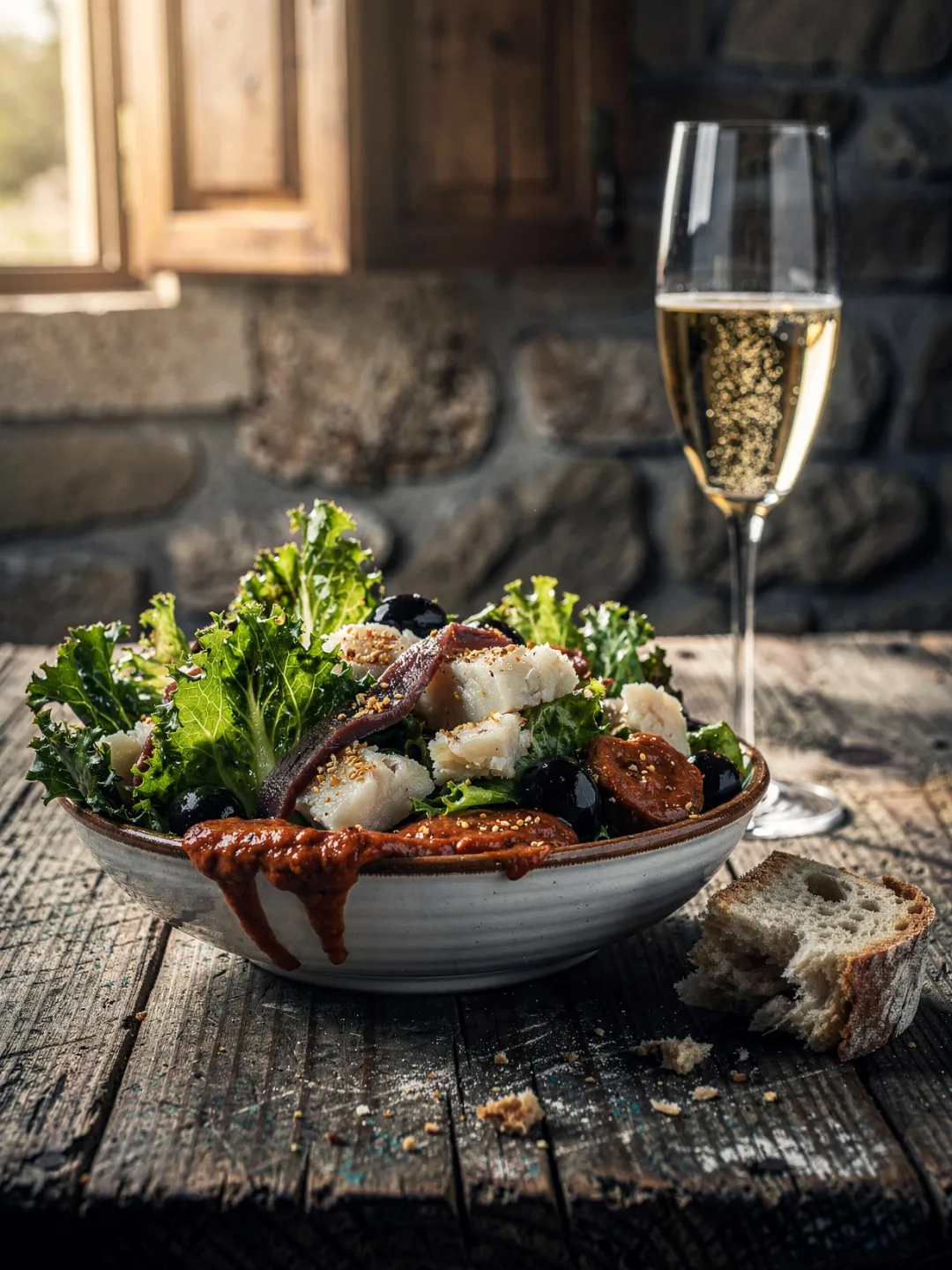
Xató is a winter salad bowl made of escarole, salted cod, anchovies, sometimes tuna, and black olives. Everything is drizzled with xató sauce — a kind of romesco, but made with raw rather than roasted garlic and raw tomato. Today, Vilanova i la Geltrú celebrates it with its own festival every last Sunday in November, a tradition now more than twenty-five years old.
So much salt and fat calls for more than a delicate wine. A young Cava with plenty of acidity and a fine perlage cuts through the oily fish in a way a still wine simply couldn't — the carbonation sweeps every layer of fat off the tongue before the next bite arrives. That's exactly why a well-chilled bottle is a traditional must alongside Xatonada.
When it comes to the region's heartier dishes, still red wines take over. Botifarra amb mongetes, the Catalan grilled sausage with white beans, calls for a wine made from Ull de Llebre or the rediscovered Sumoll. It's robust enough to stand up to the sausage, yet has enough acidity to avoid seeming clumsy next to the mild beans.
By the end of the meal, Cava makes its return — this time for dessert. A dry Brut doesn't work with a Crema Catalana and its crackling caramel crust; the dessert's sweetness would make the wine taste sour and thin by comparison. A Cava Semi Sec, with noticeable residual sugar of its own, holds its ground, so neither one loses out in the end.