On a Cava
Tasting
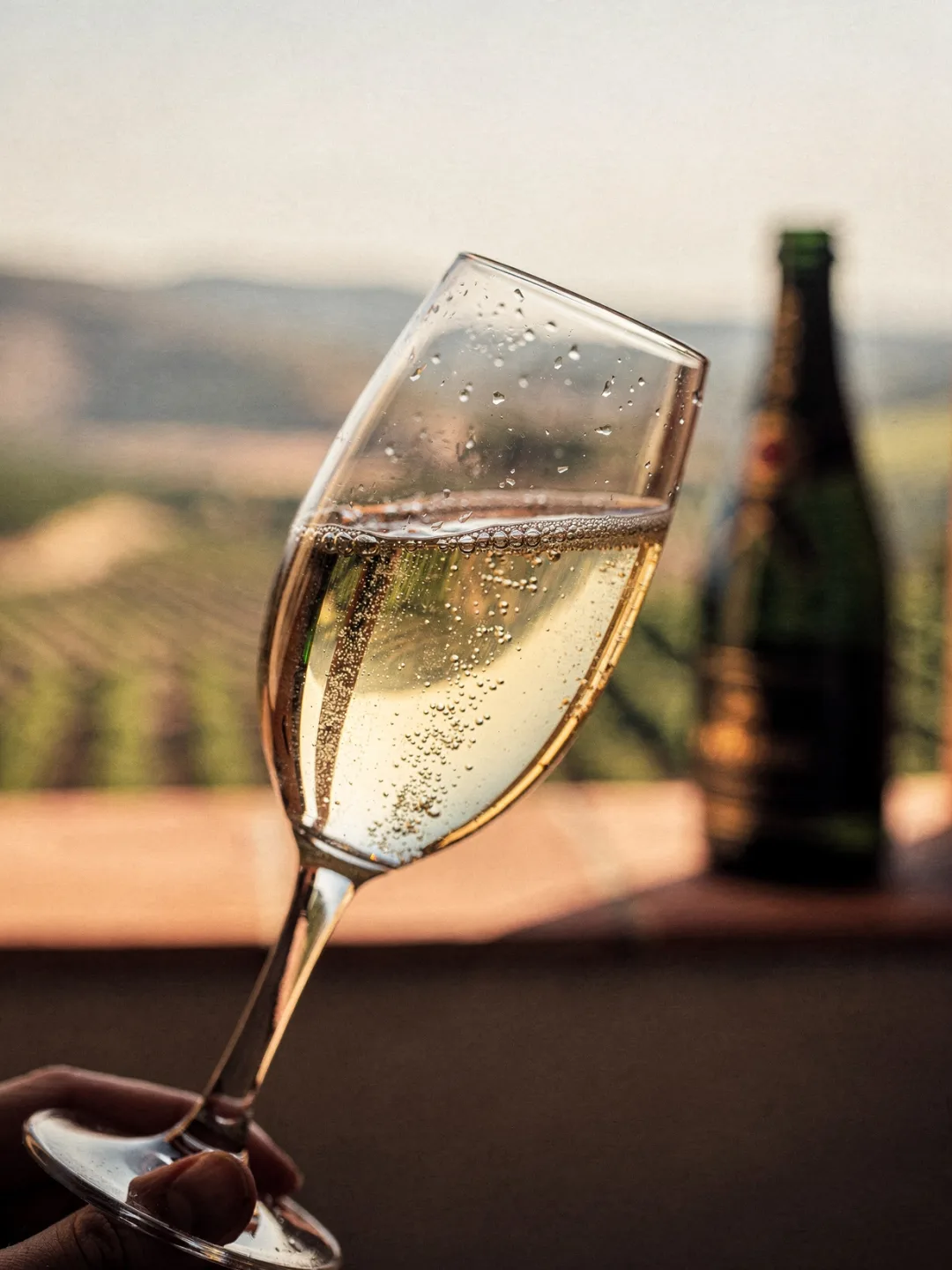
Hold a glass of Cava up to the light, ideally against a white background. The color reveals how long it rested on the lees. It's pale greenish-straw yellow in a young wine aged nine or eighteen months, more golden with finer, denser bubbles in a Gran Reserva or a long-aged Corpinnat. Coarse, large bubbles almost always indicate a young wine with short aging.
Smell first calmly, without swirling, then again after a few seconds of air. In a young wine made mostly from Xarel·lo and Parellada, apple, citrus, and a hint of fennel emerge, sometimes a touch of anise too. In a wine with extended lees aging, this shifts completely: brioche, toasted almond, a hint of toasted bread, and sometimes butter. These aromas don't come from the grape, but from months spent with dead yeast in the bottle.
On the palate, pay attention to three things in sequence. First the bubbles themselves, which can prickle on the tongue or, with long aging, feel almost creamy; then the acidity, which in Xarel·lo and Parellada usually stays high and keeps the wine fresh even after years; and finally the typical, slightly bitter, almost salty finish that experienced tasters recognize almost like a fingerprint of Xarel·lo. This isn't a flaw — it's the variety itself.
At the end, count the seconds after swallowing. In a basic Cava with nine months on the lees, it's often just a few. In a Gran Reserva or a Corpinnat with over eighteen months, it can stretch to twenty or thirty seconds, during which brioche and almond slowly transform back into citrus. This length can't be shortened. It is, quite literally, the time that passed in the cellar, now unfolding in your own mouth.