Xabre & Granite
Soils
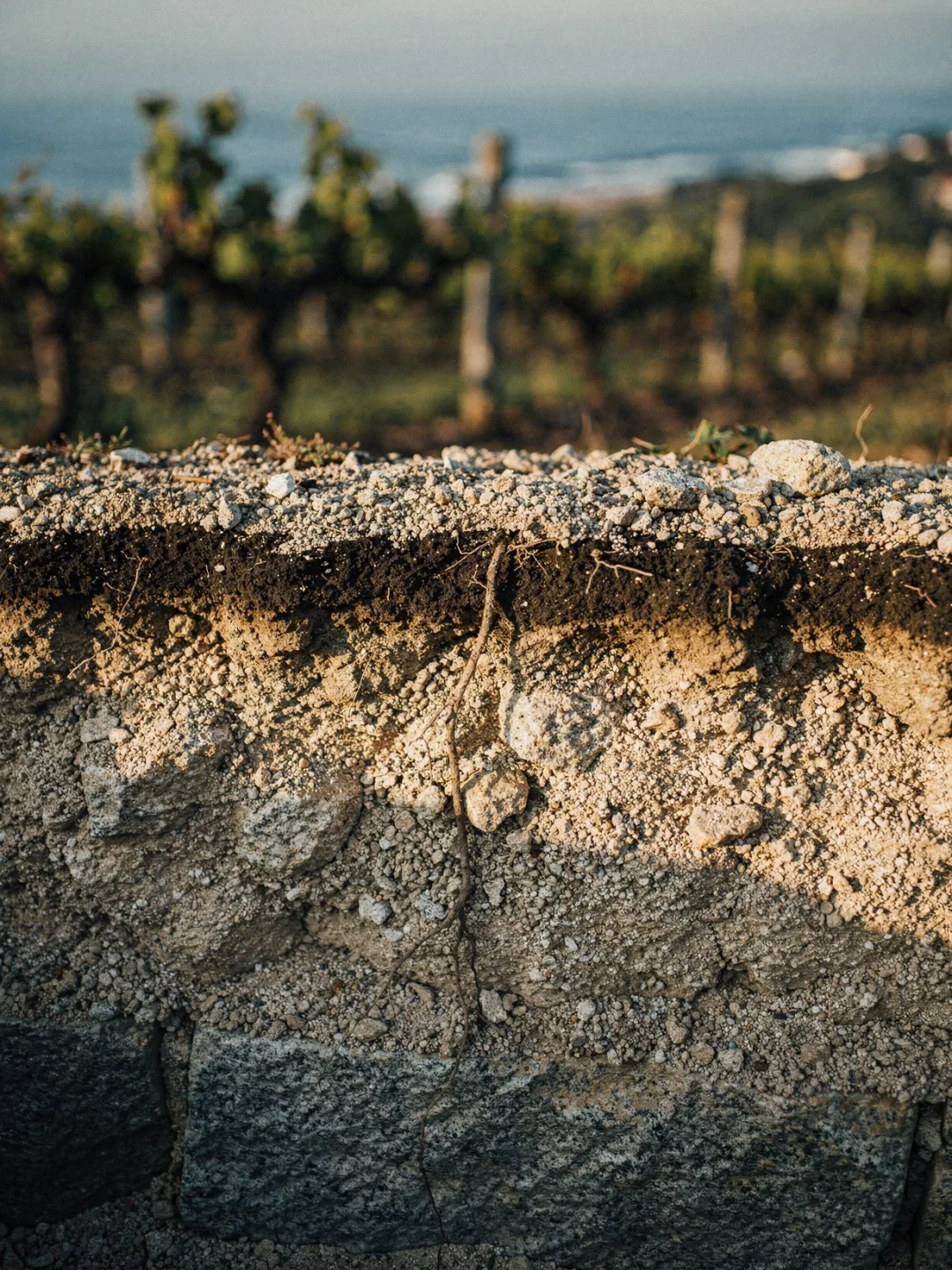
Pick up a handful of earth from a vineyard in the Val do Salnés and you won't hold soil at all, but grainy, pale sand: Xabre, a rock the Atlantic has weathered out of granite over thousands of years. Rub it between your fingers and it crumbles instantly into coarse grit. This rock is rare elsewhere. Rías Baixas is one of the few places to have given it a name of its own.
Xabre holds back almost nothing. Water drains through it instantly, and nutrients along with it. What's left is a lean, acidic soil that forces every vine to dig deep. In one of Europe's rainiest corners, of all places, this turns out to be a blessing. However impressive the sixteen hundred millimeters of annual rainfall may sound, in the Xabre the rain simply drains away instead of drowning the roots.
Deeper down, often not before a meter, the ground turns solid. There lies the actual granite, unbroken and barely weathered, a reserve for the dry weeks of August. A vine that manages to reach this deep can survive a summer with hardly any rain at all. And that happens here more often than the winter rainfall would suggest.
The soil here changes noticeably from place to place. In Condado do Tea and O Rosal, along the Miño, younger, more fertile alluvial deposits of gravel, sand, and clay take over instead. Wines grown there tend to be fuller-bodied and rounder. In the Ribeira do Ulla, by contrast, slate dominates, warmer in the ground and encouraging deeper roots. This gives the wines there a leaning toward dried fruit rather than the salty freshness of the coast.
A misconception persists here too: that a wine tastes "mineral" because the plant literally sucks up the rock. The math isn't that simple. Only dissolved salts travel through the root, and in quantities far below what any human tongue could ever detect. The real lever lies elsewhere: in the water that Xabre lets through or slate holds back, and in the depth to which the root manages to work its way down.
A thin, dark layer of decomposed leaf litter, quick to renew under the humid Atlantic climate, but rarely deeper than a hand's width.
The root: This is where the fine roots sit. They take up whatever the frequent rain brings — and are the first to suffer when summer drought sets in.