Assessing a Reserva
Tasting
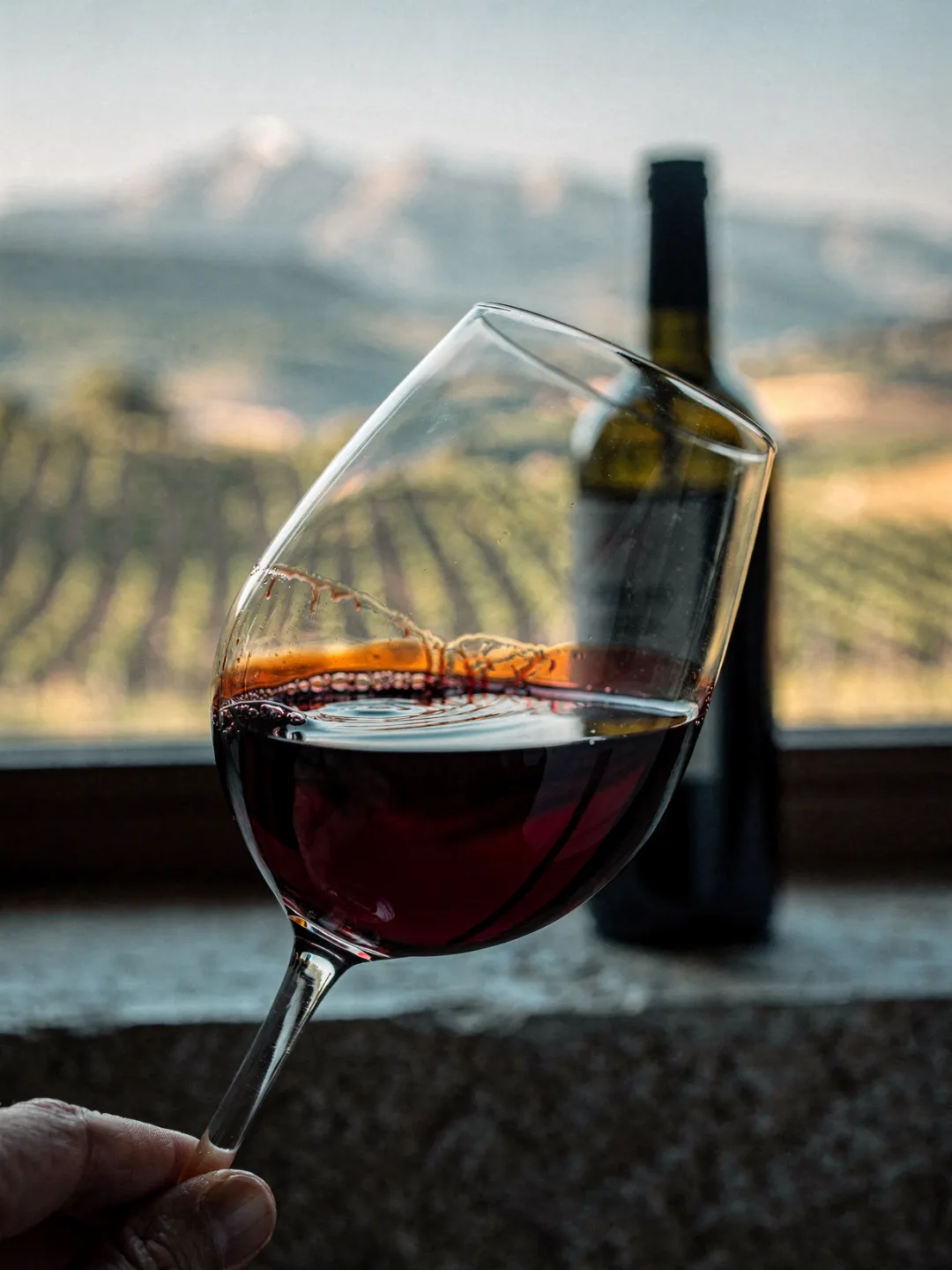
Tilt a glass of Tempranillo against something white, and its age reveals itself at the rim. A young Crianza glows cherry-red there, with a violet sheen. A ten-year-old Gran Reserva shifts toward brick-red at the edge, without losing much depth at the core. This color change isn't a flaw — it's the chemistry of slow aging in barrel and bottle.
On the nose, what comes first is what the grape itself contributes: red cherry, sometimes plum, and in blends with Garnacha, a touch of strawberry. After swirling, what the barrel added follows — vanilla and coconut from American oak, finer toasted notes from French. In a well-aged Reserva or Gran Reserva, a third layer emerges: leather, tobacco, sometimes a whisper of truffle, all signs of years spent aging in bottle.
On the palate, pay attention to two things separately. You'll feel the acidity along the sides of the tongue, preserved by cool nights during the growing season; it keeps the wine lively despite its density. You'll feel the tannin as a dry coating on the gums, firm when Mazuelo is part of the blend, softer after years in wood. In a good Rioja, both are present in generous amounts, carried by enough fruit — otherwise the wine feels angular rather than structured.
Finally, count how long the flavor lingers after you swallow. Two seconds is short, twenty is long, and that length can't be manufactured in the cellar: a winemaker can add sugar, alcohol, and oak character, but never length.
Taste a Crianza from Rioja Alavesa alongside a Reserva from Rioja Oriental, and you'll experience the same grape variety from two different angles. Here it's tighter and cooler, there it's rounder and more fruit-forward. The difference isn't in the barrel. It's in the soil and the wind that sweeps across both vineyards.