Slender for Verdejo
Glassware
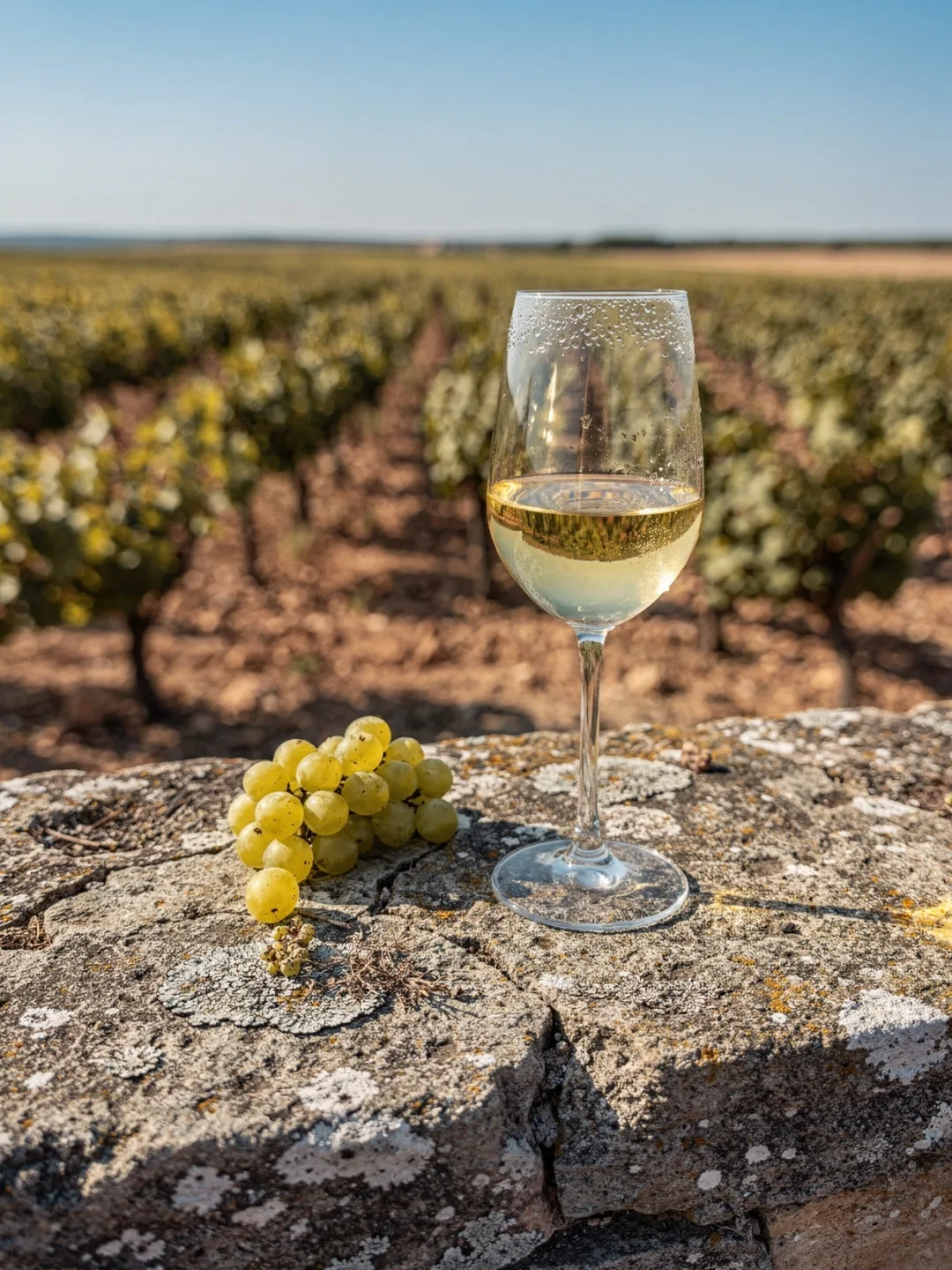
Verdejo lives on aromas that escape easily: fennel, freshly cut grass, lime. A glass that's too wide spreads them over a large surface. That's exactly where the delicate notes get lost before they even reach the nose. This wine therefore needs a narrower, tall glass that noticeably tapers toward the opening.
The shape concentrates the aroma over a small surface and sends it upward in a focused stream, similar to Sauvignon Blanc, with which Verdejo is often compared. Choose a narrow glass deliberately. A large balloon glass, the kind typically used for full-bodied red wine, doesn't yield more aroma with Verdejo — it yields less.
Temperature, too, noticeably changes the wine. A young, stainless-steel-aged Verdejo belongs in the glass at between eight and ten degrees. That's cool enough to preserve its freshness, but not so cold that the aroma and the characteristic light bitterness in the finish disappear. A barrel-fermented Verdejo can tolerate two to three degrees more, otherwise the toasty notes from the oak get lost in the chilling effect.
With Vino Generoso, the picture changes completely. Dorado and Pálido age for years, either oxidatively or under a veil of flor yeast, similar to sherry, and reach the glass at fourteen to fifteen percent alcohol. That calls for a smaller, tulip-shaped glass and a warmer temperature of around twelve to fourteen degrees. Otherwise the toasted and nutty notes stay silent.
The pour stays modest across all styles. A glass should be filled only up to its widest point at most, which for a standard white wine glass is barely more than a hundred milliliters. The space above that is not wasted room. That's where the aroma gathers before it reaches the nose.