Cool, then Solera
Production
Modern Rueda white wine is made almost in contrast to the region's old tradition. The grapes arrive at the winery early in the morning, often picked at night, so the heat doesn't rob them of aromas before they even reach the press. Fermentation then proceeds in a controlled, cool manner in stainless steel tanks, usually at fourteen to eighteen degrees. This is exactly what preserves those volatile aroma compounds that a warm, uncontrolled fermentation would destroy.
Before fermentation, the must often rests on the skins for just a few hours. That's enough to release aroma precursors from the berry skin, without bitter compounds or color making their way into the tank. Orange wine works completely differently: there, white grapes ferment on their skins for weeks like a red wine. In Rueda, hours are counted, not weeks. Some wines are then aged sobre lías, on their own lees, which gives them more fullness and a slightly creamy texture in the mouth, without any oak at all.
Anyone using the term Fermentado en Barrica must actually ferment the wine in oak barrels and age it there on the fine lees. A brief stay in the barrel isn't enough. Here, time counts double. You taste the difference immediately: more structure, subtle toasty notes, less of the pure citrus punch of the stainless-steel wine.
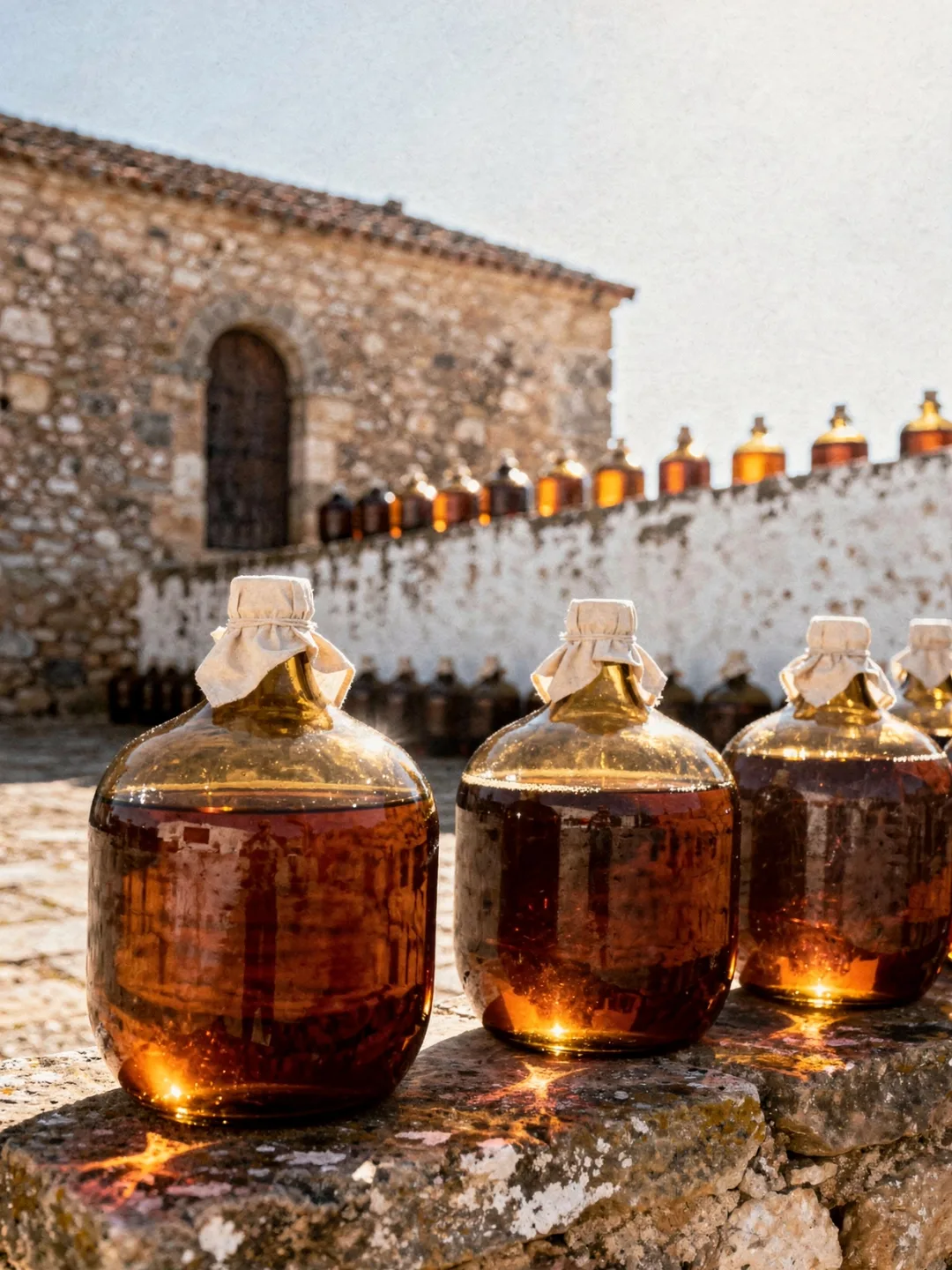
Making a Dorado or a Pálido works entirely differently. For the Dorado, the wine ages oxidatively for at least four years, the last two mandatorily in oak barrels, and in the past it was kept in glass demijohns out in the open air, exposed alternately to sun and cold. Color migrates slowly. The Pálido, by contrast, ages biologically, under a veil of flor yeast called velo de flor, for at least three years in barrel. This process is otherwise known from the much warmer Jerez, and in Rueda only a few wineries still master it.
The newest and strictest category is called Gran Vino de Rueda. It requires vines over thirty years old, a maximum yield of six thousand five hundred kilograms per hectare, and a pressing yield of no more than sixty-five percent. This wine may not be sold before the fifteenth of October following the harvest, a full year later than ordinary Rueda.