Cold, Heat, Wind
Climate
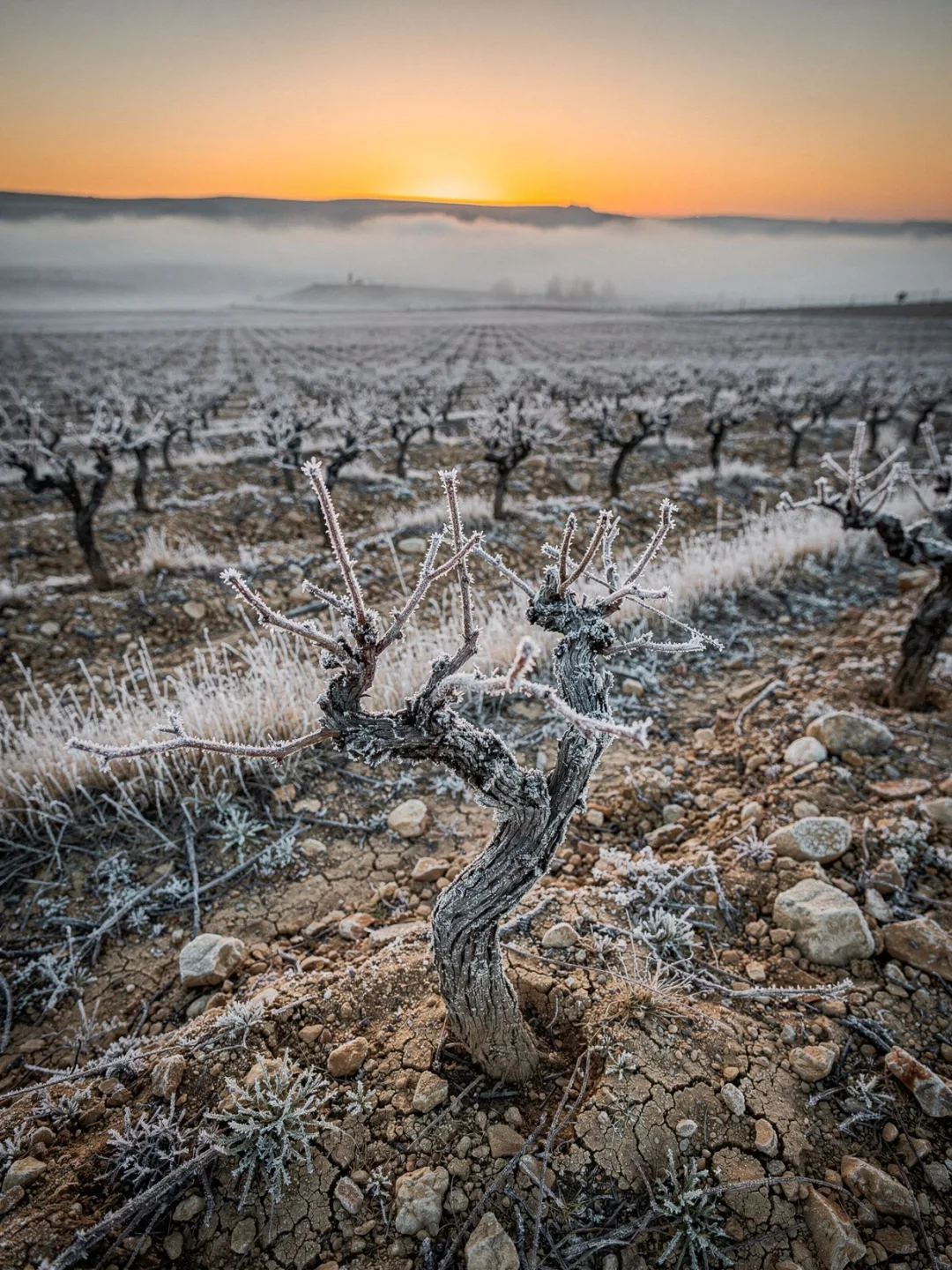
The vineyards of Rueda lie between seven hundred and eight hundred seventy meters above sea level. They sit on a flat, barren plateau with no shelter at all. This very altitude makes the climate harsh: long, cold winters, short springs with late night frosts, and hot, dry summers interrupted only by occasional thunderstorms.
The numbers are unambiguous. The mean annual temperature is around eleven and a half degrees. The annual swing is around seventeen degrees. Extremes range from minus six to minus ten degrees in winter up to thirty-seven degrees in the height of summer. On average, the soil is free of frost only from late April to mid-October, roughly one hundred eighty days a year. Add to that little rain, four hundred to four hundred thirty millimeters, spread over seventy to eighty-five days.
Two winds govern the weather over the villages of La Seca and Nava del Rey. One comes from the west, the other from the southwest and is called Ábrego here; both bring nearly all of the year's rain in autumn. Otherwise, mostly dry air blows across the plain. Standing here, you feel how quickly the air cools in the evening. This very swing between day and night is often greater than twenty degrees during the ripening period, and it locks in the acidity of the grape while the sun provides sugar during the day.
Water is therefore the scarcest resource. For a long time, the vines had to fend for themselves. In the past, growers dug a trench around each vine in late winter to collect meltwater. In early summer they piled soil back over it, sometimes up to half the height of the plant, so the sun wouldn't evaporate the water. Only the drip irrigation of recent decades made this laborious handwork unnecessary. Even so, the old roots have long since learned to search deep rather than wait at the surface.