Room for Power
Glassware
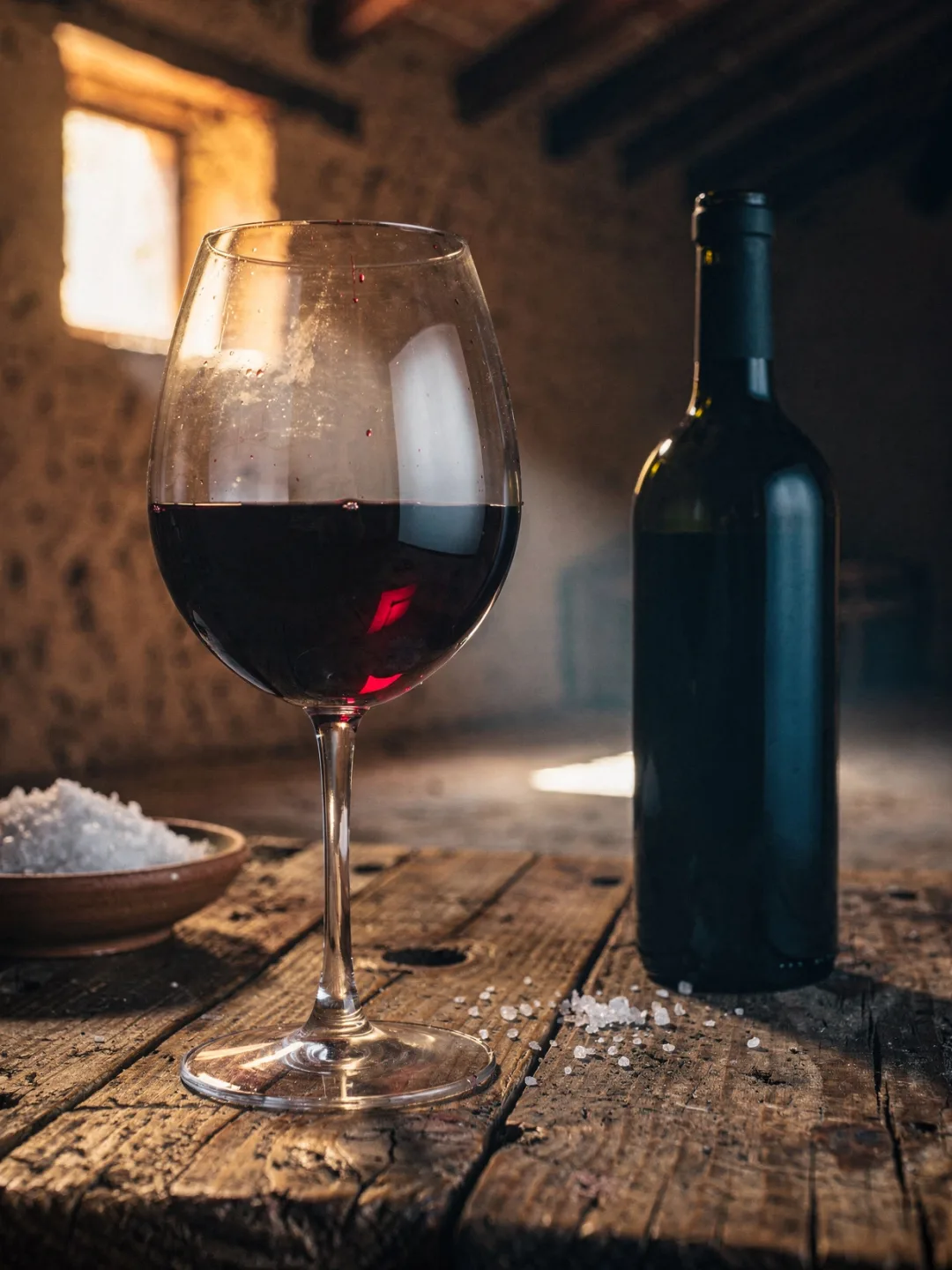
A glass for Tinta de Toro needs above all one thing: room for the high alcohol to escape. Toro wines often reach fourteen to sixteen percent alcohol by volume, higher than most other Spanish reds. In a narrow glass, this alcohol pushes straight into the nose before you even catch the fruit.
A wide, tall glass with a generous bowl solves the problem. The large surface area lets the alcohol evaporate faster, while the narrowed rim still captures the heavier aromas of ripe black fruit and toasty oak. A small, narrow glass, by contrast, concentrates everything at once, alcohol and fruit together, making the wine seem sharper than it really is. For a variety with as much potassium and as little acidity as Tinta de Toro, this balance makes all the difference.
With temperature, every degree counts. Sixteen to eighteen degrees Celsius is right, cooler than what many consider room temperature. Any warmer than eighteen degrees, and the alcohol pushes forward so strongly that the dark fruit behind it disappears, which is exactly what happens to many Toro wines when poured straight from a warm living room. Twenty minutes in the fridge is usually enough.
A young, straightforward Toro wine doesn't need a decanter. A mature Reserva from Numanthia or Pintia, however, benefits noticeably from half an hour of air. Years in barrel and bottle temporarily lock away the variety's firm tannin. Such wines also often carry sediment that shouldn't end up in the drinking glass. A decanter reliably holds it back.
Never pour beyond the widest point of the bowl, roughly one hundred fifty milliliters in a standard glass. Above that, there's no room left for the aromas to gather. Fill the glass to the brim, and you're still drinking the same powerful wine. But you'll smell a lot less of it.