Four Fixed Aging Categories
Production
Red wine from Toro is made the way any red wine is made. The skins stay in the must during fermentation, since that's where the color and tannin live, not in the juice. To achieve this, the grapes must reach a probable alcohol content of at least ten and a half percent by volume at harvest. A firm limit applies to pressing: from one hundred kilograms of grapes, no more than seventy liters of must or wine may be extracted; anything beyond that dilutes the quality.
The official aging period always begins on the first of November of the harvest year, regardless of when the wine actually enters the barrel. And one more thing is mandatory in Toro: bottling may only take place at wineries within the zone itself. The reason lies in the wine: with as much tannin and pigment as Tinta de Toro brings, it needs the calm of its own bottle to settle.
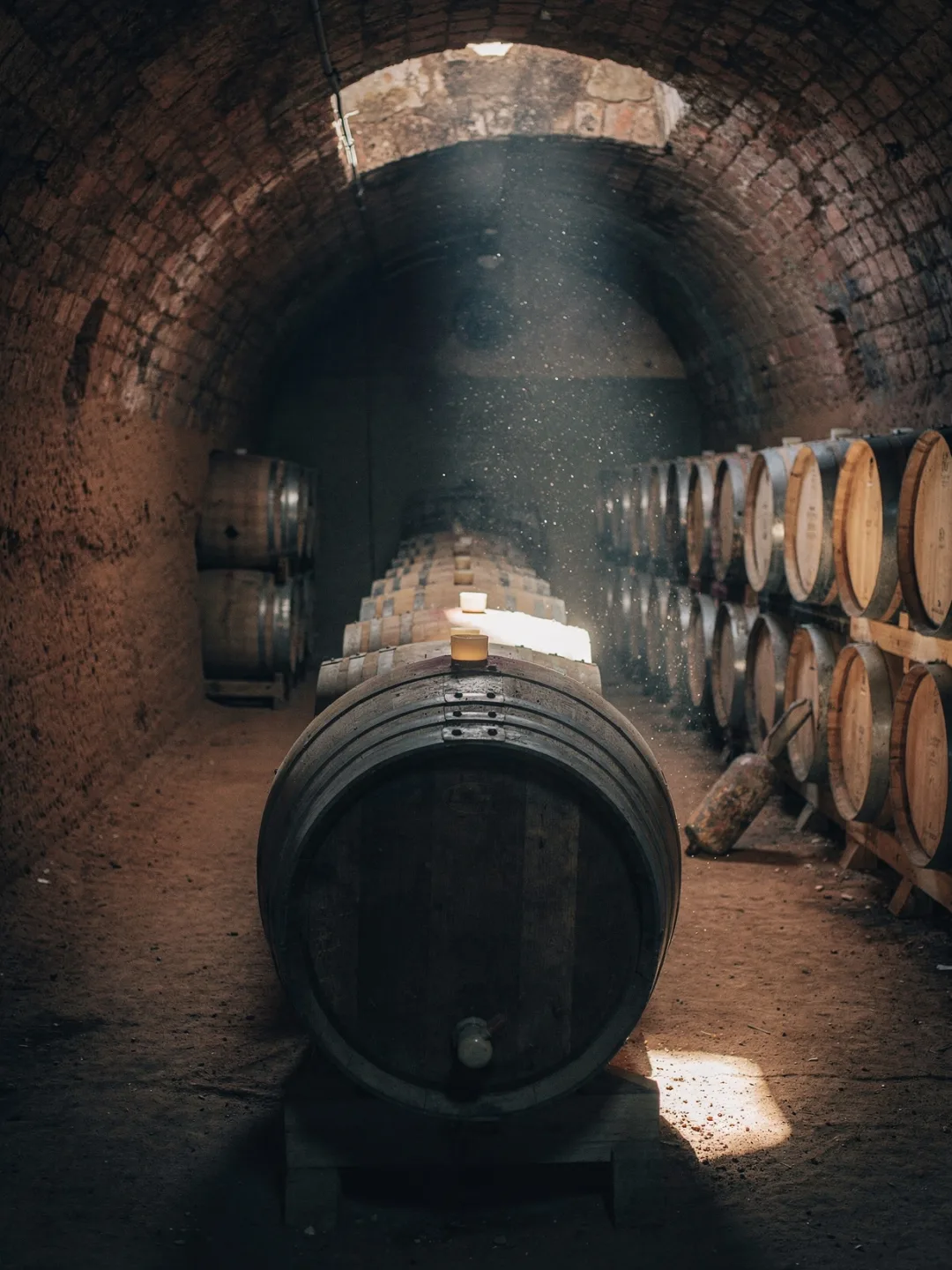
A young wine with a few months in oak may be labeled Roble or Fermentado en Barrica, depending on the label. That's not yet Crianza. This category demands at least twenty-four months of total aging, including at least six months in oak barrel. Only after that may a wine carry the name most buyers look for on the shelf.
Reserva requires at least thirty-six months. Twelve of these spend in barrel, the rest in bottle. Gran Reserva demands as much as sixty months in total, with at least twenty-four months in oak. So a wine harvested in 2020 can't be sold as a Gran Reserva before 2025 at the earliest. Usually it rests in the cellar even longer than that.
How differently the same grape ages in barrel is shown by Numanthia in Valdefinjas across three wines from different parcels: Termes ages more briefly and lightly in oak, Numanthia longer, and Termanthia the longest, with the most new oak. At Pintia, Vega Sicilia's Toro project near San Román de Hornija, the power comes straight from the vineyard. Ancient, ungrafted vines rooted in river gravel need only accompaniment in the cellar.