Extreme Climate on the Duero
Climate
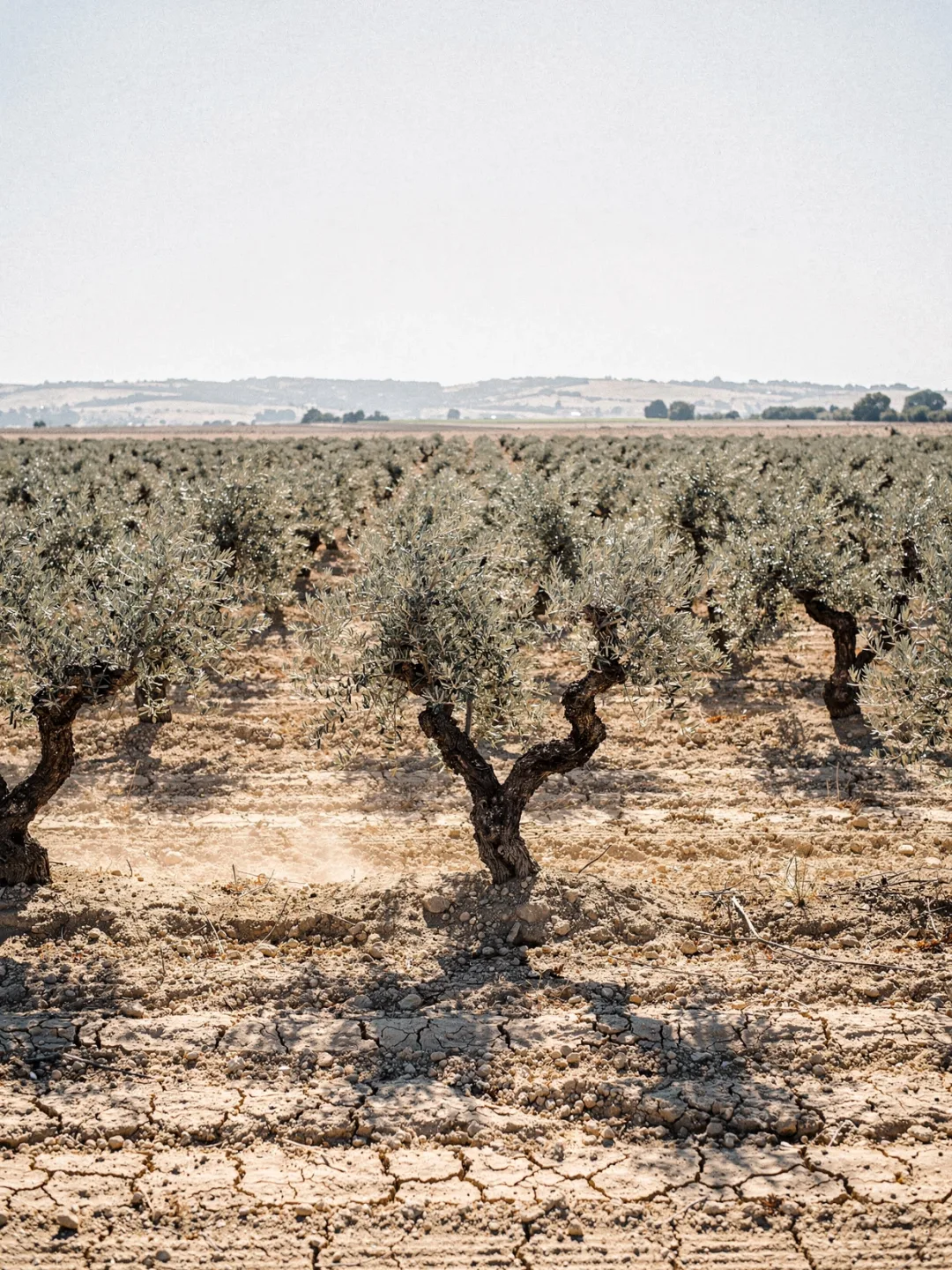
The Toro zone lies in the far west of Castile and León, well away from the sea, and its climate is correspondingly harsh. Officially classified as continental and extreme, with an Atlantic influence and semi-arid character: only three hundred fifty to four hundred millimeters of rain fall each year, scarcely more than in some steppe. In summer, the thermometer climbs to thirty-seven degrees Celsius. In winter it drops to minus eleven. Between the two lies almost nothing mild.
What matters, though, isn't the annual mean temperature of twelve to thirteen degrees Celsius, but the swing between day and night. During ripening in September, the difference between day and night temperatures climbs above fifteen degrees, sometimes more. The vine makes double use of this: by day it builds sugar and color. By night the cool holds onto some of the acidity that a naturally potassium-rich, mild grape like Tinta de Toro would otherwise barely retain. Without this nightly drop, the wines would taste both flat and heavy at once.
Frost remains the greatest danger nonetheless, and over a long stretch of the year: late spring frosts can still strike young shoots as late as May. The vine's full growing cycle here lasts on average around two hundred thirty days. Elevation offers some protection: the vineyards sit between six hundred twenty and eight hundred forty meters, with the highest sites in the southwest of the zone also staying the coolest.
On top of this comes one of Spain's highest sunshine totals: two thousand six hundred hours a year, rising to three thousand in good vintages. Historically, this pushed alcohol levels at late harvest to sixteen or seventeen percent by volume, and it was precisely this power that made the wine so durable and sought-after centuries ago. Today most producers harvest earlier and land at fourteen to sixteen percent, still higher than most other Spanish reds.
The Duero itself and its smaller tributaries, the Guareña and the Hornija, have shaped the land. They cut it into valleys and terraces. Where a slope descends toward the river, cool air pools in the morning. Where it opens to the south, it gathers heat. From this fine-grained distribution, noticeably different wines emerge across the zone's twelve municipalities.