Granite & Sandstone
Soils
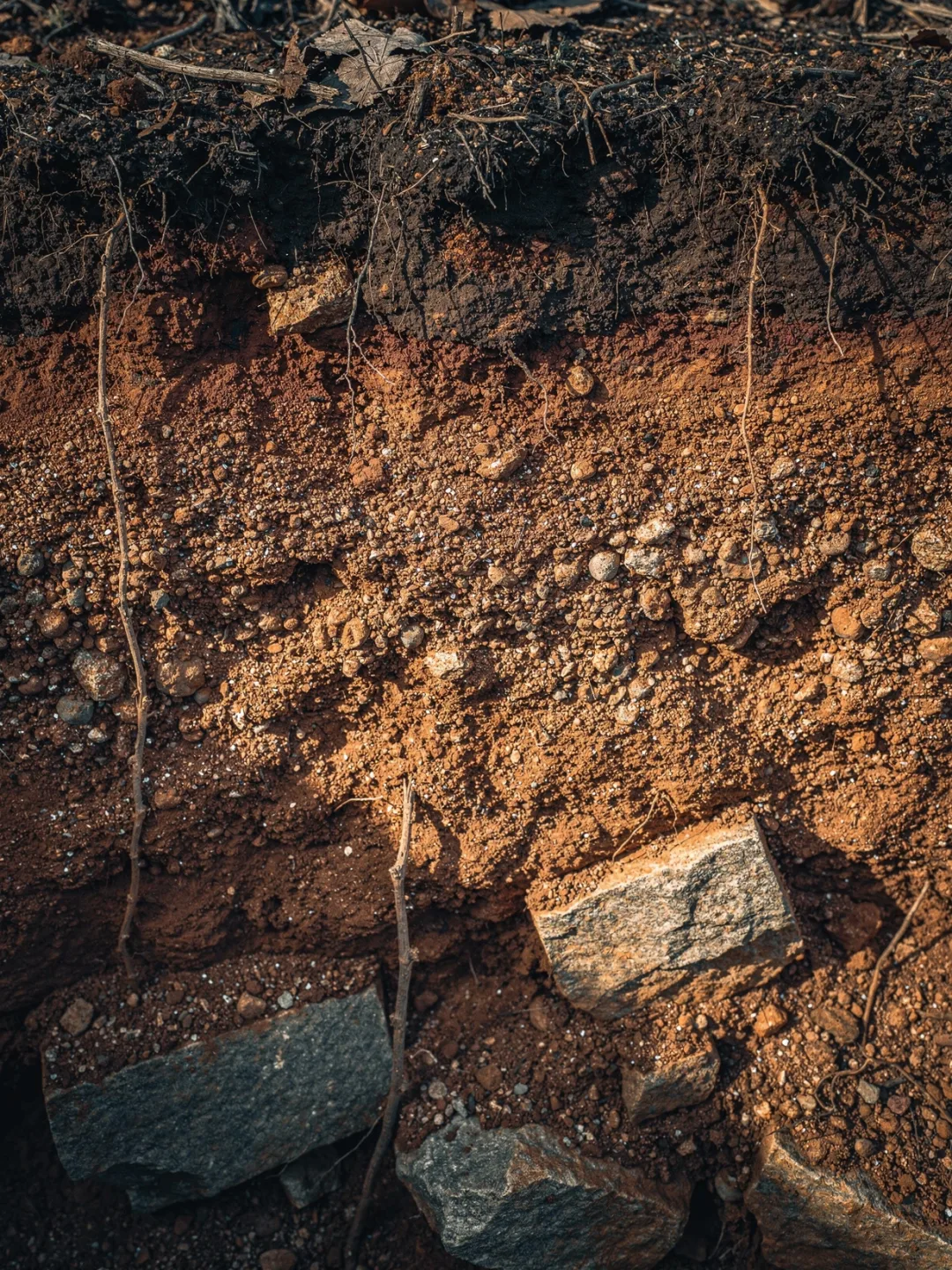
Dig a hole in a vineyard at Constantia Glen. You'll first hit a fine-grained, reddish-brown earth that feels almost like clay between your fingers. It comes from weathered Cape Granite, that hard grey rock which solidified from molten magma beneath today's Cape Peninsula a good half billion years ago. Today it lies at the surface, broken down into a soil that holds more clay than almost any other vineyard soil at the Cape.
Twenty to thirty-five percent of this soil is clay, an unusually high figure for a wine region. Clay stores water like a sponge. This explains exactly why Constantia's vines survive the dry summer without irrigation: what the rain deposits between May and August, the soil releases back, month by month. Elsewhere at the Cape, where granite weathers into sandier material, this buffer simply isn't there.
Further up, on the steeper ridges toward the Constantiaberg, the picture changes. There lies Table Mountain Sandstone, which was deposited as sand over the long-since-cooled granite many millions of years later. Layer upon layer, it built up into a formation over six hundred meters thick. Where this sandstone dominates the soil, lighter, more barren stretches appear, with less clay and more coarse quartz gravel.
Winegrowers in Constantia speak openly about the difference this makes in the glass. Wines from the clay-rich granite carry a saline, almost savory note, while sites on sandstone bring more richness and texture, especially with Semillon. No vine root actually tastes the rock itself. What comes through is warmth, water, and the vine's need to grow deep, not dissolved minerals in any literal sense.
In the end, this soil forces the root into a detour that pays off. It works its way through dense clay instead of gliding effortlessly through loose sand. This naturally curbs yield, with no need for a winegrower to intervene. What arrives at the press is correspondingly concentrated.
A thin, dark layer of leaf litter and root remains under a winter-moist climate, barely more than a hand's width deep.
The root: This is where the fine roots sit, the first to spring into action after the initial winter rains.