In the Lee of the Mountains
Climate
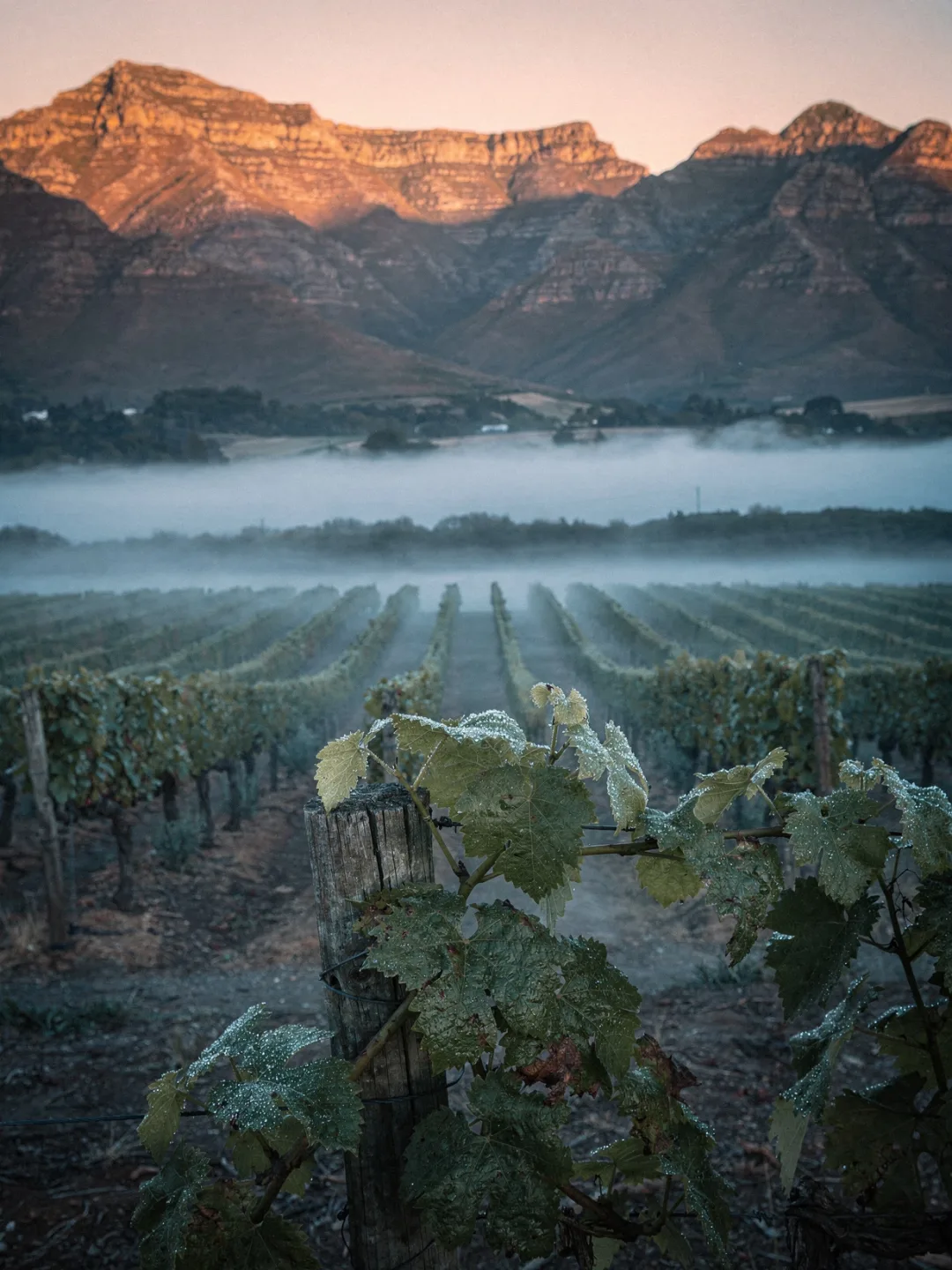
Mountains enclose the Franschhoek valley almost completely on three sides. To the north, the Wemmershoek mountains separate the valley from the Breede River Valley; to the south, the Franschhoek and Groot Drakenstein ranges shield it from the ocean's full force. The result is a basin with its own microclimate. Sheltered, but not cut off.
Summers are warm and dry, with highs between 25 and 30 degrees Celsius, while nights cool down to 15 to 18 degrees. Winter brings the rain: from May through August, around 900 millimeters fall annually, with June alone often exceeding 120. In cold years, the peaks even see a brief dusting of snow. Unlike the coastal vineyards, Franschhoek feels the cooling southeasterly wind known at the Cape as the Cape Doctor only faintly, since the mountains dampen its force.
The mountains, however, do their own work. At night, cool air sinks from the slopes into the valley, gathers above the Berg River, and pushes the day's warmth ahead of it. This movement creates a pronounced difference between day and night, more important to the wine than any average temperature. More coolness means more time.
During the day, the vine builds up sugar in the heat. At night, as the cold air settles in, acid breakdown slows almost to a standstill. This exact interplay keeps varieties like Semillon and Chardonnay fresh, even though the days are often hot enough for dark red wines.
Location determines style. Where a vineyard sits within the valley makes a real difference. Blocks near the foot of the Franschhoek mountains get more coolness and more afternoon shade than those out in the open valley floor. Winemakers use this deliberately: red wine vines often occupy the open, sunny sites, while Chardonnay and Semillon claim the cooler edges toward Wemmershoek and Groot Drakenstein. This creates remarkably different wines within a tight space, even when the sites are often just a few hundred meters apart.