Granite & Shale
Soils
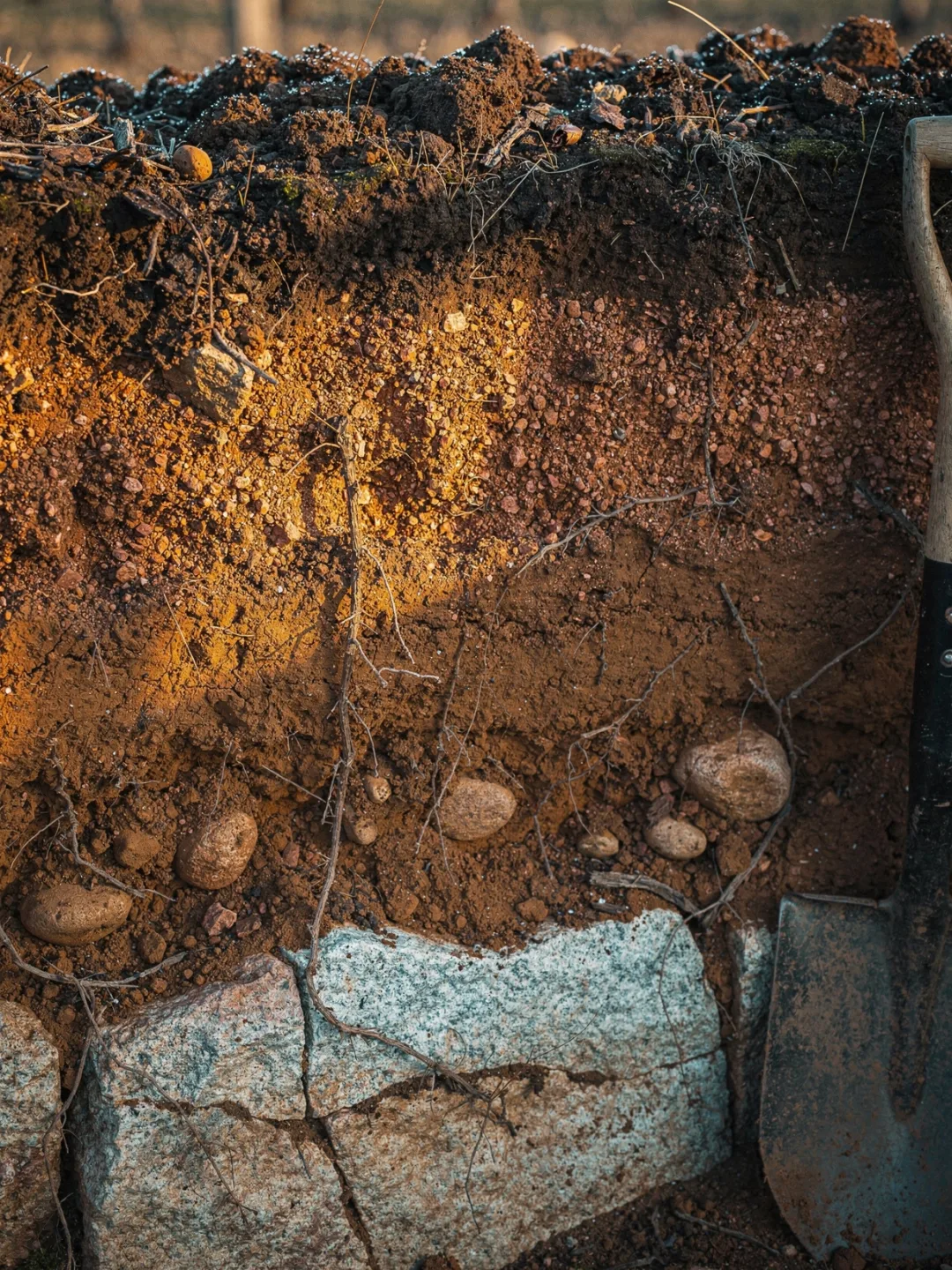
Dig a hole at the foot of the Paarlberg, right next to an old vineyard. The top twenty to thirty centimeters are reddish-brown and crumbly, almost like gravel mixed with sand: grus, the debris of weathered granite. Below that, the soil becomes denser and reddish-yellow. The local soil map calls this clayey loam Hutton or Clovelly, named after the farms where it was first described.
This granite is ancient. It belongs to the Cape Granite Suite and crystallized from rising magma roughly five hundred million years ago. Today it stands exposed as one of the largest freestanding granite formations in the world, the Paarlberg itself, three smooth domes rising in the middle of town. Weathering has worked on this rock for millions of years, layer by layer, and it's exactly this decay that produces the soil the vines grow in today.
This loam is the real treasure. It holds onto water that falls in winter, releasing it slowly. That way, roots still find something to drink even in the driest February, three or four meters below the surface. It's exactly this that allows vines to be planted without drip irrigation, unirrigated, as it's called in local jargon. From this comes the concentrated old Chenin Blanc bush vines the district is known for.
After ninety centimeters or a meter, the drill hits something hard, because what comes next is the weathered granite itself: grey-white blocks known as corestones, between which only cracks and thin veins of weathered material remain. Only a few roots make it this deep. But it's precisely these few that carry the vine through the driest months, when everything above has long since turned to dust.
The soil isn't uniform everywhere. In the west of the district, around Agter-Paarl, the granite gives way in places to darker shale from the Malmesbury Group. This shale holds water differently and produces heavier, firmer wines. Taste two wines from Paarl side by side, one from granite, one from shale, and you can taste this difference in soil right there in the glass.
Reddish-brown, crumbly debris of weathered granite, sandy and loose, low in nutrients.
The root: The fine roots of the topmost years. These are the first to dry out in summer.