Altitude Beats Heat
Climate
In February, mid-harvest, the thermometer in the valley often climbs past twenty-nine degrees Celsius. Grapes exposed to that much heat quickly lose their acidity. What saves Paarl nonetheless is the night. Once the sun disappears behind the Drakenstein Mountains, the temperature drops fifteen to eighteen degrees within a few hours, especially on the higher slopes of the Simonsberg. This coolness slows acid breakdown in the berry almost overnight.
Rain falls almost exclusively in winter. Between May and August comes most of the roughly eight hundred millimeters that fall here on average each year. The summer months from December to February often stay dry for weeks on end. For the vines, this is both blessing and risk. They fill their water reserves deep in the granite soil over winter, but through summer must fend for themselves, since irrigation isn't even an option for the old bush vines.
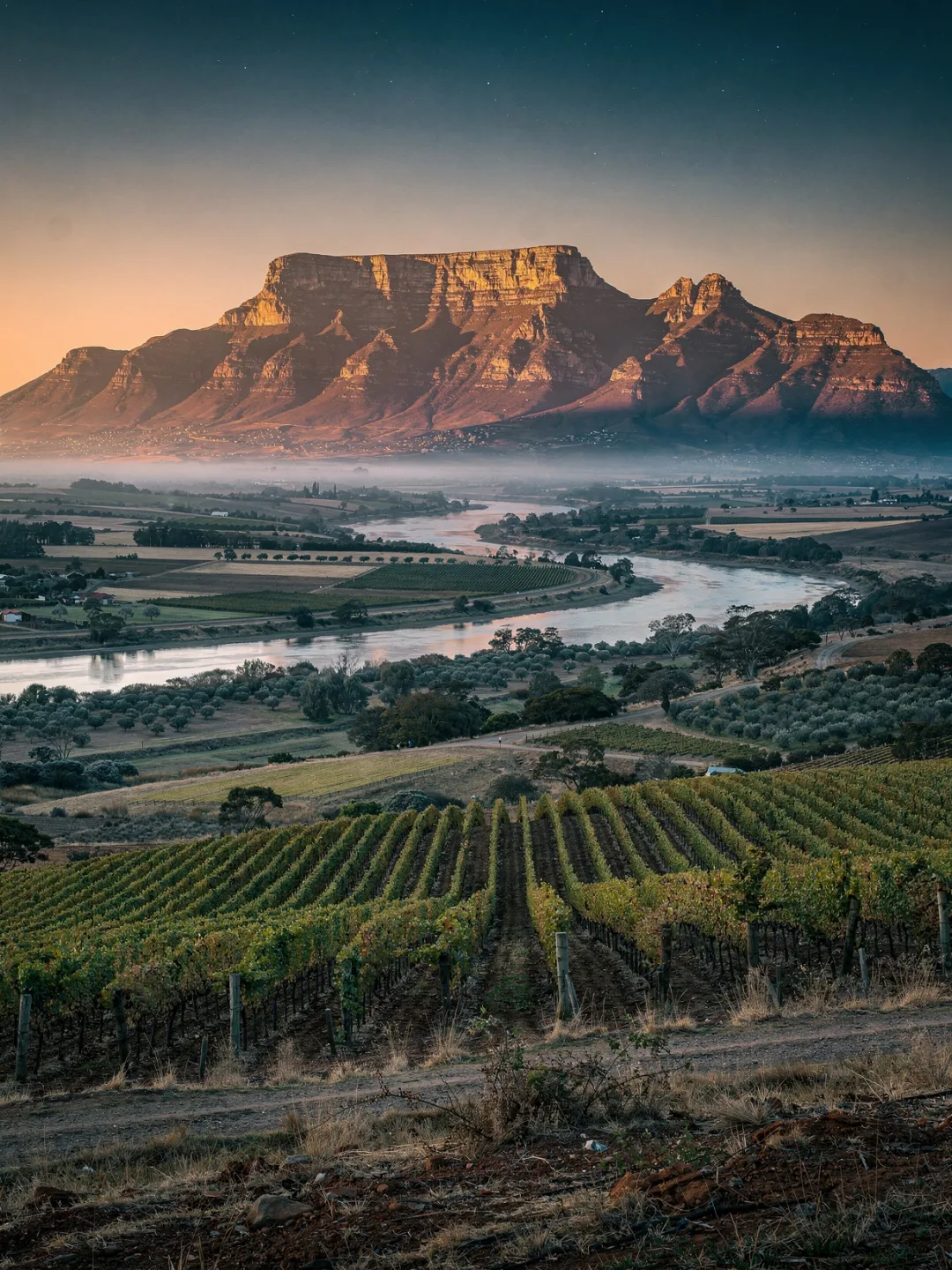
A third element is the Bergrivier, which runs through the valley floor between the mountains. On clear, still nights, cold air pools from the slopes down into the valley bottom, where the lowest vineyards lie. There, late winter occasionally brings a risk of frost, while higher up the slope the air keeps moving and stays warmer. That's why many estates plant their most delicate vines not in the valley but higher up the slope, facing the Paarlberg, away from the frost risk below.
Not the whole area is equally warm. Around the town and on the flat valley floor, grapes ripen quickly and evenly, ideal for easy-drinking, fruity everyday wine. Further up, on the slopes of Simonsberg-Paarl and Voor-Paardeberg, altitude delays ripening by several weeks. It's from precisely this delay that winemakers draw the structure that lets a wine age for years.