Wood, Yeast, Spirit
Production
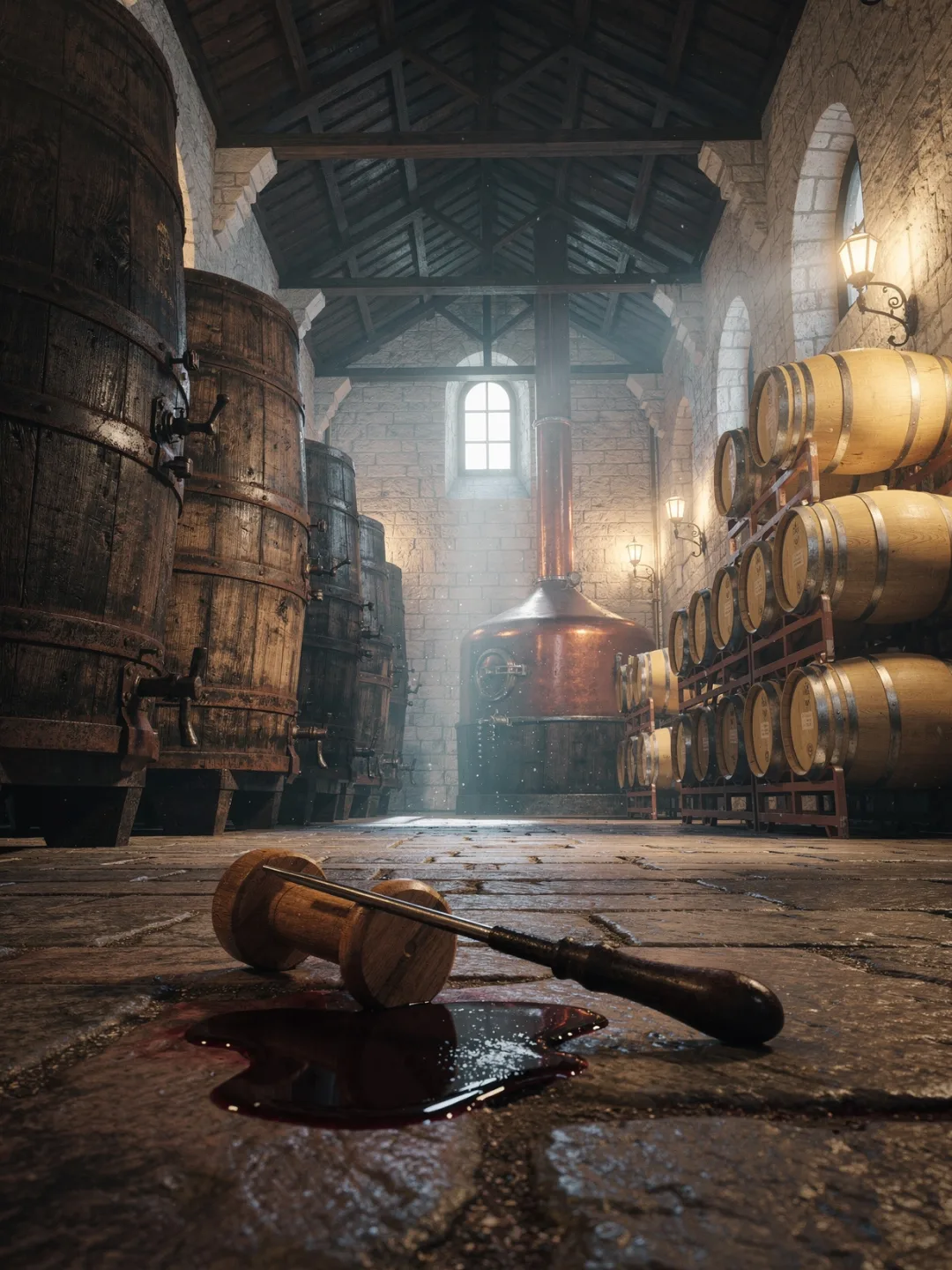
The largest winery in Paarl is also a distillery. On some twenty-two hectares stand KWV's buildings, and inside them, the largest copper pot stills in the Southern Hemisphere. For decades, wine has been distilled into brandy here. Some of it still ages today in the Cathedral Cellar, a windowless hall lined with enormous wooden casks that feels more like a church than a workshop.
For the red wines of Simonsberg-Paarl, barrel size has nearly reversed within a few decades. Wines used to age in large, old foudres that gave off almost no aroma. Today, Cabernet Sauvignon and Shiraz often mature in small French barriques of 225 liters, some new, some already in their third fill. Winemakers decide anew each vintage how much new oak to use, depending on how concentrated the grapes turn out to be.
Things work quite differently for those making Hanepoot into a sweet Boberg wine. For a Jerepigo, the grape juice is fortified with pure spirit immediately after pressing, before the yeast even begins to work, so that nearly all the natural sugar is preserved. A Muskadel, by contrast, is allowed to ferment for a few days before the spirit is added. This leaves less residual sugar behind, but more aroma from fermentation itself ends up in the glass. Both methods finish at sixteen to eighteen percent alcohol, well beyond what yeast could achieve on its own.
White wine shows this range even more clearly. A simple Chenin Blanc fermented in stainless steel stays cool and floral. The old bush vines, by contrast, are often fermented in used oak and then stirred on their lees for months. This technique is called bâtonnage, and it gives the wine fullness and a slightly creamy impression. The oak for this hasn't come from the town's avenues for a long time now, though a governor in the seventeenth century had exactly that in mind when he ordered farmers to plant oak trees along the main road.