Shape & Smoky Note
Glassware
A glass changes how much air reaches the wine and where the aroma first meets the nose. For the powerful red wines of Stellenbosch, this makes a big difference. Both Pinotage and Cabernet Sauvignon bring plenty of tannin and often generous alcohol.
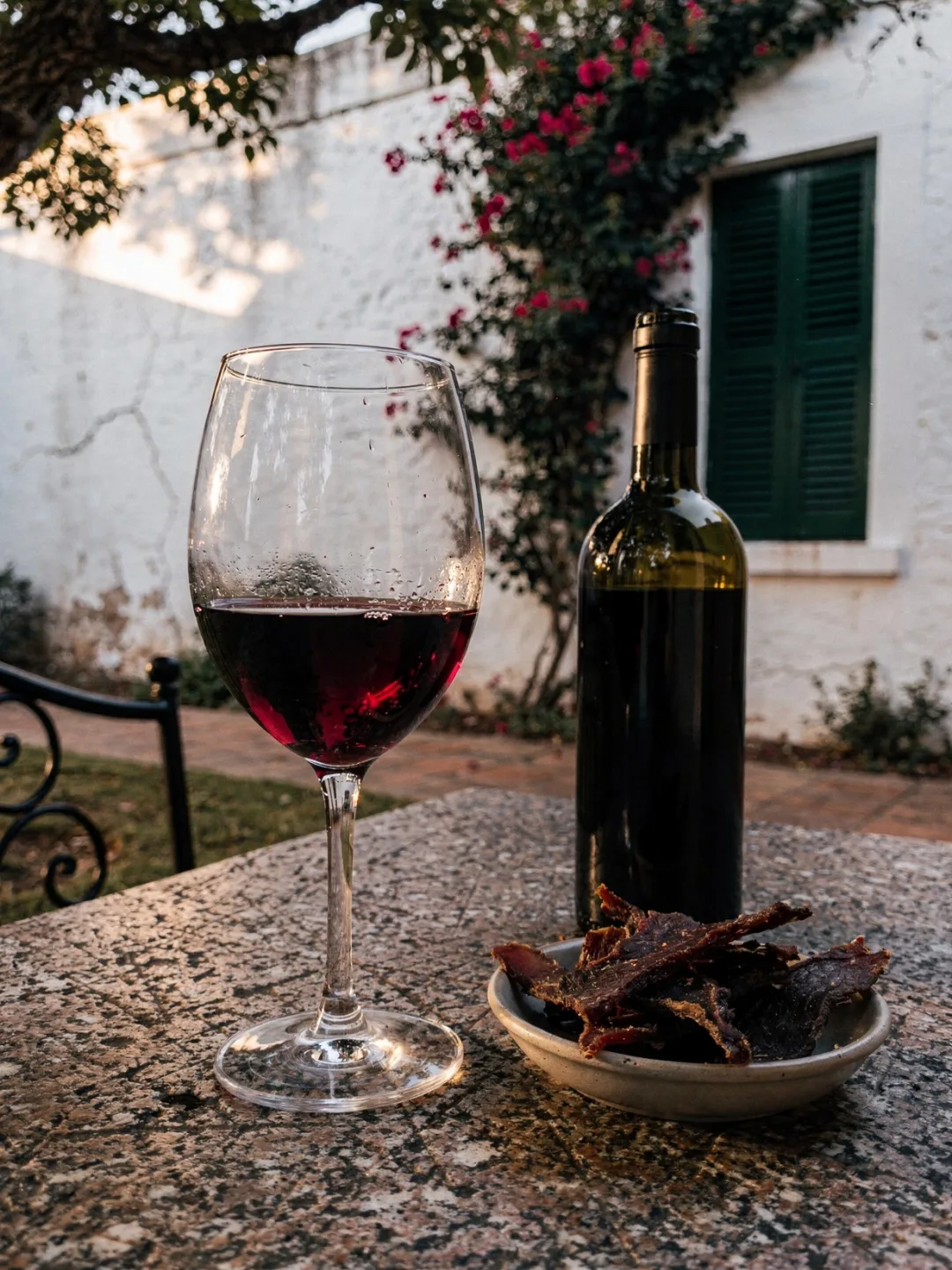
A tall, bowl-shaped glass with a relatively narrow opening, the kind usually used for Bordeaux, almost always works best here. The large surface area in the bowl lets alcohol evaporate and softens the tannin before the first sip reaches the tongue. The narrow opening keeps alcohol vapor from masking the finer notes.
With Pinotage, there's a second reason. Young, carelessly made examples can lean toward a whiff of nail polish remover or burnt rubber, and a glass that's too narrow only intensifies these sharp edges. In a generous Bordeaux glass, the harshest notes dissipate more quickly, letting plum, smoke, and the variety's characteristic banana note step forward instead.
On temperature: serve it cooler than you might think. Sixteen to eighteen degrees Celsius suffices for most red wines from the district. Especially with a powerful Cape Blend at fourteen percent alcohol by volume or more, this keeps the alcohol from overpowering everything else. Twenty minutes in the refrigerator is usually enough.
A young Pinotage rarely needs a decanter. A ten-year-old Cabernet from the Simonsberg, however, does: the tannins have knit together tightly, and half an hour of air noticeably opens the wine, even before it's poured.