Cape Doctor & Bay
Climate
Stellenbosch lies on the same latitude as Sydney or Buenos Aires. The climate is classified as Mediterranean: dry, warm summers and mild, wet winters. Here, the vine experiences an average growing-season temperature of around twenty degrees Celsius — a figure remarkably close to that of Bordeaux, despite the district lying much closer to the equator.
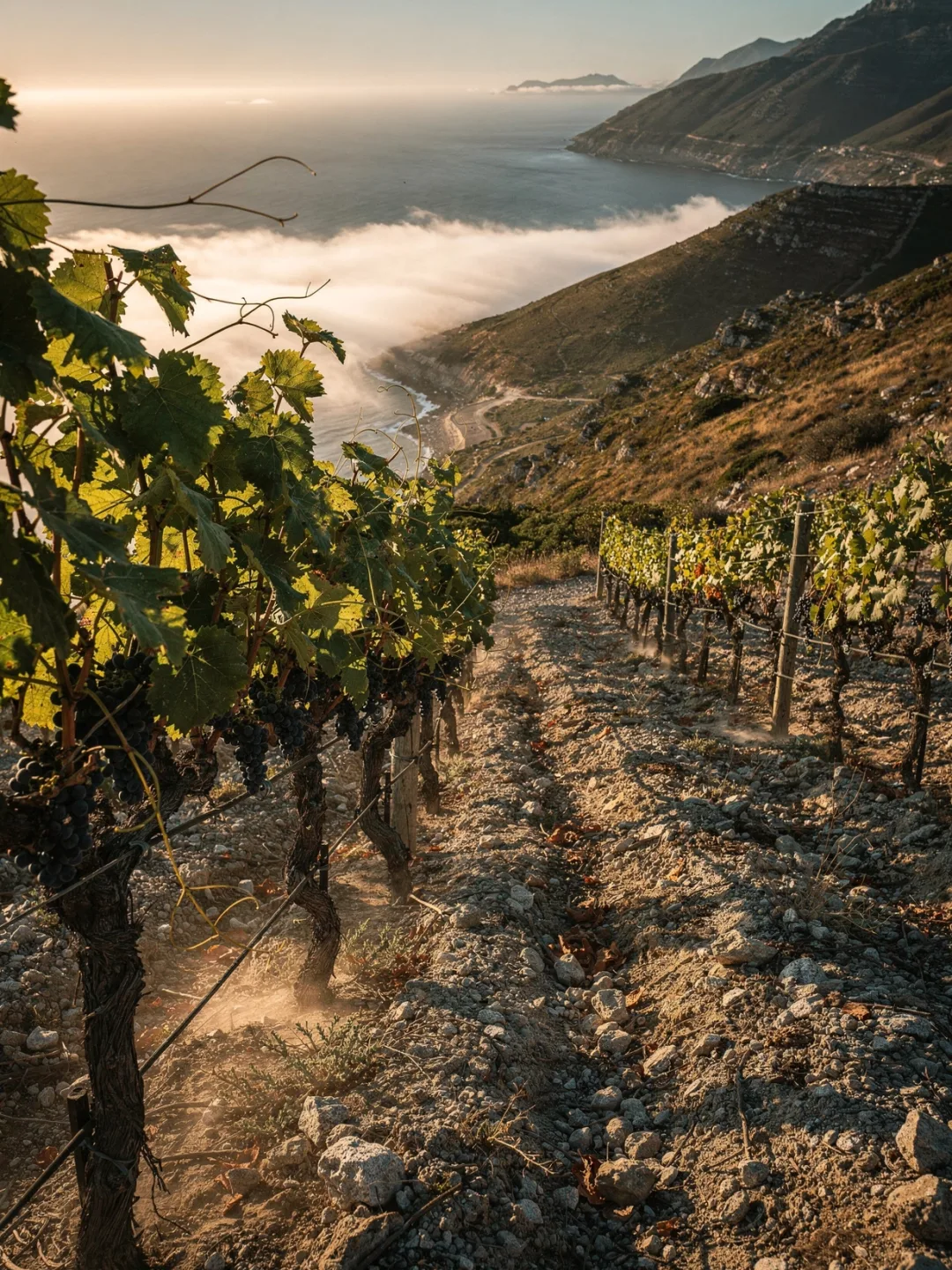
What actually slows ripening comes from a single direction: the southeast. From late winter through midsummer, a dry, often fierce wind sweeps across the mountains, known here since colonial times as the Cape Doctor, supposedly because it drives disease and foul air out of Cape Town. For the vineyard, it acts like a fan. It dries the grapes quickly after rain, keeps fungal pressure down, and cools the afternoons noticeably.
A second cooling influence comes from the other side, gentler but just as effective: the Atlantic, via False Bay. Vineyards planted in Helderberg, just a few kilometers from the bay, benefit from afternoon breezes that bring coolness even in February and help lock in acidity in the berries. Moving further north toward Bottelary or Simonsberg, this effect fades kilometer by kilometer, until the heat there hits unchecked.
At night, temperatures often drop by ten to fifteen degrees Celsius. This swing preserves aromatic compounds that would simply evaporate during a consistently warm day. Rain falls mainly in winter, between six hundred and eight hundred millimeters a year, while summers stay nearly dry. Irrigation, on many sites, is therefore not an option but a necessity.
Altitude amplifies all of this further. The Simonsberg rises to a good fourteen hundred meters. On its slopes, vineyards reach up to six hundred meters, where it stays cooler and the grapes hold onto their acidity longer than down in the flat valley floor.