For warmth and Chenin
Glassware
A glass can make a warm wine feel even warmer. But it can also give it enough air so the fruit arrives before the alcohol does. Swartland reds like Columella typically sit at thirteen and a half to fifteen percent alcohol, powerful enough to overwhelm too narrow a glass.
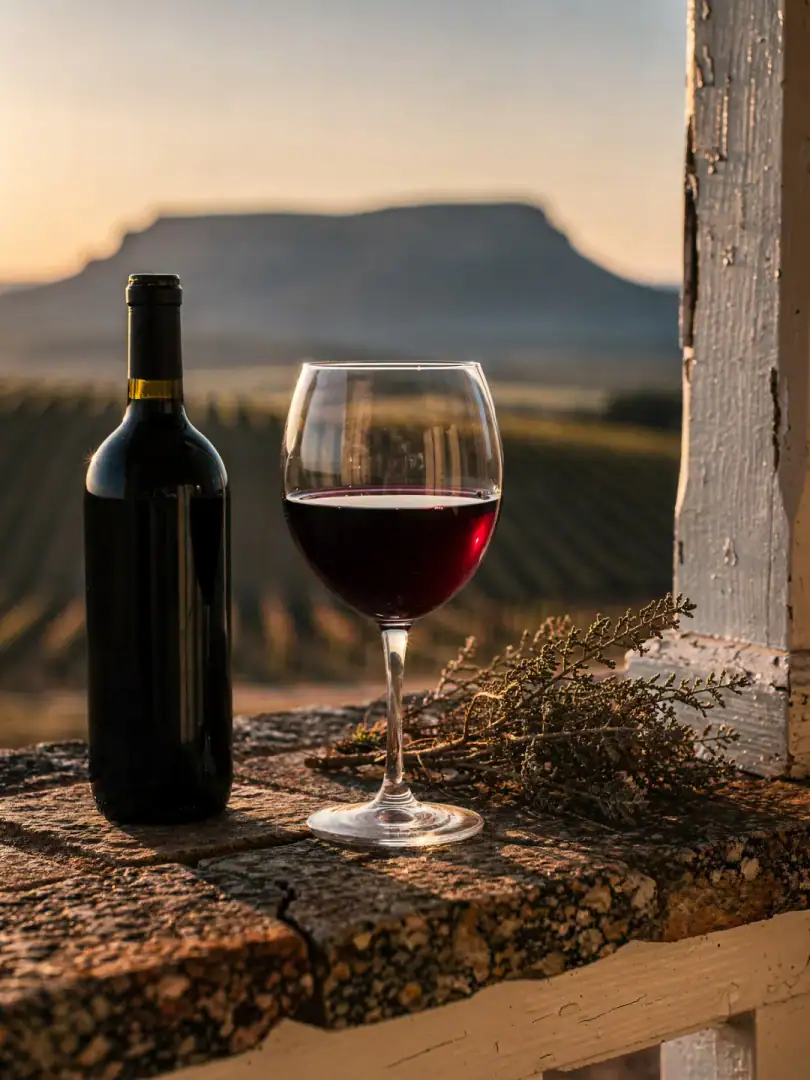
For these Rhône-style blends of Syrah, Grenache, and Mourvèdre, a bowl-shaped glass suits best. It has a wide bowl and a slightly narrowed opening, similar to the glass used for a robust Châteauneuf-du-Pape. The wide bowl gives the alcohol surface area to evaporate before it reaches the nose, while the narrow opening still concentrates the dark fruit and the herbal note of the bush vines.
Old bush vine Chenin calls for a different measure. It is often dense and oily, with fourteen percent alcohol and more. A narrow white wine glass quickly feels overwhelming here. A slightly wider bowl, the kind normally used for mature Chardonnay, gives the texture room without smothering the fine salinity that many koffieklip Chenins bring.
At the Cape, wine is often poured too warm. Ten to twelve degrees Celsius suffice for the Chenin, sixteen to eighteen for the red — cooler than what might tempt you on a South African summer terrace. Above eighteen degrees, the alcohol in Columella pushes forward immediately and masks the finer herbal spice.
Young Columella vintages almost always benefit from decanting, because spontaneous fermentation without cultured yeast sometimes leaves reductive notes that only clear with air. An old Palladius, by contrast, no longer needs this. After ten years in the cellar, it has already had plenty of air of its own.