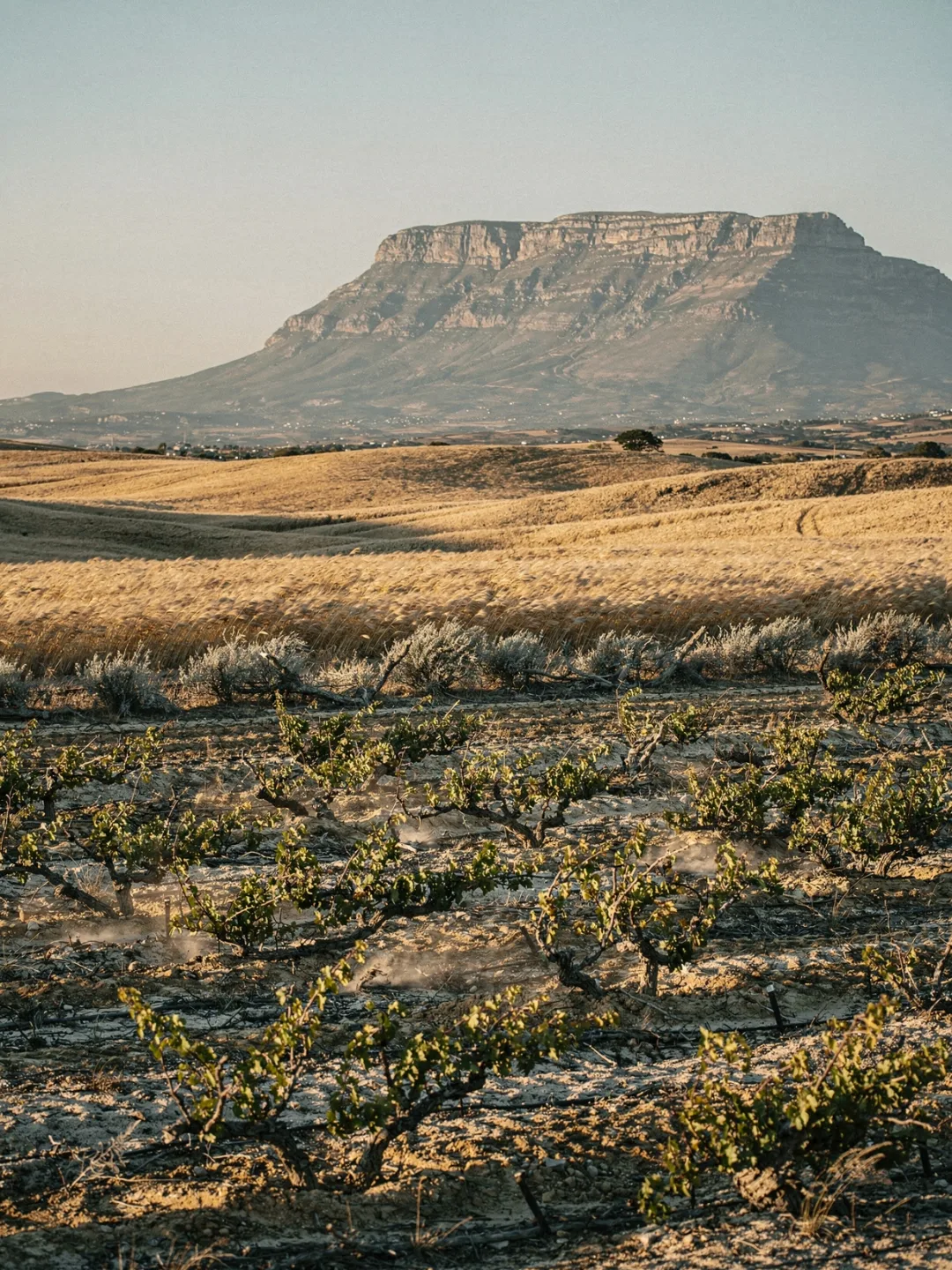
Dry, hot, windy
Climate
The difference between day and night here is often greater than between summer and winter, for the Swartland has a classic Mediterranean climate with dry, hot summers and wet winters. More than eighty percent of the rain falls between April and September. Over the course of a year, only around two hundred to four hundred fifty liters per square meter accumulate, depending on how close a vineyard lies to the coast.
This dryness sounds like a disadvantage, but for the old bush vines it is really the condition under which they came to exist in the first place. Planting in the Swartland without irrigation forces the vine to root deep rather than spread shallow. It is precisely this scarce supply that keeps yields small and berries concentrated.
Near the coast at St Helena Bay, the Atlantic cools the air noticeably. Further inland, around Malmesbury and Riebeek-Kasteel, much less of that cooling arrives, and summer days there regularly climb past thirty degrees Celsius, while the night gets little relief from the sea. Even so, temperatures drop noticeably after dark. The dry air simply holds heat poorly. This difference remains crucial: it preserves enough acidity in the grapes to balance the daytime heat.
At the Paardeberg, a third effect comes into play: the wind. Almost daily in the afternoon, a noticeable southeasterly breeze sweeps over the hills. It dries the leaves quickly after rare rainfall, keeps fungal disease at bay, and lets many estates farm largely without spraying.
Because rain falls so unreliably, harvest shifts from year to year. It usually begins in late January or February, right in the middle of the South African high summer — considerably earlier than in most European wine regions. This rhythm shows just how much the Swartland is shaped by the southern hemisphere and its reversed calendar.