Cool, lean, saline
Glassware
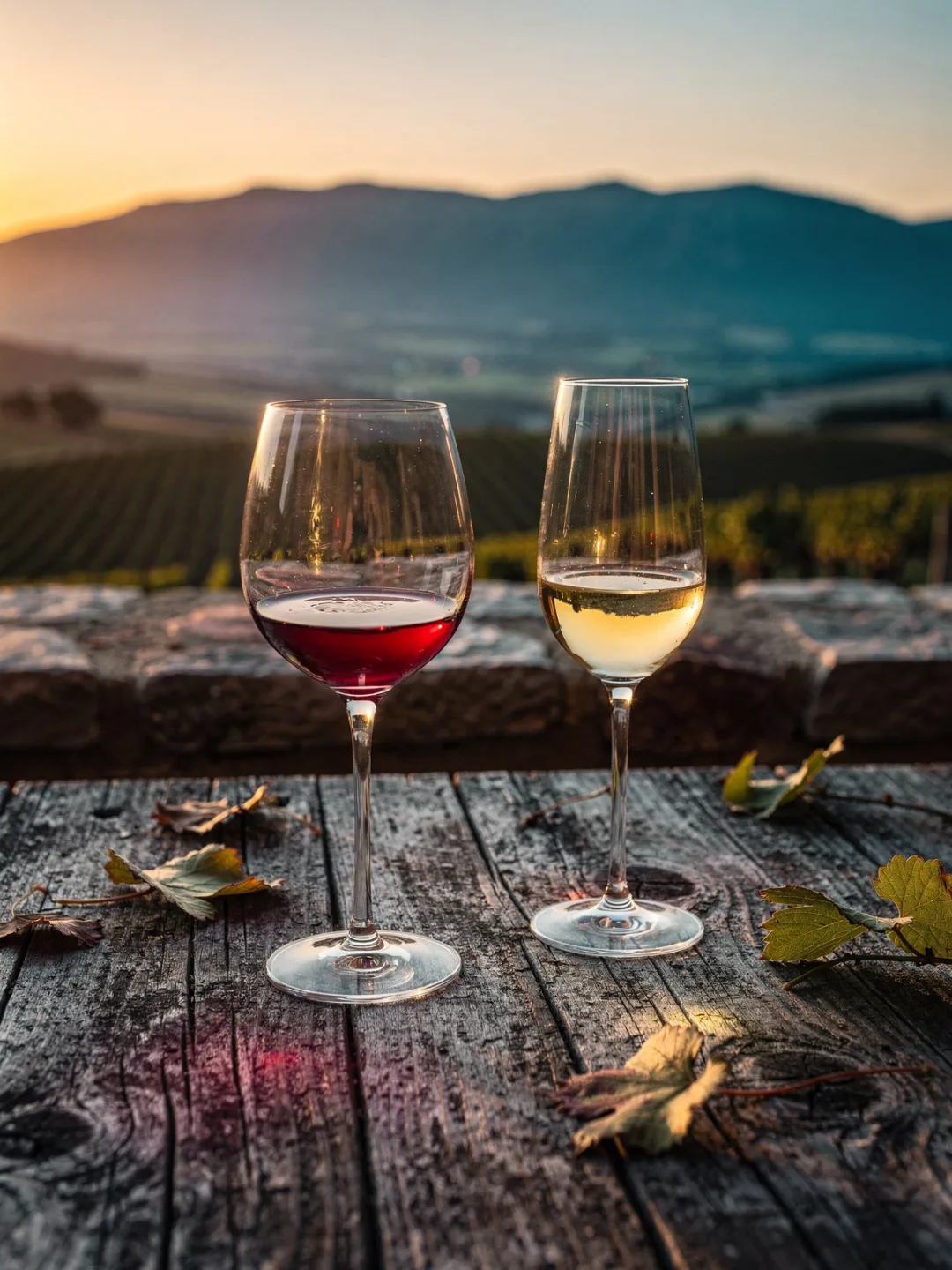
Taste Pinot Noir, Chardonnay, and Sauvignon Blanc back to back in a cellar in the Hemel-en-Aarde Valley near Hermanus, and you quickly notice something simple: a single glass doesn't suit all three. Each of these varieties brings a different balance of acidity, aroma, and weight out of Walker Bay's cool climate. The shape of the glass determines how much of that actually comes through.
In Pinot Noir, low tannin — the rough feel on the gums — combines with plenty of delicate fruit. A round-bowled Burgundy glass with a wide dome gives that fruit room to breathe without crushing its delicate structure the way a narrow glass would, and the opening should taper back in so the aromas of sour cherry and pomegranate don't simply escape over the rim.
Chardonnay from the same valley calls for almost the opposite of a small glass. It's fuller-bodied, often aged in oak. A wider bowl lets the candied citrus peel and salty oyster-shell notes coexist rather than crowd each other out. Served at ten to twelve degrees Celsius, cooler than many expect, that balance holds.
Sauvignon Blanc, by contrast, belongs in a slender, tall glass with a narrow opening. Its aromas of green fig and grapefruit are fleeting. A too-wide glass lets them dissipate before they ever reach the nose. Eight to ten degrees keeps it fresh, even cooler than the Chardonnay.
The Pinotage from the second label, Southern Right, follows its own rule again. It can take more air. Served lightly chilled at fourteen to sixteen degrees, in a medium-sized glass, enough air gets in to tame its firmer tannins without losing the fruit. Whatever the glass: pour only up to its widest point, never to the rim, or there won't be room left for the aromas to gather.