Cold Atlantic current
Climate
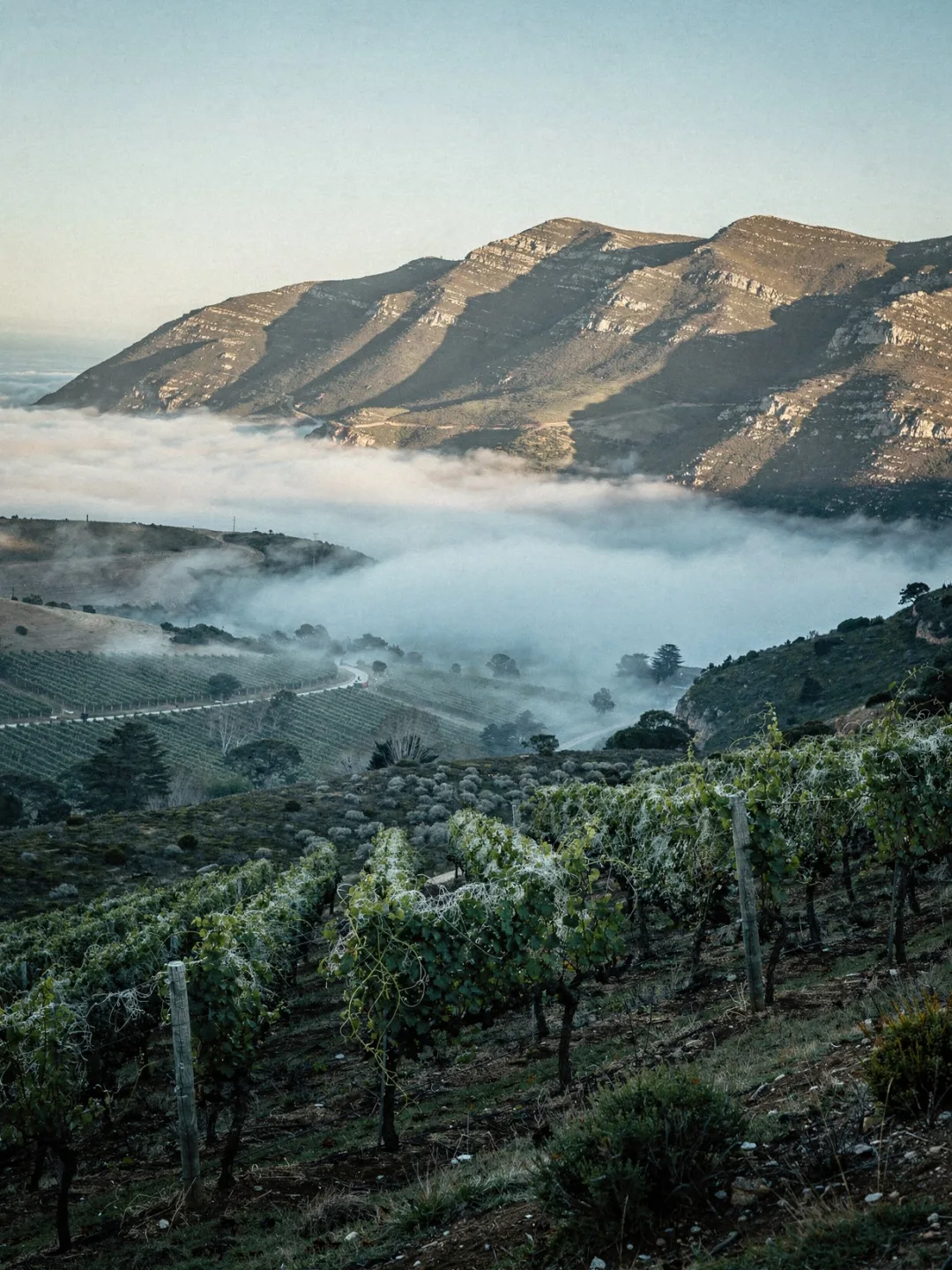
Off the coast of Walker Bay, the sea is colder than the map suggests. The Benguela Current brings water up from Antarctica here year-round, often only twelve to sixteen degrees Celsius, even in the height of the South African summer. When the prevailing southeasterly wind sweeps over this water, it cools down and carries that chill straight into the vineyards.
The Hemel-en-Aarde Valley is practically built for this. It runs east to west, exactly in line with the direction the wind comes from. The Kleinrivier Mountains to the south hold clouds and moist air in place instead of letting them simply drift on. As a result, this narrow strip often stays cooler and damper than land just a few kilometers further inland.
In summer, between December and February, the thermometer rarely climbs above twenty-five degrees Celsius, dropping to twelve to fifteen at night. This range is crucial. By day the berry ripens; by night the cool air slows the breakdown of acid, so the grapes stay fresh despite the sun. On top of that comes six hundred to eight hundred millimeters of rain a year, most of it falling between May and August, when the vines are dormant anyway.
Drive further inland and you quickly leave this coolness behind. In Bot River and Sunday's Glen, the mountains shield the sea's influence more strongly. Days there are hotter and nights milder, which is why Shiraz and Chenin Blanc ripen fully there, whereas in the valley itself they'd often stay pale and herbaceous.
Sometimes a single change in elevation is enough. On the Hemel-en-Aarde Ridge, which sits higher and more exposed than the valley below, the wind blows more freely, and the vines hang almost constantly in the breeze. Less moisture on the leaves means less fungal pressure, but also more stress on the berry. Winemakers there accept this trade-off deliberately, because it makes the grapes smaller and the flavors more concentrated.