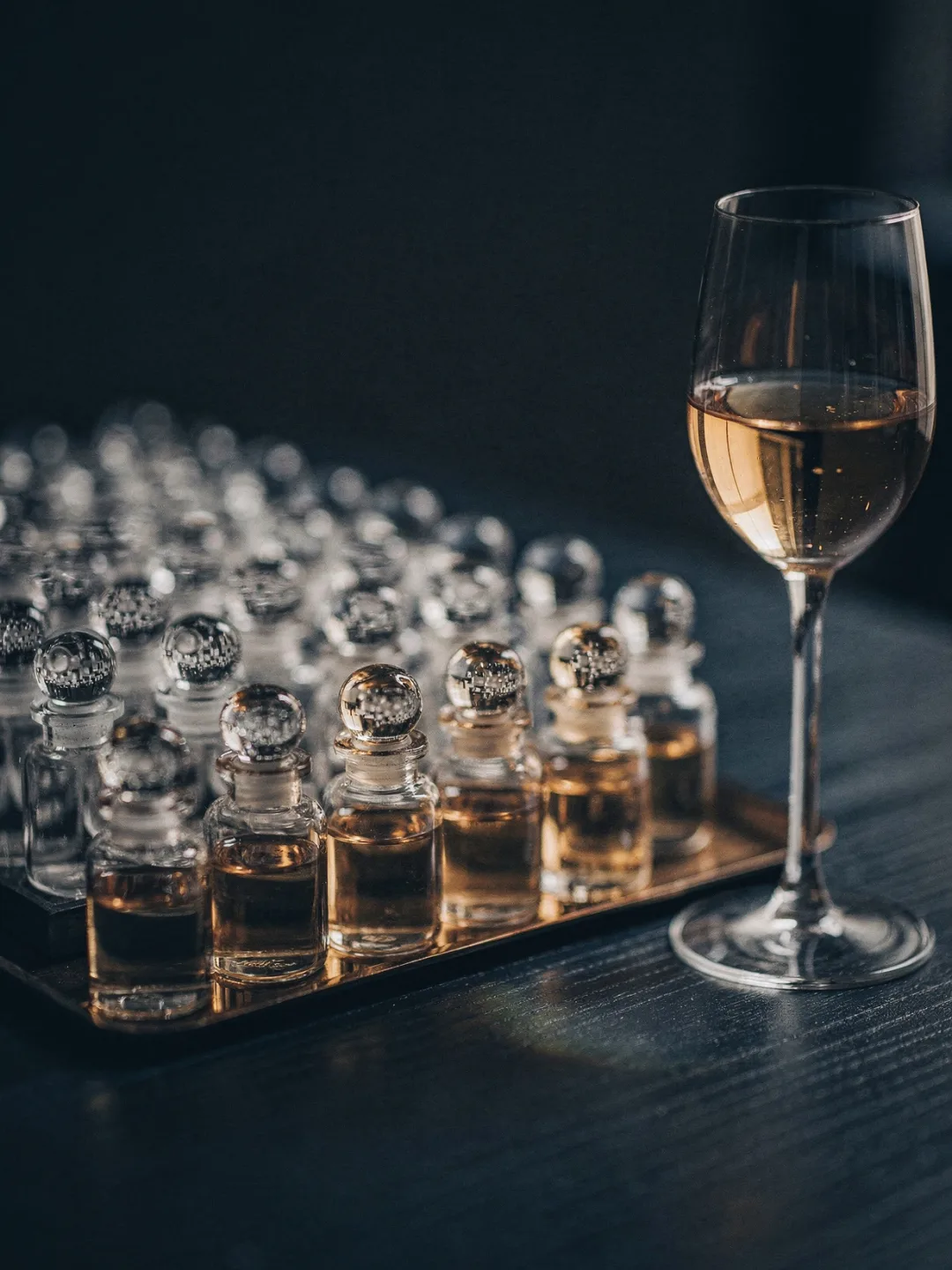
Eight Hundred Building Blocks
How Many Aromas Does Wine Have
Chemistry has already identified more than eight hundred individual aroma compounds in wine, and some studies count over a thousand. No one can pick them all out individually, and that is precisely where the real art of tasting lies.
What an Aroma Compound Actually Is
An aroma compound starts out as a fairly unspectacular chemical molecule: small, light, and above all volatile enough to pass into the air at room temperature. Only when such a molecule also stimulates one of the roughly four hundred olfactory receptors in the head does it become a scent at all. Chemists distinguish between substance groups such as esters, terpenes, aldehydes, and phenols, all of which smell differently and are perceived with differing sensitivity.
Each of these substances has its own detection threshold – the minimum amount at which a nose notices it at all. Some molecules can be detected at just a few nanograms per liter, an amount no lab in the world can see, only smell. Others go unnoticed until concentrations a thousand times higher are reached. These thresholds ultimately decide whether a substance contributes to a wine's aromatic profile at all, or remains chemically present but sensorially meaningless.
Where All These Substances Come From
The more than eight hundred known compounds come from three quite different sources. Some are already present in the ripe grape itself and are released during pressing – think of the floral terpenes in Muscat or the grassy pyrazines in Sauvignon Blanc. A second, often larger group forms only during fermentation, when yeasts convert sugar into alcohol and produce hundreds of by-products along the way, such as fruity esters. A third group forms only afterward, in barrel or in bottle, as the wine ages and slowly changes chemically.
This three-way split into grape, fermentation, and aging aromas is more than dry theory. It explains why a young Sauvignon Blanc smells of gooseberry almost before fermentation has even begun, while the toasty note of an aged red wine only develops after months in oak. The following stops on this journey trace exactly this sequence, from the grape through the fermentation tank to the dark wine cellar.
Why Only a Few Really Count
Even if a wine truly contains eight hundred different aroma compounds, no one will ever pick out more than a handful of them. The reason lies in a simple ratio that experts call the odor activity value: the actual concentration of a substance divided by its detection threshold. If this value falls below one, the substance is chemically detectable but invisible to the nose.
In most wines, only twenty to thirty compounds stay above this threshold, and often just five to ten particularly dominant key compounds determine the wine's character. These few key compounds give a Riesling its citrus note or a Syrah its peppery bite, while the remaining several hundred molecules resonate quietly in the background, never individually named by anyone.
Trainable Noses
The reason experienced tasters pick out more than beginners rarely lies in a better nose. Their olfactory cells work chemically exactly the same as anyone else's. The difference lies in the brain behind them: someone who has deliberately smelled blackcurrant a hundred times and remembered the scent recognizes it instantly in a wine, while an untrained palate perceives the very same note only as vaguely familiar, without being able to put a name to it.
This kind of training can be practiced deliberately, for instance with smelling samples from the spice rack or ready-made wine aroma kits. But more important than any expensive kit is the habit of consciously naming every scent encountered in daily life, from freshly cut lemon to warm toast at the breakfast table. This vocabulary is exactly what the next stop draws on, with a tool that has taught an entire generation of tasters how to put smells into words.
What This Number Means in Practice
A label rarely names more than three or four aromas. At first glance that seems sparse. But measured against the few genuine key compounds, it's actually pretty much spot on. Anyone who crams ten terms into a tasting note is often guessing more than actually smelling. A few clear words usually hit the mark better than a long list. Even professional tasters rarely settle on more than five or six terms per wine in the end. More words don't automatically mean more insight.
Numbers like eight hundred or a thousand still work well as marketing claims. They sound impressive, but say little about the wine actually in the glass. A consumer doesn't buy wine for its molecule count. They buy it for what their own nose actually picks up from it. So the number that matters is never the total count, but always this: which few compounds are really standing out right now? That's exactly the question the next stop answers, with a concrete tool proven over decades: the aroma wheel.