What bottle age creates
Tertiary aromas of maturity
A young Riesling smells of lemon; the same wine twenty years later sometimes smells of petrol. This isn't a flaw, but its own third chapter of wine aromas, one that only begins in the bottle: tertiary aromas.
Three layers, one sequence
Wine aromas can be roughly sorted into three layers, and this journey is deliberately structured the same way. Primary aromas are already present in the grape, like the fruit and floral notes of the middle stops. Secondary aromas develop in the cellar, through yeast, bacteria, and oak barrels. Tertiary aromas, finally, form only afterward, in the sealed bottle, with no further intervention from the winemaker.
Unlike in an open barrel, a sealed bottle has almost no oxygen available. Chemical reactions therefore proceed extremely slowly, over years rather than weeks, transforming the existing aroma compounds rather than adding many new ones. It's precisely this slowness that makes mature wines so different from young ones.
The petrol note in old Riesling
The best known of the tertiary aromas is one many people don't expect to find in wine at all: petrol or kerosene, typical of aged Riesling. It's caused by a compound called TDN, which forms from pigment precursors in the grape skin, though only after years in the bottle.
Warmth speeds up this transformation considerably: Riesling from very sunny sites or from bottles stored too warm often develops the petrol note after just a few years, while cool-stored bottles from cooler vineyards can take decades. In small doses, this note is seen as an exciting sign of maturity; in large doses, it can completely mask the actual fruit character.
Nuts, dried fruit, leather
Wines that mature deliberately under the influence of oxygen develop a completely different profile than those in a tightly sealed bottle. Sherry and Tawny Port, for example, age for years in only partially filled barrels, so oxygen is constantly reaching the wine. This produces a lot of acetaldehyde, a compound that brings out notes of walnut, dried dates, and caramel.
A red wine carefully sealed under cork matures quite differently, with practically no oxygen exposure. Here, over the years, notes of leather, forest floor, dried roses, or truffle tend to emerge instead, through slow reactions between tannin, pigments, and the remaining aroma compounds. Both paths are called maturation, but they lead to fundamentally different results.
How to recognize the right time for maturity
Not every wine is built for this journey at all. Ageability requires a certain backbone of acidity, tannin, sugar, or alcohol that keeps the wine stable for years while the aromas slowly change. Most everyday wines lack exactly this backbone, and they taste best young, with their fresh fruit intact.
Only a small proportion of all wines, usually with plenty of tannin, acidity, or residual sugar, actually gain depth over decades. A high price alone tells you little about this; what matters is the wine's inner structure. It's precisely this structure, especially acidity and tannin, that stands at the center of the next few stops on this journey.
How to recognize the right time for maturity
A glance into the glass often reveals more than the first sip. Young red wine shows a deep violet or purple at the rim; over time the color shifts through ruby to brick red and finally to a brownish edge. This visible transition usually runs parallel to the aromas developing in the bottle. The color of the label, or the appearance of an old label, can sometimes offer rough clues about storage conditions, but it never replaces your own nose.
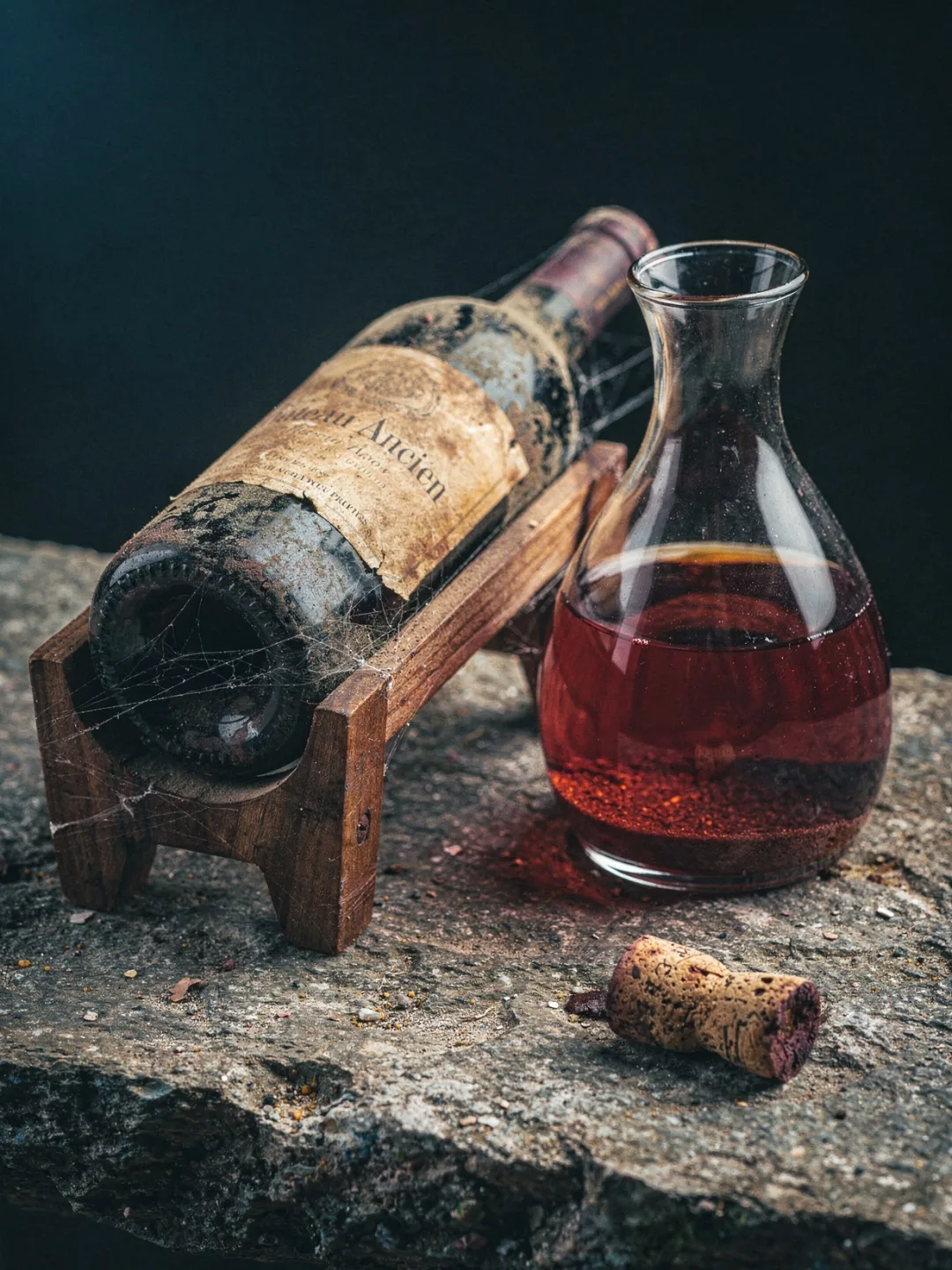
The cork itself offers a second clue. A dry, brittle cork lets in more air than a moist, elastic one, inadvertently speeding up exactly the kind of maturation this stop is about. That's why ageworthy wines are stored lying down, keeping the wine in constant contact with the cork.
Before actually drinking, decanting helps, especially with older red wines. Gently pouring the wine into a carafe separates the fine sediment of broken-down tannin from the clear wine, while also exposing it to a bit of oxygen. Too much air at once, though, can quickly exhaust a very old, delicate wine. If in doubt, it's better to open a bottle too early than too late.