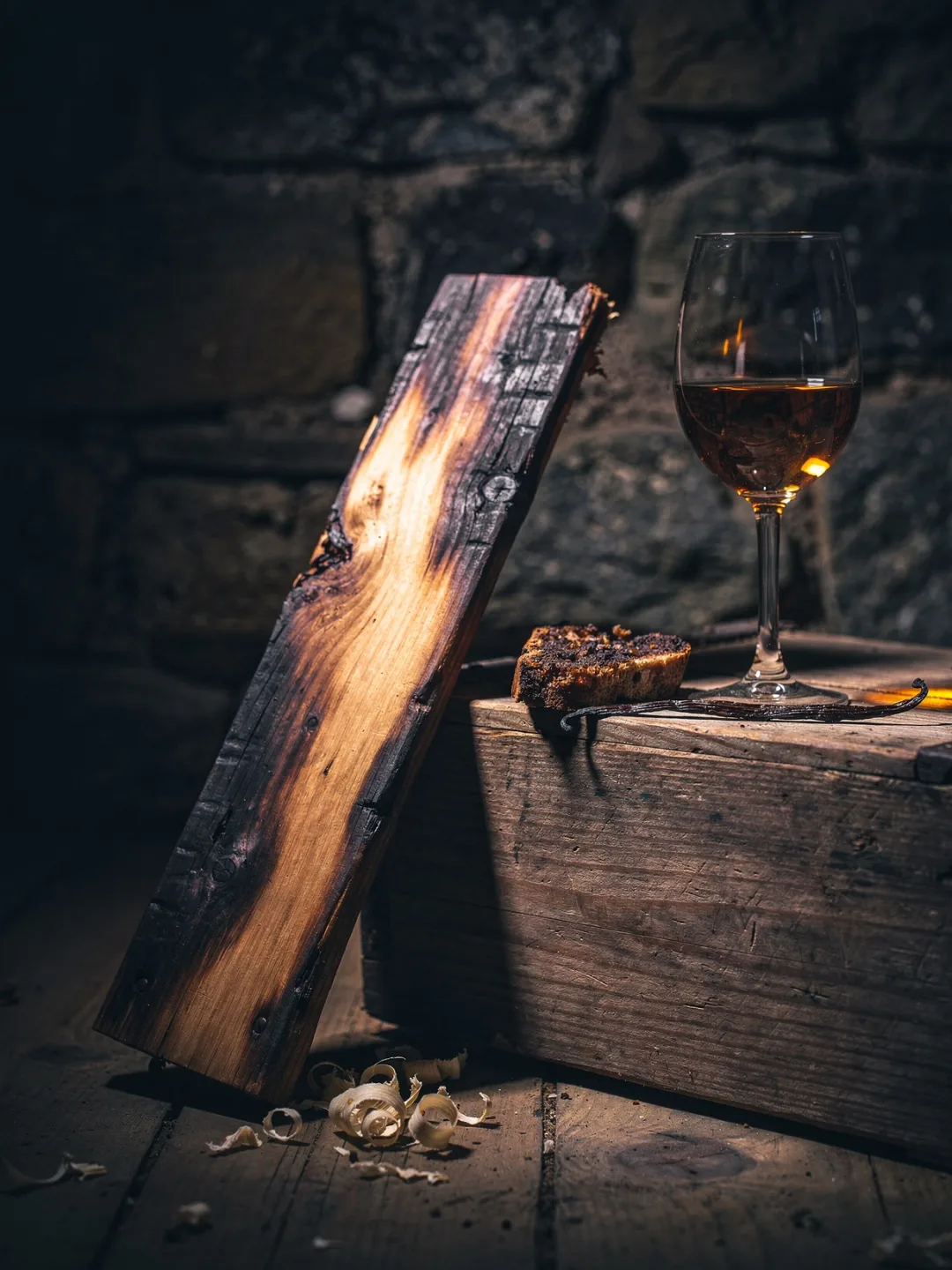
Vanilla and toast
Wood aromas
No vine produces vanilla. The scent of vanilla, coconut, or toasted bread found in many red wines and some white wines almost always comes from the same source: the oak barrel in which the wine was aged.
Why oak in the first place
Oak barrels actually came into their present role by chance. Celts and Romans originally used them simply as sturdy, easy-to-transport containers, with no particular thought given to flavor. Only over the centuries did winemakers notice that wine from such barrels tasted different from wine aged in clay or stone, and began using the wood deliberately.
Today, wineries mainly use two types of oak. French oak grows tightly and evenly, and its wood tends to impart fine spice notes with little direct vanilla. American oak grows faster and more loosely, but contains significantly more so-called oak lactones, the compounds responsible for the pronounced coconut and vanilla notes typical of American oak-aged wines.
Toasting makes the difference
Before a new barrel ever sees wine, the cooper holds its interior over an open flame, a step called toasting. The heat generates entirely new compounds from the wood itself. Vanillin smells like vanilla, guaiacol lends a smoky note, and furfural is reminiscent of roasted almonds.
Depending on the desired style, winemakers choose between light, medium, or heavy toasting. A lightly toasted barrel mainly imparts subtle spice. A heavily toasted one, on the other hand, delivers pronounced roasted and smoky notes that often come across in the finished wine as dark chocolate or freshly baked bread. The difference lies as much in the fire as in the wood it prepares.
How much barrel really ends up in the wine
How strongly a barrel ultimately shapes its wine depends mainly on two things: its age and its size. A brand-new barrel releases the bulk of its aromatic compounds already in its first fill. After two to three years, a barrique is largely spent aromatically and functions mainly through the slow oxygen exchange via the wood's pores.
Size matters too. A classic barrique holds around two hundred and twenty-five liters, giving it a lot of wood surface per liter of wine. Large barrels, known as foudres, shift that ratio strongly in favor of the wine, holding several thousand liters. Anyone seeking maximum oak flavor at minimum cost instead turns to oak chips or staves in a steel tank, a much cruder shortcut lacking the fine oxygen control of a real barrel.
When wood overpowers the fruit
In the 1990s and early 2000s, bold new oak was widely considered a mark of quality in many places, and some wines ended up smelling more of the cooperage than of their own grape. Critics accused such wines of letting the vanilla and roasted notes completely overshadow the actual fruit, when they were only meant to accompany it.
Since then, the trend has noticeably shifted: more used barrels instead of new ones, larger vessels instead of small barriques, and in some cases even concrete or clay vessels with no wood flavor at all. These vessels provide a texture similar to a barrel, but without vanilla or toast. That's a second, wood-free route to the very richness that yeast contact, discussed earlier, can also provide.
Where the wood comes from
Not every oak comes from the same forest, and that's more than a footnote. French barrels often come from specific forest areas used for centuries, such as Tronçais or Allier, known for their especially fine, tight grain. American barrels usually come from the forests of Missouri, Kentucky, or Arkansas, where growth is noticeably faster. A label reading "French oak" or "American oak" actually gives you a genuine clue as to the style you can expect.
Cooperages increasingly promote the precise origin of their wood, much as winemakers do with their vineyard sites. This isn't pure marketing: a forest's soil, climate, and growth rate genuinely influence how much aroma and how much tannin a barrel will later impart. A winemaker aiming for a particular result therefore often chooses a barrel as deliberately as a vineyard plot.
Some wineries deliberately blend several origins and toast levels within a single bottling: part new French oak for structure, part older American barrel for subtle sweetness. The result is an overall picture no single barrel could achieve alone. The drying time before a barrel is even built also plays a role. Two to three years in the open air break down bitter tannins in the wood before it's even planed and bent. Wood that's dried too hastily often passes that bitterness straight through into the wine later on.