Drink of the Gods
Egypt and Mesopotamia
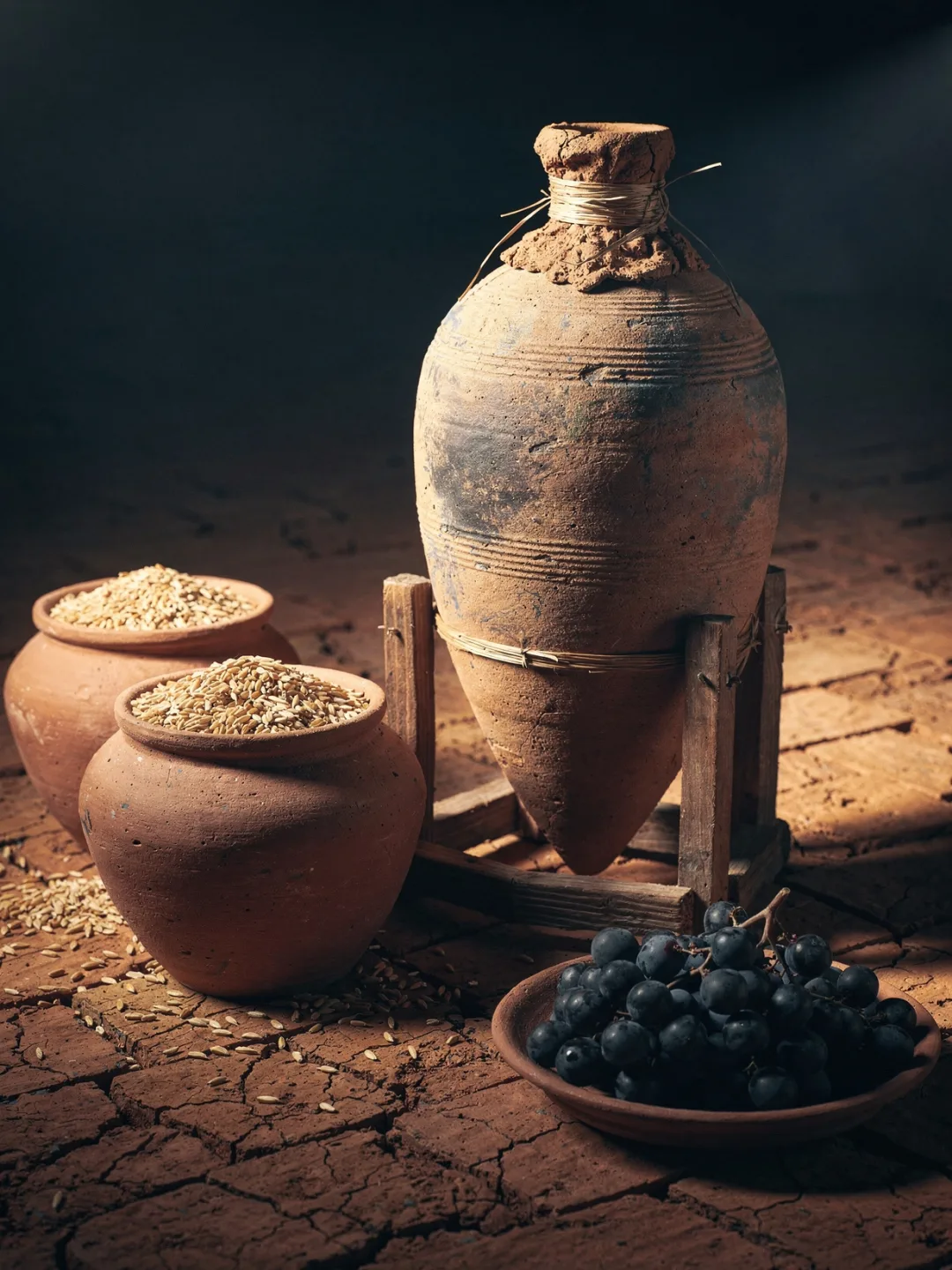
While mostly barley beer flowed in Mesopotamia, Egypt's pharaohs drank wine from the Nile Delta. Tomb paintings depict the harvest, pressing, and bottling in detail. Wine there was a luxury good for the upper class and an offering to the gods, not an everyday drink for everyone.
Why Mesopotamia Stuck with Beer
In the hot, dry south of Mesopotamia, the grapevine struggled to grow. The Sumerians therefore turned mainly to barley beer, easily made from the region's abundant grain. By some estimates, a significant portion of the annual grain harvest went directly into beer production, since both bread and beer were considered dietary staples. Wine didn't disappear alongside it, though; it simply arrived in cities mostly from further north.
Cities like Nineveh and Tell Brak in the north cultivated vines. From there, they shipped wine down the Euphrates and Tigris to Ur and Uruk. There it reached mainly palaces and temples, rarely ordinary households, since transport made it expensive. The Epic of Gilgamesh, one of humanity's oldest surviving stories, mentions wine as well. In one version, the hero drinks it instead of beer once he reaches the edge of the known world. For the Sumerians, wine thus represented something foreign and special, affordable only to the powerful.
Pharaohs and the Vineyard by the Nile
In Egypt, the situation was different. Wine grew well in the Nile Delta. From around 3000 BC onward, tomb wall paintings show in detail how workers picked grapes, trod them underfoot, and poured the juice into large clay vessels. These images weren't art for art's sake. They were meant to guarantee the deceased the same pleasures in the afterlife they'd enjoyed in life, and were therefore treated as serious religious provisioning.
In Egypt, wine was reserved almost exclusively for the upper class and priesthood. Ordinary people mostly drank beer, similar to Mesopotamia, while wine flowed at royal courts and in temples. For rituals and as grave goods for pharaohs, however, it was indispensable, since it was believed to connect them to the world of the gods. Some tombs contained dozens of amphorae, filled and sealed for a life after death that, according to Egyptian belief, resembled earthly life. In the tomb of the young King Tutankhamun, for instance, archaeologists found several labeled wine jars, even though the ruler died as a teenager.
Early Labels on Clay Vessels
It's remarkably modern how precisely the Egyptians labeled their wine. On many amphorae, ink inscriptions recorded which vineyard the contents came from. Often the vintage year was also noted, and sometimes even a rough quality grading. A palace administrator could organize stock this way, much as a label today reveals origin and vintage.
These inscriptions are one reason historians know so much about Egyptian wine. They allow individual vineyards along the Nile Delta to be traced back over several centuries, and even let scholars distinguish good vintages from weak ones. Without this early form of record-keeping, a great deal of this knowledge would have been lost forever.
Two Cultures, One Shared Heritage
Mesopotamia and Egypt show how differently two neighboring regions approached the same drink. One empire built its drinking culture mainly on grain, the other on the vine. Both paths converged via trade routes, as Egyptian wine traveled across the Mediterranean while Mesopotamian wine traveled south along the rivers. Merchants were already connecting far-flung regions this way four thousand years ago.
For the further history of wine, one connection proved especially decisive: the exchange with the Levant and later with Crete and mainland Greece. From there, the vine spread further west, into regions that would soon make wine a fixed part of their daily life and festivals. Phoenician traders sailed the sea with vine stocks and wine amphorae aboard, planting new vineyards along many Mediterranean coasts long before Rome was even founded. The next stop on this journey begins right there, on the eastern edge of the Mediterranean, with a people who turned wine drinking into an art form of its own.