Wine and Water
The Greeks and Their Symposium
The Greeks almost never drank wine undiluted. They mixed it with water in large vessels. In doing so, they celebrated the symposium, a carefully structured drinking gathering with conversation, music, and set rules. Through their trading ships and colonies, they carried viticulture across the Mediterranean, from Sicily to southern France.
The Krater at the Center of the Room
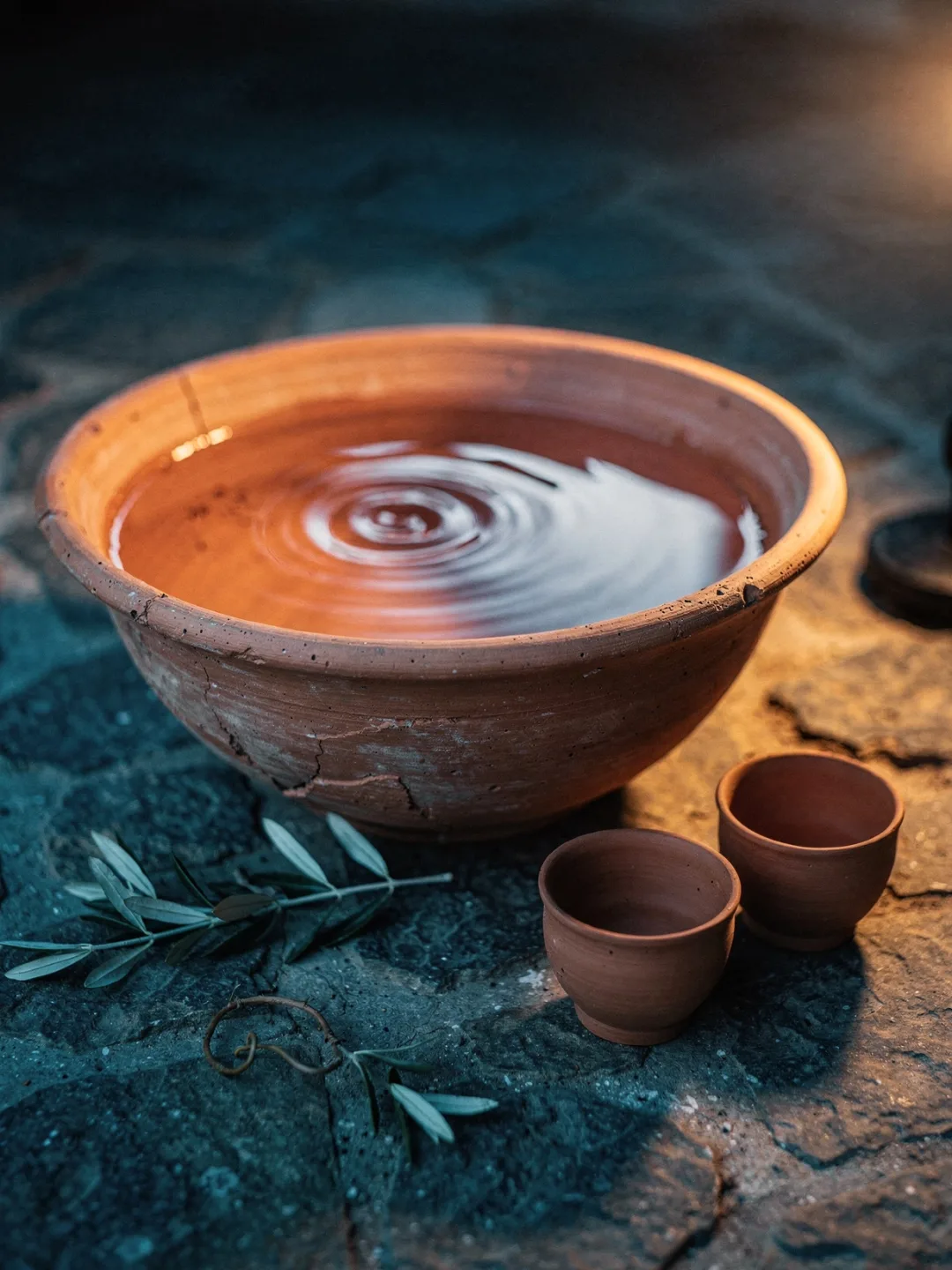
At the heart of a Greek drinking party stood a large mixing vessel, the krater. In it, a host diluted wine with water, often at a ratio of one part wine to two or three parts water. Anyone who drank wine unmixed was considered uncivilized, even barbaric, an accusation directed mainly at their northern neighbors. The dilution was more than mere etiquette; it also kept guests sober enough for serious conversation for longer.
A symposiarch set the mixing ratio and the number of rounds for the evening. This was usually the host or a participant chosen by lot. This allowed a festivity to be managed that might otherwise have quickly spiraled out of control. Wine was drunk from fine cups, the kylikes, in convivial company, while poets recited verses and philosophers such as Plato later turned the symposium's conversation into a literary model. Before the first round began, a bit of wine was usually poured onto the ground for the gods. This small offering was never missing from any celebration.
Dionysus and the Religious Framework
Behind the sociable drinking stood a dedicated god, Dionysus. Multi-day festivals were held in his honor, from which Greek theater itself would later develop. Wine was thus far more than an indulgence; it connected drinkers to a religious experience that temporarily released control. Followers paraded through the streets with wine jugs, masks, and music. For one moment each year, the city's otherwise strict order was allowed to tip over.
This double role, on one hand a strictly regulated social ritual, on the other a religious intoxication, shaped the Greek relationship with wine for centuries. Loss of control was feared, yet celebrated at the same time, during clearly defined moments of the year.
Colonies Carry the Vine Across the Sea
From the eighth century BC onward, Greek settlers founded colonies all around the Mediterranean, stretching from southern Italy across Sicily to Marseille in what is now France. Wherever the Greeks settled, they brought vine cuttings with them and planted new vineyards. The Romans later even called southern Italy Oenotria, the land of the staked vine, because so much wine grew there.
Through these colonies, the Etruscans and eventually the Romans also learned systematic viticulture. They developed it further on their own and eventually carried it much further north. Amphorae from this era often come from sunken trading ships in the Mediterranean. They show just how far wine was already being traded at the time, often across hundreds of kilometers of sea route.
To ensure wine survived the long sea voyage unharmed, many traders mixed pine resin or herbs into it, which made it more stable while also changing its flavor. Out of this old necessity emerged, indirectly, a Greek specialty that still exists today: resinated wine, known in Greece as Retsina, an echo of that ancient seafaring even on modern supermarket shelves.
What Remains of This Legacy
Many foundational ideas of Greek drinking culture still resonate today, even though hardly anyone mixes wine with water anymore. The notion that drinking belongs to conversation and a fixed gathering still shapes wine tastings and sociable evenings. The word symposium also lives on, though today mostly for professional conferences, far removed from its original, wine-soaked meaning.
Above all, though, the Greeks were the first to spread an image of wine as a cultural asset, tied to taste, rules, and pleasure, and deliberately keeping intoxication within limits. The Romans adopted this image. They expanded it into an even larger system that eventually covered an entire continent with vines. Without Greek colonists, vineyards in southern Italy, Sicily, and southern France would likely have emerged only centuries later, if at all.