Trade Drives Wine
The Hanseatic League, Bordeaux, and England
In the Middle Ages, wine became one of Europe's most important trade goods. Two examples show how closely politics and the wine trade were intertwined at the time.
A Marriage Makes Bordeaux English
One is the Hanseatic League in the north, an alliance of trading cities. The other is the centuries-long bond between Bordeaux and England, which arose from a single marriage. On May 18, 1152, Eleanor of Aquitaine married the young Henry Plantagenet, who became King Henry II of England two years later. Through this marriage, all of Aquitaine, and with it Bordeaux, fell under English rule for nearly three hundred years. This had enormous consequences for the region's wine economy. The English market opened up virtually overnight to wine from the countryside around Bordeaux.
The English called this pale, light red wine Claret, and it became an everyday drink at the English court and in trading cities like London. Even Richard the Lionheart, son of Eleanor and Henry, is said to have regularly drunk Bordeaux wine. Bordeaux remained economically stable and grew as long as the English crown stood as a reliable buyer. This laid the foundation for the city's reputation as one of the world's most important wine regions. Even after France reclaimed the region in the fifteenth century following the Hundred Years' War, English taste for Bordeaux wine persisted and kept the trade going for centuries more.
The Hanseatic League Ships Wine Through the North
Further north, the Hanseatic League organized trade between the North Sea and the Baltic. It was a loose alliance of merchants and cities such as Lübeck, Hamburg, Cologne, and Danzig. Wine from the Rhineland, Alsace, or Franconia was among the goods shipped along Hanseatic routes all the way to Scandinavia, the Baltic region, and England.
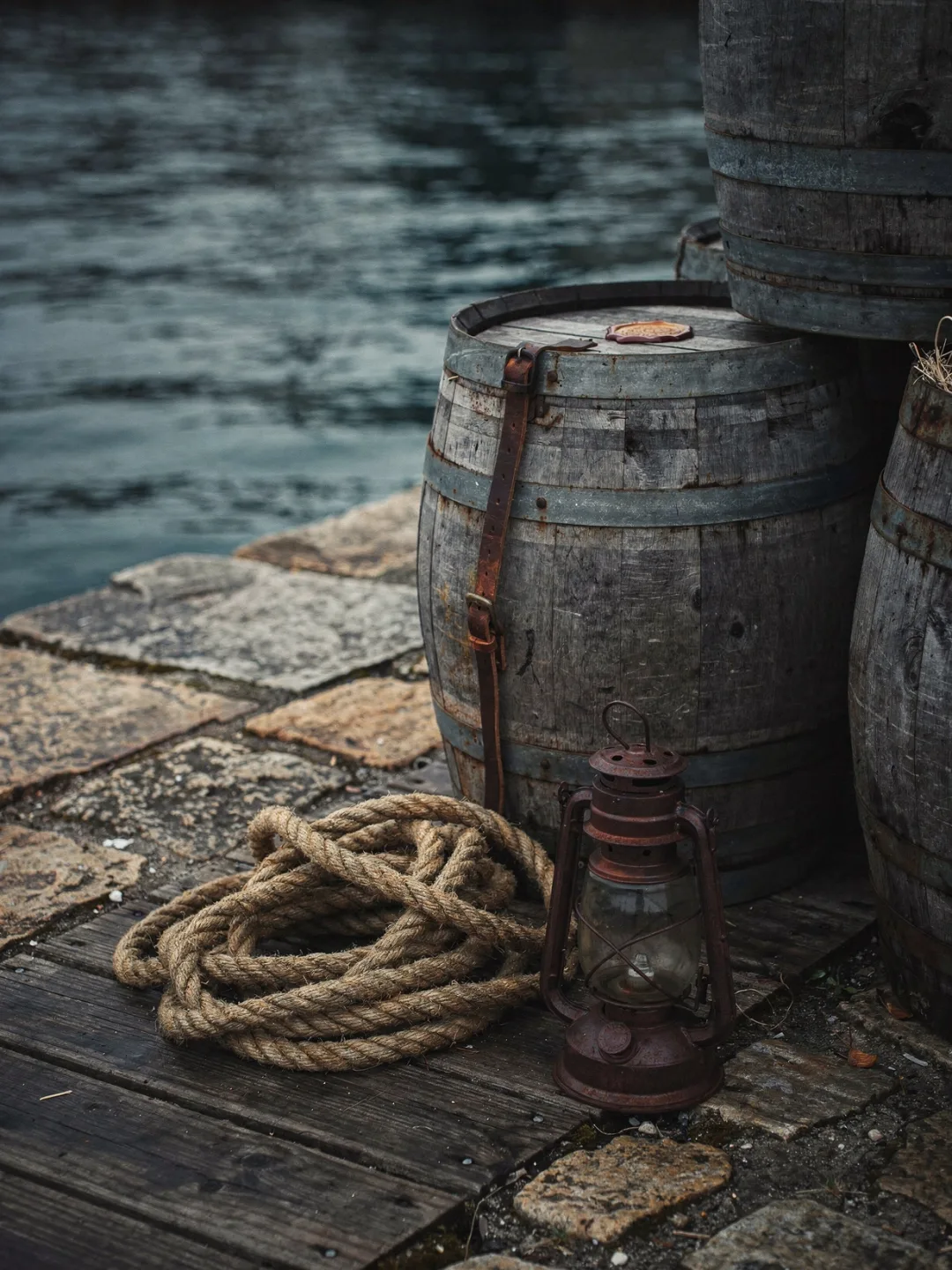
For wine to survive such long stretches on the open sea, it needed sturdy barrels and fixed standard measures. Only this way could buyers know exactly how much they were actually receiving. Cities therefore established precise barrel sizes and customs rules, with their own inspectors who checked quality and quantity before a shipment could even be loaded. Anyone caught cheating risked their reputation within a network built on mutual trust between trading partners. Once lost, a reputation was nearly impossible to restore within this tight web of cities. Merchants often did not travel with their goods themselves but relied on written contracts and steady partners in every port city along the route.
Customs, Measures, and the Power of Trade
Wine became so important in the Middle Ages that cities and rulers turned it into entire sources of revenue. Road tolls, staple rights, and market levies on wine barrels filled the coffers from Bordeaux to Cologne and financed city walls, churches, and town halls. Whoever controlled the wine trade controlled a piece of economic power that reached far beyond the drink itself.
At the same time, early rules emerged that can be read as forerunners of today's designations of origin. Buyers wanted to know whether a barrel truly came from Bordeaux or the Rhine, and not from some lesser region merely posing as such. Cities began to officially certify origin and quality long before any written wine law existed in the modern sense. In Bordeaux, for example, certain wines were only permitted onto the market after the harvest from the city's own territories, an early privilege that artificially delayed outside competition and protected local trade.
A Trade Network That Shaped Europe's Taste
Through the Hanseatic League and Anglo-French trade, a network of preferences emerged that still has an effect today. England remained one of the most important markets for Bordeaux for centuries, while the Rhine supplied northern and eastern Europe with white wine. These early trade flows partly explain why certain regions remain especially known for certain markets to this day.
By the end of the Middle Ages, wine stood as an established, well-traveled trade good, packed in sturdy barrels and protected by municipal controls. What was still missing was a vessel that could let it age in one's own cellar for years, rather than merely transport it. This exact vessel emerged in the next stop on this journey.