Knowledge Behind Walls
Monks and Monasteries
When the Western Roman Empire fell apart, much of the order that had organized winemaking disappeared with it. For centuries, monasteries above all kept alive the knowledge of vines, pressing, and storage. Monks needed wine for Mass and turned it into a craft.
Wine for the Altar, Wine for Everyday Life
Without these ecclesiastical estates, a substantial part of ancient knowledge would likely have been lost. No one else had the means and the patience for it. In Christian liturgy, wine represents the blood of Christ and is therefore an essential part of every Mass. Monasteries thus had to ensure they always had their own reliable wine, independent of harvest fluctuations or uncertain trade routes. This religious necessity gave winemaking a stability in politically turbulent times that secular estates often lacked.
Charlemagne further promoted winemaking in the Frankish realm from the late eighth century onward through decrees. Among other things, they obligated monasteries and bishoprics to establish vineyards. This meant winemaking was no longer left to chance but became a planned task carried out over generations by ecclesiastical institutions. Royal orders of this kind even covered technical details such as harvest timing and pressing methods, showing how seriously the matter was taken at court.
Benedictines, Cistercians, and the First Study of Plots
Benedictine monasteries already owned their own vineyards and cellars in the early Middle Ages, often spread across several regions, from southern Germany to Champagne. Later, the Cistercians, a reform order, proceeded even more systematically. From the twelfth century onward, they established their own monasteries in remote landscapes of Burgundy. Their monks lived by hard physical labor, including work in the vineyard. Over decades, they carefully observed which plots produced better grapes than their immediate neighbors. This observational work was tedious and far from glamorous, yet it laid the foundation for knowledge that extended far beyond any single monastery.
Out of this observation, an idea gradually emerged: a particular piece of land produces its own recognizable character in the wine, regardless of the winemaker. This idea still forms the basis of the French concept of terroir today, and ultimately of modern systems of origin that legally distinguish between vineyard sites.
Clos de Vougeot: A Wall Around Knowledge
Between 1109 and the early fourteenth century, the Cistercians in Vougeot, Burgundy, acquired or received land piece by piece, until around the year 1336 a complete wall enclosed the entire area. The result was the Clos de Vougeot, which at just over fifty hectares remains the largest single Grand Cru vineyard in Burgundy to this day.
Within this single wall, the monks built up precise knowledge over centuries of how soil, slope, and sun exposure could differ even within the smallest of spaces. Only the French Revolution ended monastic ownership, when the state confiscated Church property and sold off the site. The knowledge itself, however, survived this break and still influences today's classifications. Until 1889, the site remained in a single owner's hands. After that, an increasing number of owners came to share the same wall, today numbering well over eighty.
What the Monks Left Behind for Posterity
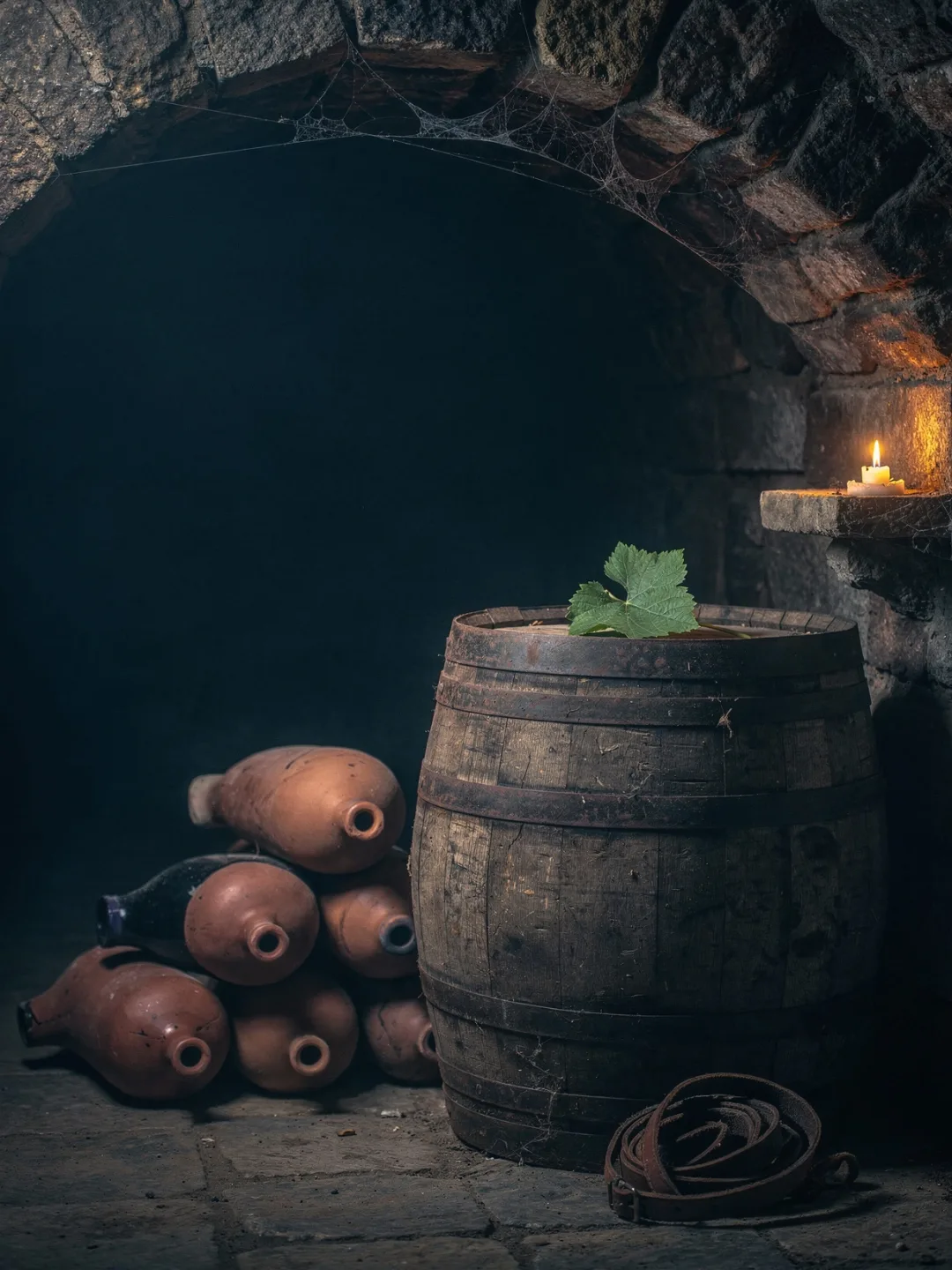
Alongside cultivation, monasteries also improved cellar technique, with longer aging in cool vaults, more careful pressing, and more systematic record-keeping of vintages and yields than most secular estates of the time. Many of Europe's finest vineyard sites, from Burgundy to the Rheingau, trace their origins back to monastic ownership. Even the names of some wine estates still recall this heritage today, even though the monks themselves have long since disappeared.
As the Middle Ages progressed and long-distance trade became safer again, wine increasingly left the monastery walls. It became a trade commodity that made entire cities and alliances wealthy. Merchants took over what monks had built up over centuries and turned it into a cross-border business. The next stop on this journey picks up exactly there.