Storing leftovers properly
Storing leftovers
An opened bottle isn't a lost cause. Sealed properly and kept cool, wine often lasts longer than most people think, even if it never quite tastes the same as it did on opening night.
Why wine turns after opening
Once a bottle is open, oxygen gets in and changes the wine step by step. Fruit turns duller, colour deepens, and over time vinegary notes emerge as bacteria slowly convert the alcohol into acetic acid. This process happens with every wine, but the speed varies enormously.
Bold, tannic red wines resist oxygen longer than delicate white wines, because tannins and pigments form a kind of protective layer of their own. A light, fruity white, on the other hand, can noticeably lose its freshness after just two days, while a robust red barely changes in the same time.
Fridge storage works for red wine too
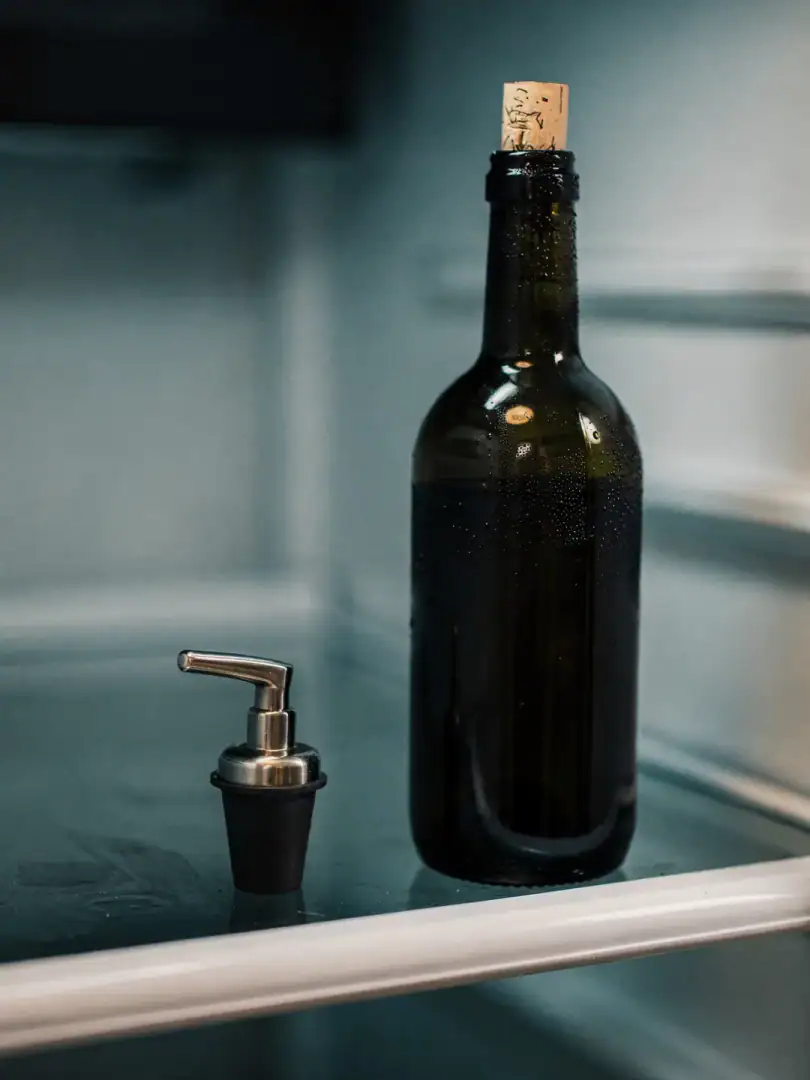
Cold slows both the chemical reaction with oxygen and the growth of unwanted bacteria. That's why every opened bottle belongs in the fridge, red wine included, which surprises many people. Put the cork back in the bottle, upside down if necessary should it be too dried out to fit properly.
Before pouring the next glass, simply take red wine out of the fridge twenty to thirty minutes early so it can come back closer to the ideal serving temperature. This small extra step costs almost no effort and noticeably extends the wine's life compared with a bottle left open at room temperature on the counter.
How long each type lasts
Most still wines, whether red or white, keep in the fridge with a good seal for about three to five days before the flavour noticeably fades. Fortified wines like Sherry or Port are more resilient: their higher alcohol content holds bacteria at bay so effectively that they often remain enjoyable for weeks, even without special care.
Sparkling wine is the most delicate case of all. Even with a special sparkling wine stopper that keeps some pressure in the neck of the bottle, it loses much of its fizz within a day or two. Without a proper stopper at all, an open sparkling wine is often noticeably flat by the very next morning.
Tools and the smell test
Vacuum pumps draw some of the air out of the bottle, slowing oxidation, but they never achieve a true vacuum. Sprays with nitrogen or argon instead settle over the wine as a heavy, inert layer. They shield it more effectively, since these gases barely react with the wine at all.
Before topping up your glass, it's always worth doing a quick smell test right at the neck of the bottle. If the wine smells like vinegar, nail polish remover, or simply nothing at all, the rest belongs down the drain, not in the glass. This holds true no matter how good the bottle once was.
Putting leftovers to good use
A wine that no longer convinces for drinking doesn't have to go straight down the sink. Slightly oxidised red wine still works well for cooking, say in a sauce or a braise, since heat transforms many of the off-putting aromas anyway. Only wine that's clearly spoiled and vinegary really needs to go, even from the kitchen.
Leftover sparkling wine can be frozen and thawed later in portions for sauces or risotto, rather than simply pouring flat fizz down the drain. Small ice cube trays work particularly well for this. That way you can take out exactly the amount a recipe calls for, without having to thaw the whole portion.
Large bottles and small households
In a one- or two-person household, more than half a bottle is often left over after an evening, especially if only a single glass was poured. This is where smaller bottle formats, like the half bottle, come in handy. They're less likely to be left half-finished, since their volume better suits a small gathering from the outset.
Where such smaller formats aren't available, a simple trick helps: transfer the leftover wine into a smaller bottle immediately after opening, filling it right to the top. Less air in the neck means less oxygen to react with the wine, and that means noticeably longer shelf life for the rest of the week. Such bottles also come in handy as gifts, since no one has to hand back a half-full bottle.