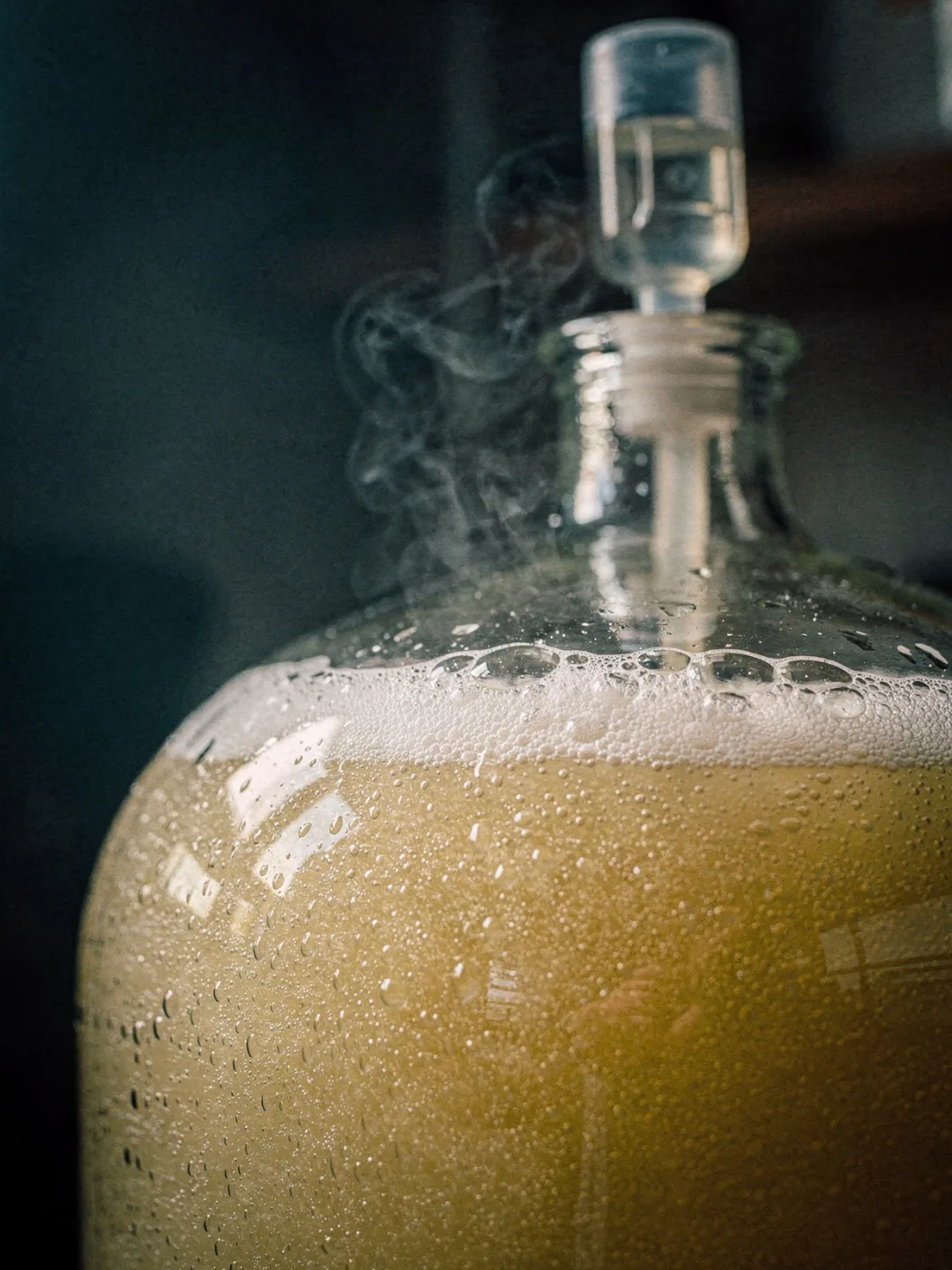
Sugar Becomes Alcohol
Fermentation and Yeast
Without yeast, there would be no wine, just sweet grape juice. Only when tiny yeast organisms convert the sugar in the must into alcohol and carbon dioxide does juice become wine. Which yeast does the work has a decisive influence on the finished wine's flavor and aroma.
What yeast actually does during fermentation
Yeasts are single-celled fungi. They occur everywhere in nature, including on the skins of ripe grapes. As soon as they have access to sugar and oxygen becomes scarce, they begin breaking the sugar down into alcohol and carbon dioxide gas to generate energy. As a rough rule of thumb, about seventeen grams of sugar per liter of must yields roughly one percent alcohol by volume in the finished wine. Grape variety, yeast strain, and temperature can all shift this figure slightly.
Alongside alcohol and carbon dioxide, fermentation produces hundreds of other compounds in tiny amounts. These include fruity esters and spicy phenols that help shape a wine's aroma. That's why the same grape juice, fermented with two different yeasts, ends up tasting noticeably different. Chemically, the same thing is happening at the core in both cases: sugar becomes alcohol. Fundamentally, that's all fermentation really requires.
Wild yeast or cultured yeast from the lab
Some winemakers let the must ferment spontaneously, relying solely on the yeasts already present on the grapes and in the cellar. This often produces more complex, individual wines. Rather than a single yeast strain doing the work, many different strains become active one after another. The downside: spontaneous fermentation is less predictable. In rare cases it can produce unpleasant off-flavors or stall altogether.
The alternative is cultured yeast, strains specifically selected and dried in a laboratory, then added deliberately to the must. They start fermentation reliably, often within just a few hours rather than days. They work predictably at specific temperatures and can be chosen for a desired aroma profile, whether especially fruity or particularly neutral. Many larger producers rely on cultured yeast for exactly this reason. Smaller estates focused on individuality, on the other hand, often deliberately stick with spontaneous fermentation. Both approaches have a firm place in the market.
Temperature controls speed and aroma
How quickly and how long a fermentation lasts depends heavily on temperature. In cool conditions, yeasts work slowly. A fermentation can then stretch over several weeks, but more delicate aroma compounds are preserved as a result. At warmer temperatures, everything happens faster, often within just a few days, producing bolder, sometimes less refined aromas. Cellar masters therefore control temperature deliberately using cooling jackets or heating coils on the tanks. Without this control, every fermentation would be left to chance.
Too much heat can even bring a fermentation to a complete halt. If the yeasts die off from heat or from too much alcohol before all the sugar has fermented, the result is what's called a stuck fermentation, leaving unwanted residual sweetness behind. That's a costly mistake. In the worst case, such wines have to be reinoculated or restarted with fresh yeast, which costs extra time and careful attention in the cellar.
When the sugar runs out
Fermentation ends on its own once either all the fermentable sugar has been consumed or the alcohol level rises high enough that it kills off the yeast itself. That usually happens somewhere between fourteen and sixteen percent. A wine with no deliberately retained residual sugar is then considered fully fermented and dry. Winemakers who want a certain sweetness, by contrast, stop fermentation earlier, whether through cooling, filtration, or the addition of alcohol. This leaves part of the sugar unfermented, and the wine retains its natural fruit sweetness.
With the end of alcoholic fermentation, a wine is technically finished, but rarely yet in balance. A second, quieter fermentation process still awaits most red wines and some white wines: malolactic fermentation. It softens a wine's sharpest edge of acidity, without producing any alcohol at all. That's exactly what comes next.