Aromas from Oak
Oak Barrels: Barrique and Foudre
A wooden barrel is never just a container. It imparts aromas ranging from vanilla to roasted coffee into the wine and lets in tiny amounts of oxygen. Whether it's new or old, small or enormous, determines just how strong this effect turns out to be.
Barrique: Small, New, Intense
At two hundred twenty-five liters, the barrique is the smallest commonly used wine barrel. It originated in Bordeaux, where this size became the standard in the nineteenth century. One reason was practical: a single dockworker could just about move a full barrel of this size on his own. In neighboring Burgundy, the traditional barrel size is only slightly larger at two hundred twenty-eight liters. There it's called a pièce and is shaped a bit shorter and rounder. Both shapes became established over centuries in their respective regions because they stack and transport well.
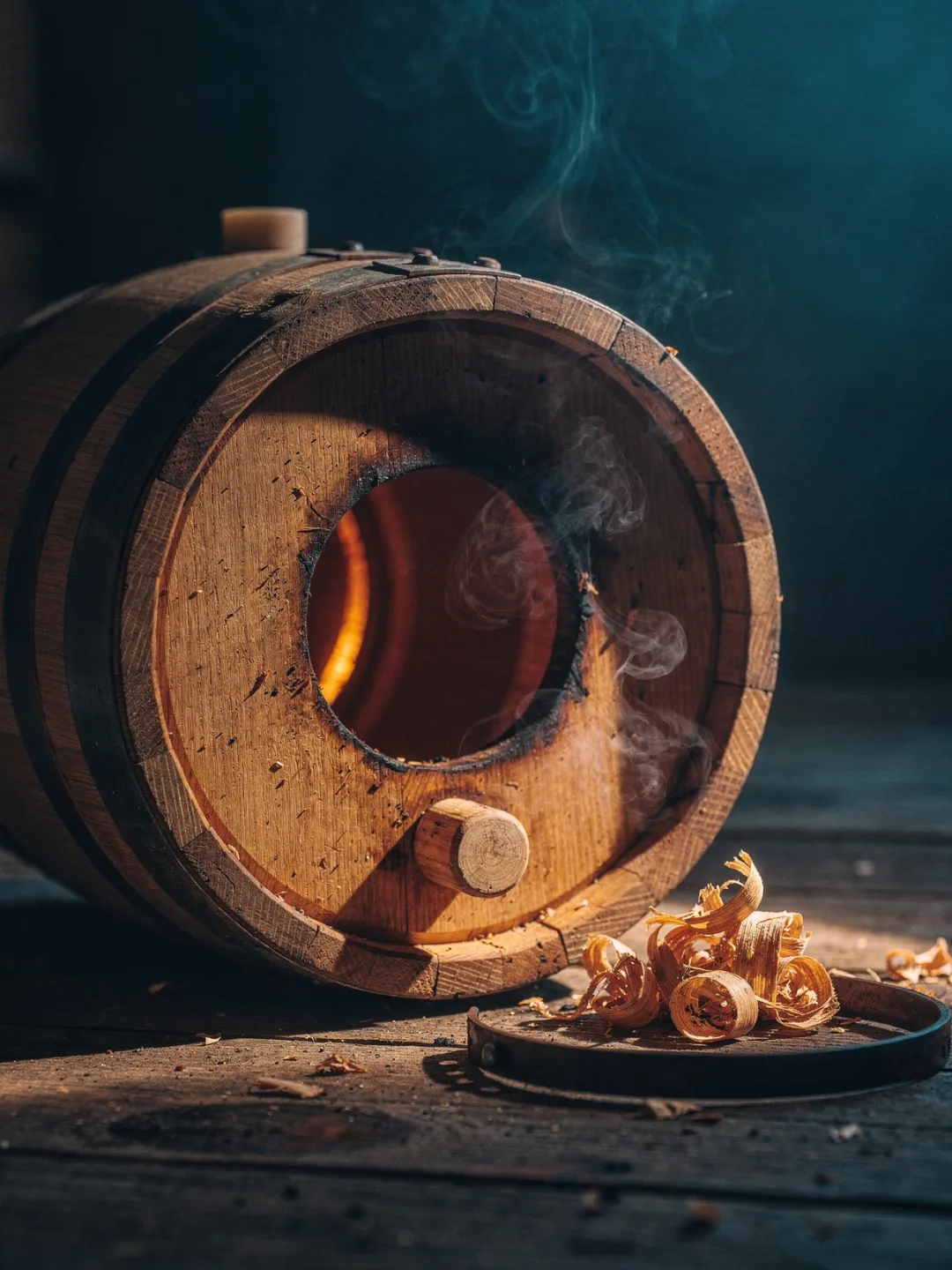
Before a wooden barrel is filled, the cooper lightly chars its interior with an open flame, a process called toasting. Different degrees of toast produce different aromas. A light toast tends to give more vanilla and spice notes. A heavy toast, on the other hand, leans more toward smoke, coffee, and caramel. Because a barrique is small, the wine inside has a lot of contact with the wood surface relative to its volume. As a result, its aroma transfers to the wine especially quickly and strongly, often noticeably so within just a few weeks.
Foudre: Large, Often Old, Restrained
A foudre is a large wooden vessel, often holding several thousand liters. It's sometimes made of oak, sometimes of other woods like chestnut, and is frequently used in the same cellar for decades. Its volume is much larger relative to its surface area compared to a barrique. As a result, the wine inside has significantly less contact with the wood per liter, measured by the surface area allotted to each individual liter of wine. Its aroma contribution is correspondingly more restrained.
On top of that, barrels lose aromatic compounds with each use, since the outermost, most aroma-rich layers of wood become depleted over time. A twenty-year-old foudre barely gives off any vanilla or toasty aromas anymore. It behaves almost like a neutral vessel. At that point, it serves mainly a different purpose: slow maturation through the tiny amounts of oxygen that seep in through the wood's pores and around the bunghole. Some cellars deliberately keep using such old foudres for generations.
What oxygen in the barrel actually does
Unlike glass, steel, or concrete, wood isn't completely airtight. Through its pores and the seams between the staves, a tiny but steady amount of oxygen seeps into the wine over the course of months. Experts call this micro-oxidative aging. These amounts are so small that the wine doesn't oxidize and spoil. Instead, its tannins slowly become softer and rounder, a process that unfolds over months and can't be rushed.
This slow oxygen exposure is exactly what fundamentally sets oak barrel aging apart from an airtight steel tank. A young red wine with hard, angular tannins can become noticeably more approachable after months or years in barrel. This can happen even without any aromatic contribution from the wood itself, as with an old, depleted foudre. In that case, the effect comes purely from the oxygen, not from the flavor of the wood.
New or Used: A Deliberate Choice
Winemakers often deliberately blend new and used barrels, for example about a third new barriques and the rest older ones. This way, they avoid getting too much vanilla and toasty aroma while still ensuring enough structure-building oxygen contact. The length of time in the barrel also varies widely. Some white wines stay in wood for only a few months. Robust red wines or oxidatively aged wines like some sherries or ports, on the other hand, may age for years, sometimes even decades, until their character has fully developed.
How strongly a wine ultimately tastes of wood is therefore a deliberate stylistic choice, not chance. Anyone wanting to avoid this influence entirely turns to other vessels that impart little or no flavor of their own. Each of these brings its own effect on texture and oxygen contact: steel, concrete, and, quite traditionally, fired clay. That's exactly what we'll look at next.