The Final Polish
Sulfur, Filtration, and Fining
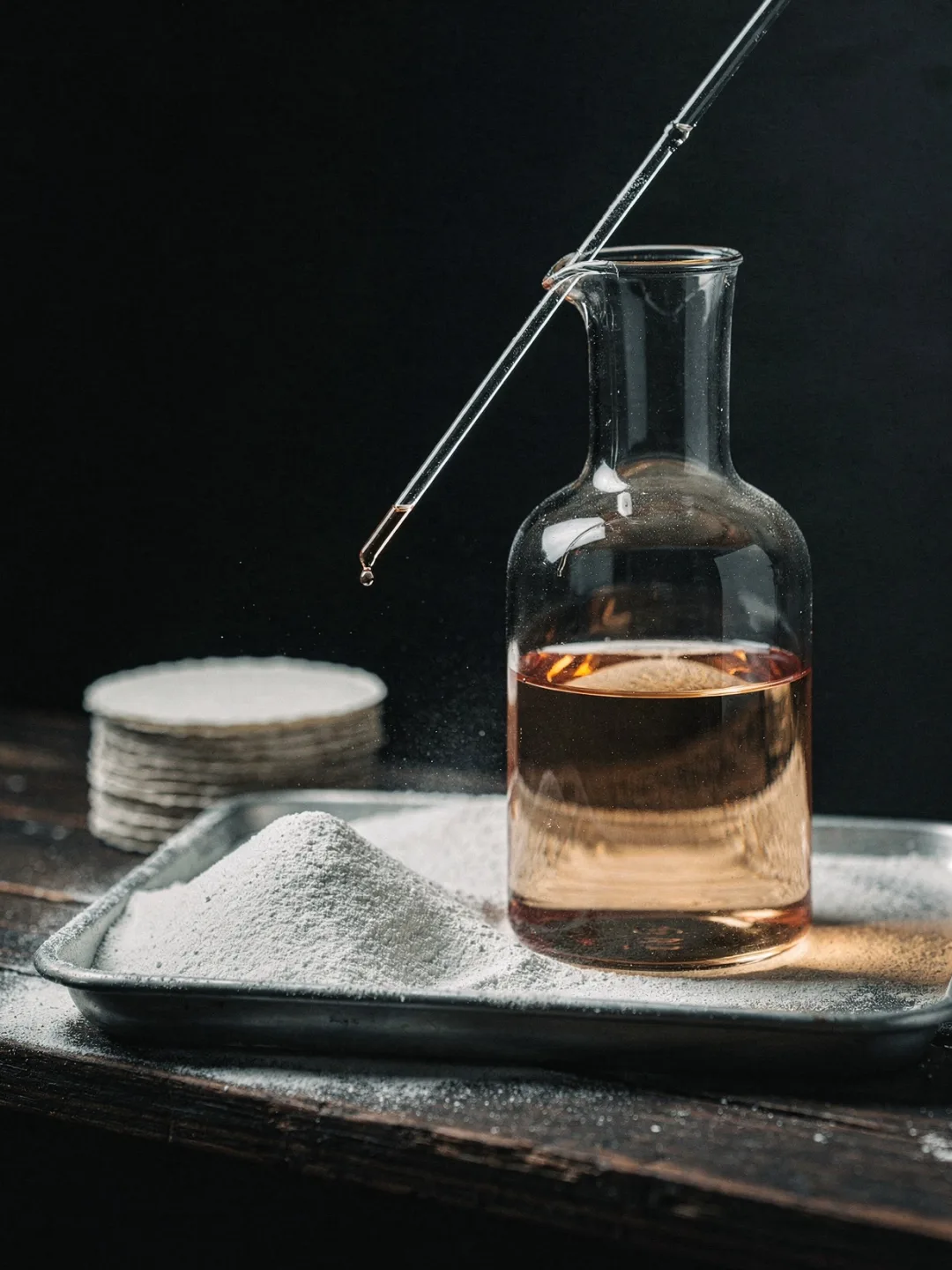
Before a wine goes into the bottle, several unassuming but important steps usually follow. Sulfur protects it from oxidation and bacteria, fining removes unwanted cloudy particles, and filtration makes it visually clear. Not every winemaker uses all three steps to the same degree.
Sulfur Dioxide: Ancient Protection Against Air and Germs
Even the ancient Romans sulfured empty wine barrels to make them last longer. Sulfur dioxide remains the most important preservative in wine to this day. It binds oxygen before it can oxidize the wine and turn it brown or musty. At the same time, it inhibits unwanted bacteria and yeasts that could otherwise spoil the wine. Without any sulfur at all, wine would barely be able to age, since oxidation and unwanted microbes would noticeably alter it after only a short time.
How much sulfur is needed depends heavily on the type of wine. Dry red wines with plenty of their own tannin, which itself has a mildly preservative effect, often need very little sulfur. Sweet wines with a lot of residual sugar need considerably more, because sugar provides extra food for bacteria and yeasts. Under EU rules, organic-certified wines are generally required to contain less sulfur than conventional ones. This is one of the stricter requirements of organic viticulture, though many organic winemakers voluntarily aim even further below this limit than the law actually requires.
Fining: Binding and Settling Out Unwanted Substances
Young wine often contains tiny suspended particles, such as excess tannins or protein residues. These can make it appear cloudy or, over time, develop unpleasant aromas. During fining, substances are added to the wine that bind with these unwanted particles. Together, they sink to the bottom, so the clear wine can then simply be racked off. The technical term for this is fining, a word that originated in English but has long since become established in wine cellars everywhere, including German-speaking ones.
Classic fining agents range from egg whites to gelatin to a fine clay called bentonite, which is especially good at binding excess protein. Anyone wanting to avoid animal-derived fining agents instead turns to purely plant-based or mineral alternatives. This is one reason some wine bottles are now explicitly labeled vegan, even though wine itself is made from grapes. Many drinkers have no idea about this, since the fining agent itself is no longer present in the finished wine.
Filtration: The Final Mechanical Clarification
While fining works through chemical and physical bonds, filtration separates particles by purely mechanical means. The wine is pressed through increasingly fine filters made of cellulose, plastic, or ceramic. Coarse filters remove only larger particles of sediment. The finest filters can even hold back most of the yeasts and bacteria, making the wine more stable and protecting it from unwanted secondary fermentation in the bottle.
Overly aggressive filtration, however, has come under criticism. Along with unwanted particles, it can also strip out delicate aromatic compounds and some texture from the wine. For this reason, some winemakers deliberately bottle their wines unfiltered or only lightly filtered. This approach lends more character, but also carries a higher risk of later cloudiness or off-flavors developing in the bottle. Each producer weighs this trade-off for themselves, depending on how much risk they're willing to take on in the market.
How Much Intervention Is Too Much?
Sulfur, fining, and filtration are, technically speaking, not mandatory—they're simply tools. Every producer uses them to a different degree. Some wineries rely on them almost entirely to guarantee a wine that's flawlessly clear, stable, and long-lasting. Others deliberately keep their use to a minimum, accepting visual irregularities or a somewhat shorter shelf life as a trade-off.
This question—how much intervention a wine should have, and how much should be left to nature alone—leads directly to the final stop on this journey. There, we turn to the differing philosophies behind organic, biodynamic, and natural wine. It's precisely at this point that each of them offers its own distinct answer.