New Varieties Emerge
Crossings, Clones, and PIWIs
Not every variety is thousands of years old. Some were only crossed on the drawing board a hundred years ago; others are simply a particular variant of a much older variety. This stop explains the difference between a crossing, a clone, and the new generation of fungus-resistant varieties, known for short as PIWI.
A Crossing Is a New Child of Two Varieties
In a crossing, a breeder deliberately transfers the pollen of one variety onto the flower of another. The goal is to combine the good traits of both parents in a new variety. Out of thousands of seedlings, the breeder selects, over many years, only the very few that truly show promise. It often takes ten to twenty years before a crossing is even released for planting. Müller-Thurgau, for instance, was already bred by Hermann Müller from the canton of Thurgau back in 1882 in Geisenheim. Before such a crossing even gets its own name, breeders often test it at several sites simultaneously to see how it copes with different soils and weather conditions.
For a long time, Müller-Thurgau was considered a crossing of Riesling and Silvaner. It was a charming idea. A DNA analysis later proved it wrong. The second parent turned out to actually be an unassuming variety called Madeleine Royale. Something similar happened with Kerner. August Herold crossed Trollinger and Riesling in Weinsberg in 1929 and named it after the poet Justinus Kerner. Georg Scheu, meanwhile, created the variety named after him, Scheurebe, in Alzey. Which second variety was actually crossed with Riesling remained a mystery even to experts for a long time. Such after-the-fact corrections to a variety's family history are remarkably common in grape breeding, since early breeders often had to guess based on outward characteristics alone, not genes.
A Clone Is the Same Variety, Freshly Selected
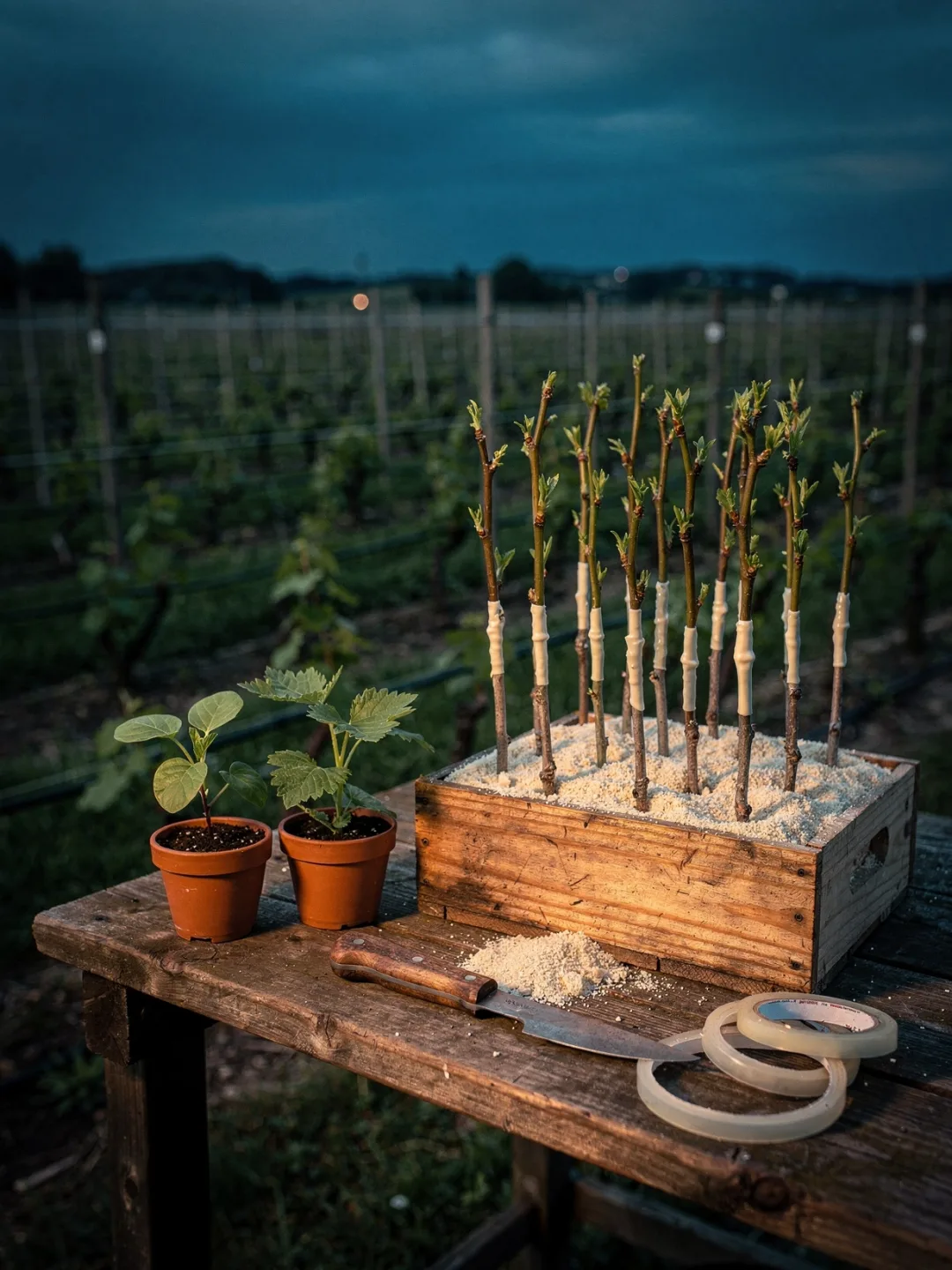
A clone, by contrast, is not a new variety at all. It's simply a particularly distinctive variant of an existing variety. Over the centuries, individual vines change through random mutations in single buds. This can affect berry size, bunch shape, or ripening time. Nurseries then propagate such standout individual vines on purpose, assigning them their own clone number. This very same kind of random change occasionally even causes a red variety to give rise, through a single mutated vine, to a pale, almost white variant.
For Spätburgunder, the German name for Pinot Noir, several hundred such clones are officially registered. Some are suited to loose-berried bunches with lower rot risk. Others deliver especially intense aromas. A clone nonetheless remains genetically the same variety—just a selected variant of it. So if you read "Clone 115," you're still holding genuine Spätburgunder in your hand. It's simply a carefully selected version of it. Wine research institutes therefore maintain their own nursery plots, where hundreds of such clones grow under identical conditions so their differences can actually be compared fairly.
PIWI: Resistance Drawn from Wild Vines
PIWI stands for "pilzwiderstandsfähige" grape variety, meaning fungus-resistant. It's bred by crossing Vitis vinifera with wild American or Asian vine species. These wild vines are naturally largely immune to viticulture's two biggest fungal enemies: powdery mildew and downy mildew. Over several rounds of crossing, breeders then deliberately fine-tune the flavor. The goal is a wine that's barely distinguishable from classic wine. These wild vines developed their own natural defenses against fungal spores over millions of years—defenses that the more delicate European vine simply doesn't have.
The effect in the vineyard is considerable. Studies show a reduction in plant protection treatments of up to eighty percent. What takes roughly twelve sprayings a year for classic varieties can drop to just two for PIWIs. Well-known examples include Regent, one of the first widely planted German PIWI red varieties. There are also newer white crossings such as Souvignier Gris. In France and Germany, such new PIWI varieties now grow on thousands of hectares, even though their share of total vineyard area overall remains small.
Why PIWIs Are Gaining Importance Now
Fewer sprayings mean less diesel used in the vineyard. They mean less time spent on the tractor. And they mean fewer copper and pesticide residues left in the soil. This argument carries more weight as climate change progresses, since wetter summers favor fungal diseases. Organic producers therefore turn to PIWIs especially often. Some winegrowers' associations now even offer financial support for switching to PIWIs, since they can make a genuine contribution to protecting soil and groundwater.
Reputation, however, still lags behind quality. Many wine drinkers still associate PIWI varieties with the simple, mass-produced wines of the first breeding generation. Newer varieties are increasingly disproving that image. Their share of vineyard area worldwide is growing slowly but steadily. Yet how well a variety ultimately ripens and tastes always also depends on its origin—the subject of the next two stops. Blind tastings in recent years have repeatedly shown that even seasoned tasters can no longer reliably tell good PIWI wines apart from classic varieties.