The short answer
Scheurebe is a white grape variety with an intense aroma. Many people smell blackcurrant, citrus, or exotic fruit. The wine comes both dry and with noticeable sweetness. The aroma doesn't tell you which of the two bottles you're actually holding.
What's behind the name
Two things confuse people most about this variety: its parentage and its aroma. Both can be clarified in a few sentences.
Georg Scheu bred the variety in 1916. Riesling and Bukettrebe are now considered its parents. The older assumption of Riesling and Silvaner is outdated. This gives Scheurebe its own distinct origin. Nothing was simply blended here.
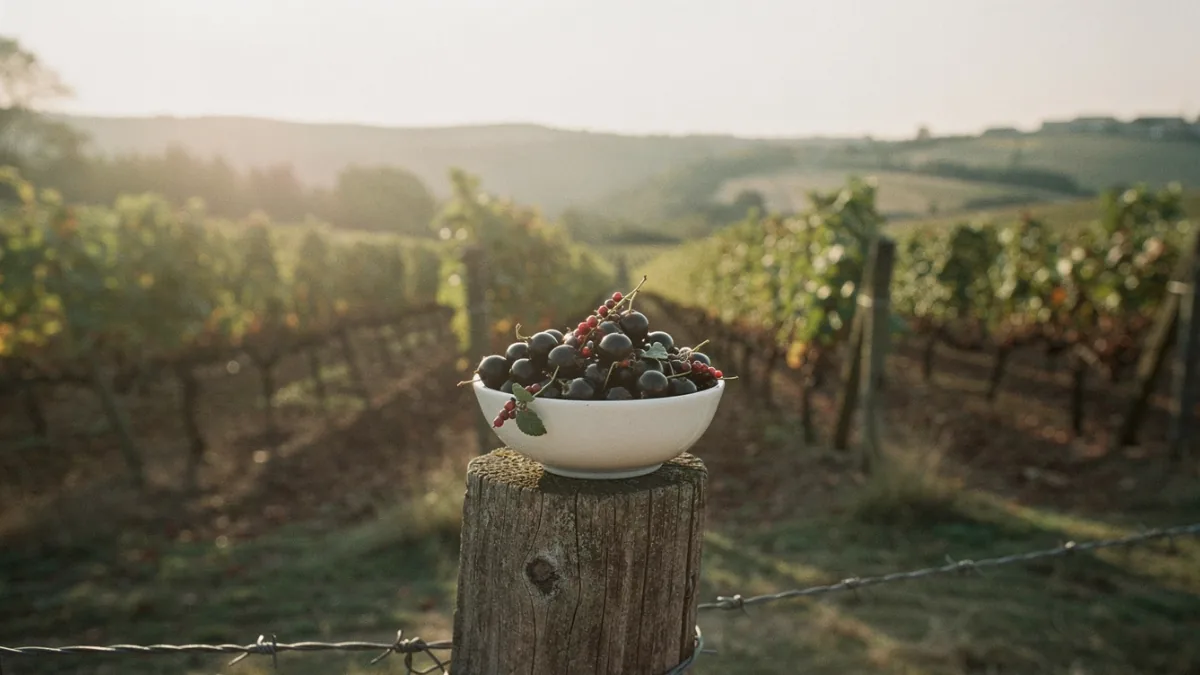
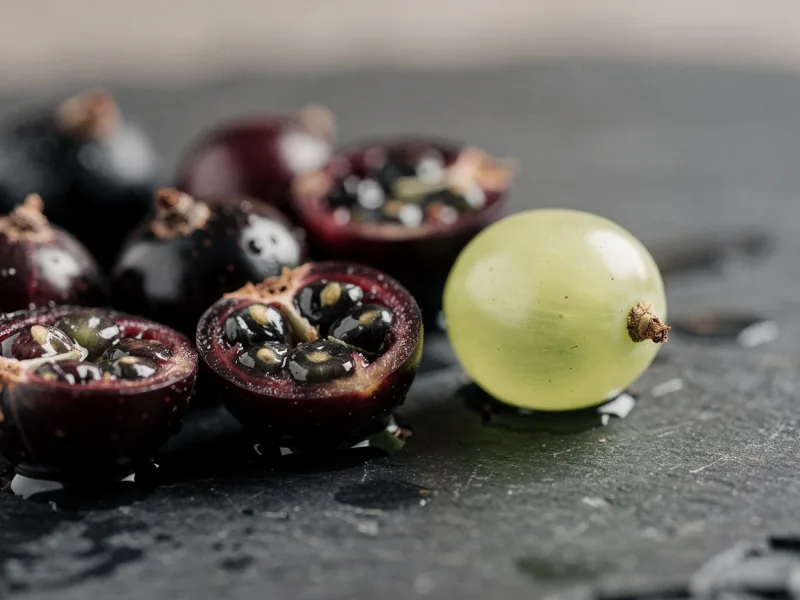
A blackcurrant aroma in a white wine doesn't mean someone added blackcurrant juice. Aroma terms only describe similarities. The color of a fruit doesn't have to match the color of the wine.
Breeding here means: two varieties were deliberately crossed. From the offspring, one was selected and further propagated. The old claim of Riesling and Silvaner still appears in older books and occasionally on back labels. The correction changes nothing about the wine in the glass. It only places the variety correctly.
Aroma comparisons are aids to communication, not ingredient lists. If you smell blackcurrant, your sense of smell has found a similarity. That's all there is to it. Someone next to you might mention grapefruit or exotic fruit instead. Both descriptions can refer to the same wine. That a dark berry shows up in a pale wine is therefore no contradiction.
Don't guess sweetness from the aroma
If you choose Scheurebe for its aroma, you should check the sweetness separately. With aromatic wines, one thought comes easily: smells sweet, tastes sweet. That very thought often leads to disappointment.
A good way to order sounds something like this: I like intense fruit, but not noticeable sweetness. Do you have a dry Scheurebe along those lines? Conversely, you're just as welcome to ask for a sweeter version. During your first comparison, note three things separately: aroma, sweetness, and freshness. That will stick with you more than the single word intense.
The aroma forms in the nose. You only notice the sweetness on the tongue. The two can be far apart. A wine with intense fruit on the nose can be dry and crisp in the mouth. Conversely, a subtle aroma can mask noticeable sweetness. Relying only on the first impression often leads you astray with aromatic varieties.
Three short lines per wine are enough for your notes. First line: what you smell. Second line: how sweet it feels. Third line: how fresh and lively the wine seems. After two or three bottles, you'll be able to read from your own notes which combination suits you. A blanket judgment doesn't help much with your next purchase.
How to find a Scheurebe you'll enjoy
The following four steps lead from the label to the conversation at the counter. The most important one is sweetness.
These steps also work without advice at the shelf. Then the label takes on the role of the conversation partner: variety name, sweetness level, origin. Whatever's missing there, you leave open and check when you open the bottle. More important than the perfect choice is something else. Afterward, you should know which piece of information led to which impression.
| Step | Specific question or action |
|---|---|
| In conversation | Dry or with noticeable sweetness? |
| On the label | A blackcurrant aroma means neither red wine nor automatic sweetness. |
| While tasting | Does the pronounced aroma suit my occasion? |
| Your comparison | Smell a sample first, then note sweetness and freshness separately. |
Where Scheurebe really comes from
The most persistent misconception concerns the blackcurrant aroma. Blackcurrant is dark, the wine is pale. So many people suspect something must have been added. But aroma terms only describe similarities that your sense of smell picks up. In the grape, color and aroma aren't linked. A pale wine is allowed to smell of dark berries, with no juice involved at all.
The second misconception: a strong aroma automatically means sweetness. A Scheurebe can be made dry and still smell intense. If you've had a sweeter bottle once and now consider the variety fundamentally sweet, you're missing out on its dry side. When in doubt, ask rather than judging taste by aroma alone.
And the question of parentage: Riesling and Silvaner is still often cited. The correct answer is Riesling and Bukettrebe. The variety has its own distinct origin. It's not a blend put together later in the cellar.
Scheurebe next to a Riesling
For the comparison, take two Scheurebes with different sweetness levels. Both equally cool, both in the same type of glass. Smell both first, without drinking, and write down what comes to mind. Then taste, starting with the drier wine, then the sweeter one. The other way around, the sweetness would overshadow your second impression. This way, you'll notice how little the aroma actually reveals about the taste.
Pay attention to sweetness and freshness separately when you taste. Sometimes a wine seems less sweet than it actually is, because it tastes so lively. Your mouth blends the two together. That's why the label's stated sweetness and your own impression sometimes diverge. Write down both. Then you'll have something to go on for your next purchase.