White Wine Made Like Red Wine
Orange Wine
Orange Wine is created when light-skinned grapes are treated like a red variety: the juice stays in contact with its own skins for days or even months. This final station explores where this ancient style comes from and what extended skin contact changes in the glass.
A White Wine Made with Red Wine Technique
Normally, pale grape juice is separated from its skins immediately, before fermentation even begins. That's precisely what usually distinguishes white wine from red wine. With Orange Wine, however, the juice of light-skinned varieties stays on the skins, sometimes along with the stems. This happens throughout all or part of fermentation. This contact often lasts weeks or even months rather than just hours. Some winemakers even use whole grape clusters, stems included, since the stems can contribute extra tannin along with a slightly green, spicy note.
This releases pigments, tannin, and structure from the skins—all things a classic white wine lacks. Depending on the variety and length of contact, the resulting color ranges from delicate amber to deep orange. The wine takes on an almost red-wine-like texture, despite being made from light-skinned grapes. Just how pronounced these effects turn out also depends heavily on whether a winemaker regularly stirs the vessel or simply lets the skins sit undisturbed.
A Thousands-of-Years-Old Technique from Georgia
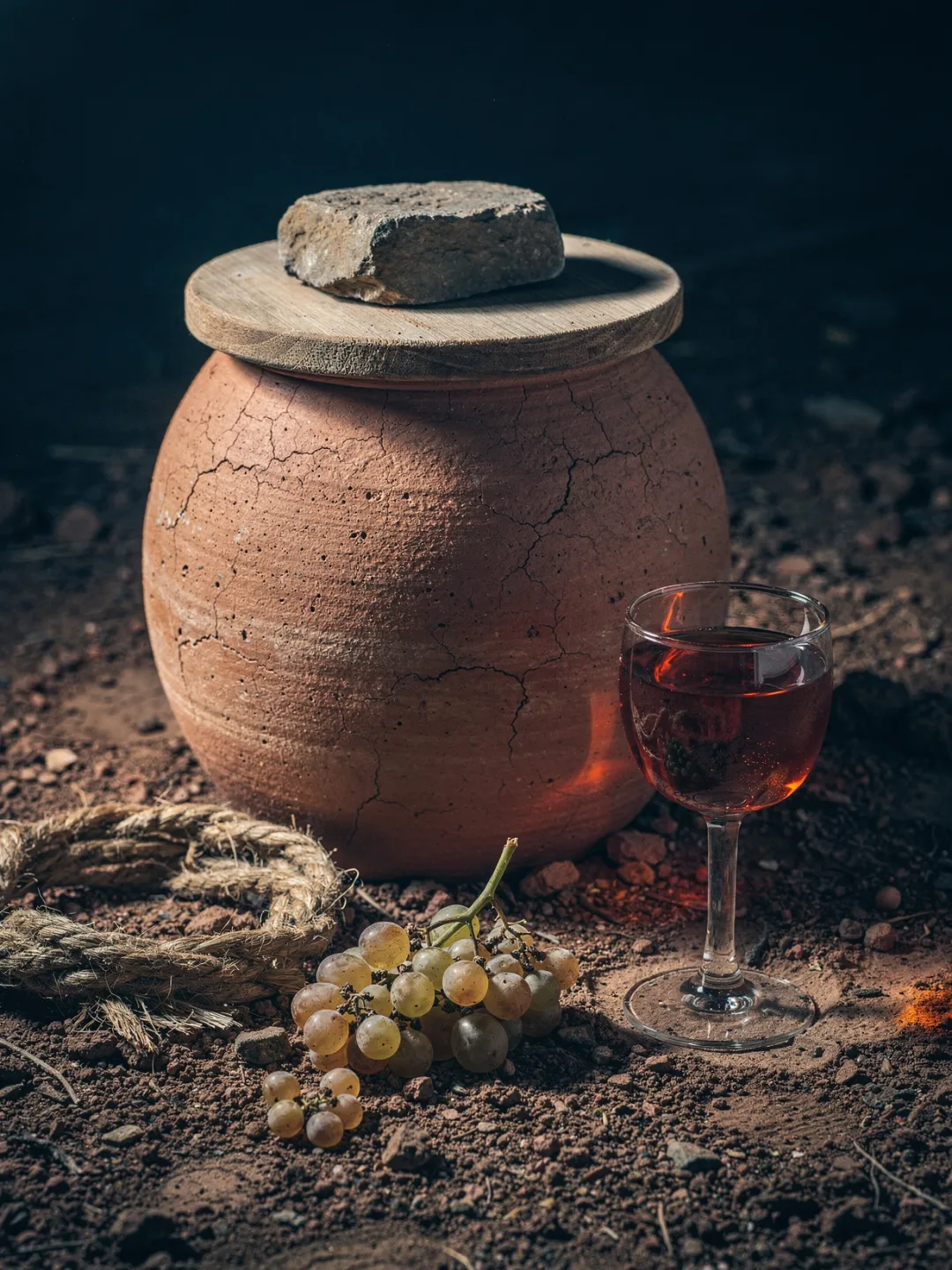
This method is no new invention—it's one of the oldest winemaking techniques there is. In the Caucasus nation of Georgia, wine has aged for thousands of years in large, egg-shaped clay vessels called qvevri. These are buried completely in the ground and filled together with skins and sometimes stems. The earth keeps the temperature inside remarkably stable for months. Traditionally, qvevri vessels are carefully cleaned with hot water and wild herbs before each new filling, a ritual passed down unchanged across generations.
In 2013, UNESCO added this traditional qvevri winemaking method to its list of the Intangible Cultural Heritage of Humanity, a rare distinction. It shows just how deeply woven this technique is into Georgian culture. For Georgia, then, Orange Wine isn't a trend; it's unbroken tradition. Georgian families still often pass their own, frequently handmade qvevri down through the same wine cellar across generations.
The Modern Rediscovery
Outside Georgia, the technique was largely forgotten for much of the twentieth century, as clear, fruity white wine dominated the market. Starting in the 1990s, some winemakers in the northern Italian–Slovenian border region of Friuli began deliberately experimenting again with extended skin contact for white wine. At first, this was a fairly fringe phenomenon. Critics initially accused the new style of merely dressing up faults like oxidation, while its supporters celebrated exactly those rough edges as expressions of craft and honesty.
From there, the style slowly spread across Europe and eventually reached the entire wine world. This often happened within the orbit of the so-called natural wine movement, which favors as little cellar intervention as possible. The now-common name "Orange Wine" only emerged considerably later, coined by wine merchants searching for a catchy term for this unusual style. Today, Orange Wine is found not just among small natural wine producers, but increasingly on the lists of established wineries and restaurants too.
What Skin Contact Does in the Glass
Through extended contact with skins and sometimes stems, Orange Wine picks up noticeable tannin. This gives it a slightly astringent texture reminiscent of black tea, unusual for a wine made from light-skinned grapes. Aromas of dried apricots, nuts, or tea often take the place of the loud fruitiness typical of pale varieties. It's precisely this tannin structure that makes some Orange Wines surprisingly age-worthy, even though they originate from what is normally a rather short-lived white grape.
Some Orange Wines also show visible sediment or a fine haze, since filtration is deliberately skipped. Anyone tasting this style for the first time should therefore approach it differently: it's less comparable to classic white wine and more like its own third path, somewhere between white and red. This style is best tasted with an open mind, without applying the usual expectations for white or red wine from the outset.