Bottle, tank, Pét-Nat
Sparkling wine styles
Champagne, Prosecco, and Pét-Nat all sparkle, yet they're made in completely different ways. This station explains the main production methods for sparkling wine and how different levels of residual sweetness arise, ranging from bone-dry Brut Nature to sweet Mild/Doux.
Bottle fermentation: the second fermentation in its own container
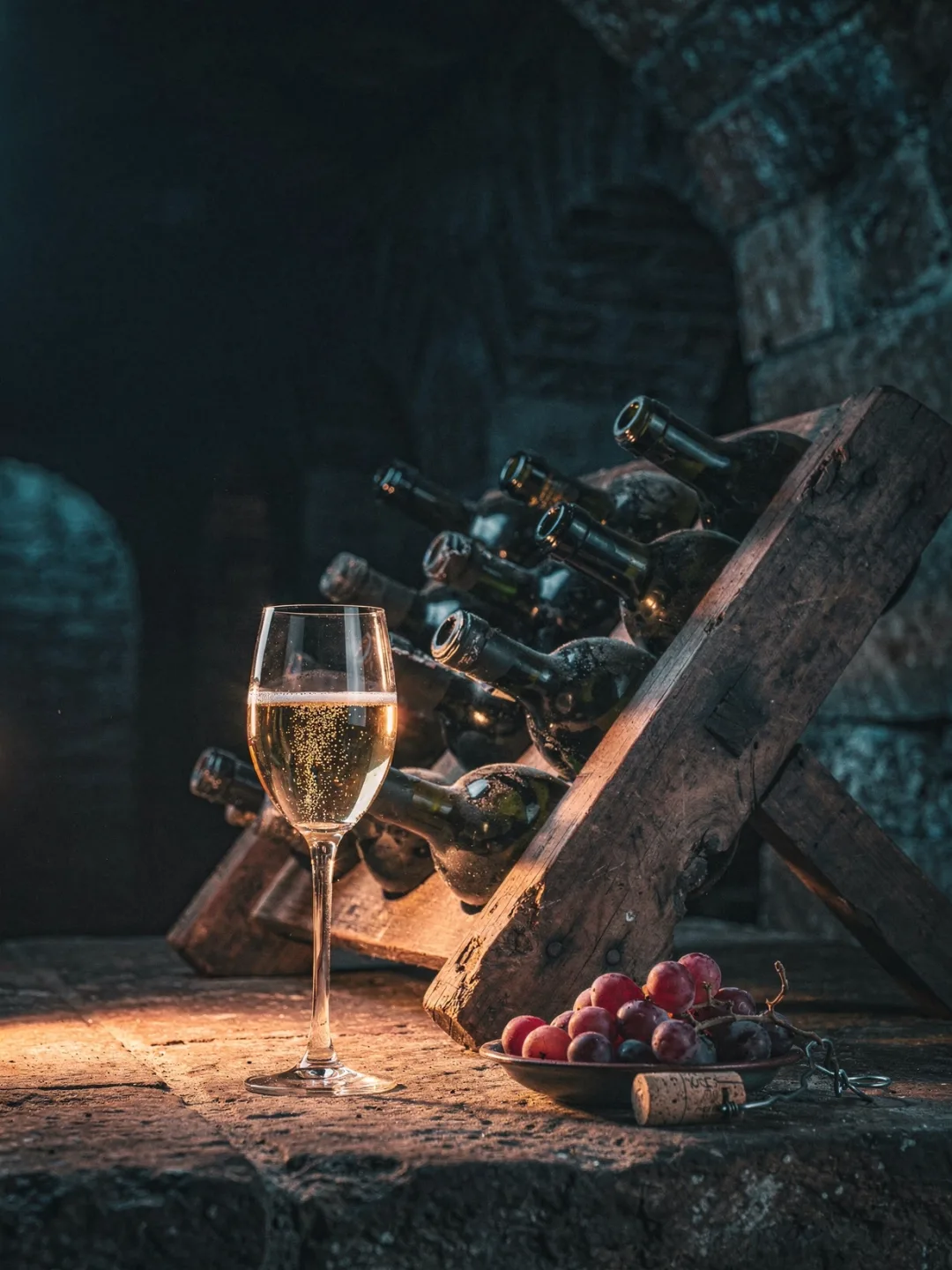
In classic bottle fermentation, sugar and yeast are added to a finished base wine inside the bottle. This is how Champagne, many quality sparkling wines, and Cava are made. The resulting second fermentation takes place directly in the same bottle in which the wine will later be sold, and it's this process that forces the characteristic fizz into the drink. For very high-quality Champagnes, this aging on the lees can last several years, making the wine noticeably more complex—and more expensive—than one with only a brief standard aging.
After months or years resting on the dead yeast cells, delicate, bready aromas develop. This spent yeast must then be removed from the bottle. During the so-called riddling process, it slowly migrates into the neck of the bottle over several weeks, where it's frozen. When the bottle is opened, it shoots out under pressure in a step called disgorgement. Getting the timing of this riddling process exactly right is still considered one of the most demanding tasks in the cellars of prestigious houses.
Tank fermentation: faster and fruitier
With tank fermentation, the second fermentation doesn't take place in individual bottles but in one large, pressure-resistant steel tank. Named after its inventor, Eugène Charmat, it's also called the Charmat method. Only afterward is the finished sparkling wine bottled under pressure. Because the entire process happens under controlled pressure in huge tanks, far larger volumes can be produced at once than with the labor-intensive bottle fermentation method.
This method is considerably faster and cheaper than bottle fermentation. At the same time, it better preserves the grape's fresh fruit character, since the wine has minimal contact with the yeast. Prosecco from northern Italy is the best-known example of this light, fruity style. It's precisely this efficiency that makes tank fermentation so well suited to sparkling wines meant to be drunk fresh, easygoing, and at an affordable price.
Pét-Nat: the deliberately unfinished-looking throwback
Pét-Nat, short for pétillant naturel, is likely the oldest method of all sparkling winemaking, and it's currently back in fashion. The wine is bottled while still in the middle of its very first, not-yet-completed fermentation. The carbon dioxide produced stays trapped directly in the drink this way. No added sugar or second fermentation is needed. Fans of this style particularly value its unpredictability: no two bottles of a Pét-Nat ever taste exactly alike, even if they came from the same tank.
The result often looks cloudy and rustic, and sometimes tastes slightly yeasty or wild. Filtration and added sweetness are deliberately skipped. It's precisely this lack of polish that fans of the natural wine movement particularly appreciate about this style. Critics, on the other hand, point to these very inconsistencies as a drawback, since they make reliable quality from bottle to bottle harder to guarantee.
Dosage: the residual sweetness after riddling
After disgorgement, a small gap remains in the bottle. It's topped up with what's called the dosage, a mixture of wine and sugar. Its amount determines the finished sparkling wine's sweetness level, graded by residual sugar content. Brut Nature stays bone-dry with zero to three grams of sugar per liter. Extra Brut, with zero to six grams, is only slightly softer. Winemakers often guard the exact recipe for their dosage as a closely held secret, since it forms a crucial part of a sparkling wine's distinctive house style.
Brut is by far the most common level, running up to twelve grams per liter. Next comes Extra Dry, with twelve to seventeen grams. Dry, called Sec in French, sits at seventeen to thirty-two grams and, despite its name, already tastes noticeably sweet. Demi-Sec, with thirty-two to fifty grams, and Doux (or Mild), with over fifty grams, are considered distinctly sweet, dessert-style pairings. So anyone looking for a truly dry sparkling wine shouldn't be guided by the word "Sec" on the label alone, but should specifically reach for Brut or Extra Brut.