Brief skin contact
Rosé
Rosé almost never comes from simply mixing finished red wine with finished white wine—in large parts of the EU, that's actually forbidden. This station explains how pink wine is really made and why it's best enjoyed young.
A ban with one famous exception
Within the European Union, it is generally forbidden to blend finished red wine with finished white wine if the result is meant to be labeled "Rosé." The reasoning is quality control: such a blend is considered too easy a trick for faking color rather than earning it through proper winemaking from the grape. Historically, this ban also arose because in earlier decades it was indeed common to artificially tint simple table wine pink by just mixing the two together.
There is, however, one well-known exception. In Champagne, winemakers are allowed to blend a splash of finished red wine from the same region into the white base wine, creating rosé Champagne. Nowhere else in Europe does the same route lead to a legal result. Wine connoisseurs often recognize a rosé Champagne made this way by its somewhat bolder, berrier fruit compared to a classic rosé produced through direct pressing.
Direct pressing: pale color through brief contact
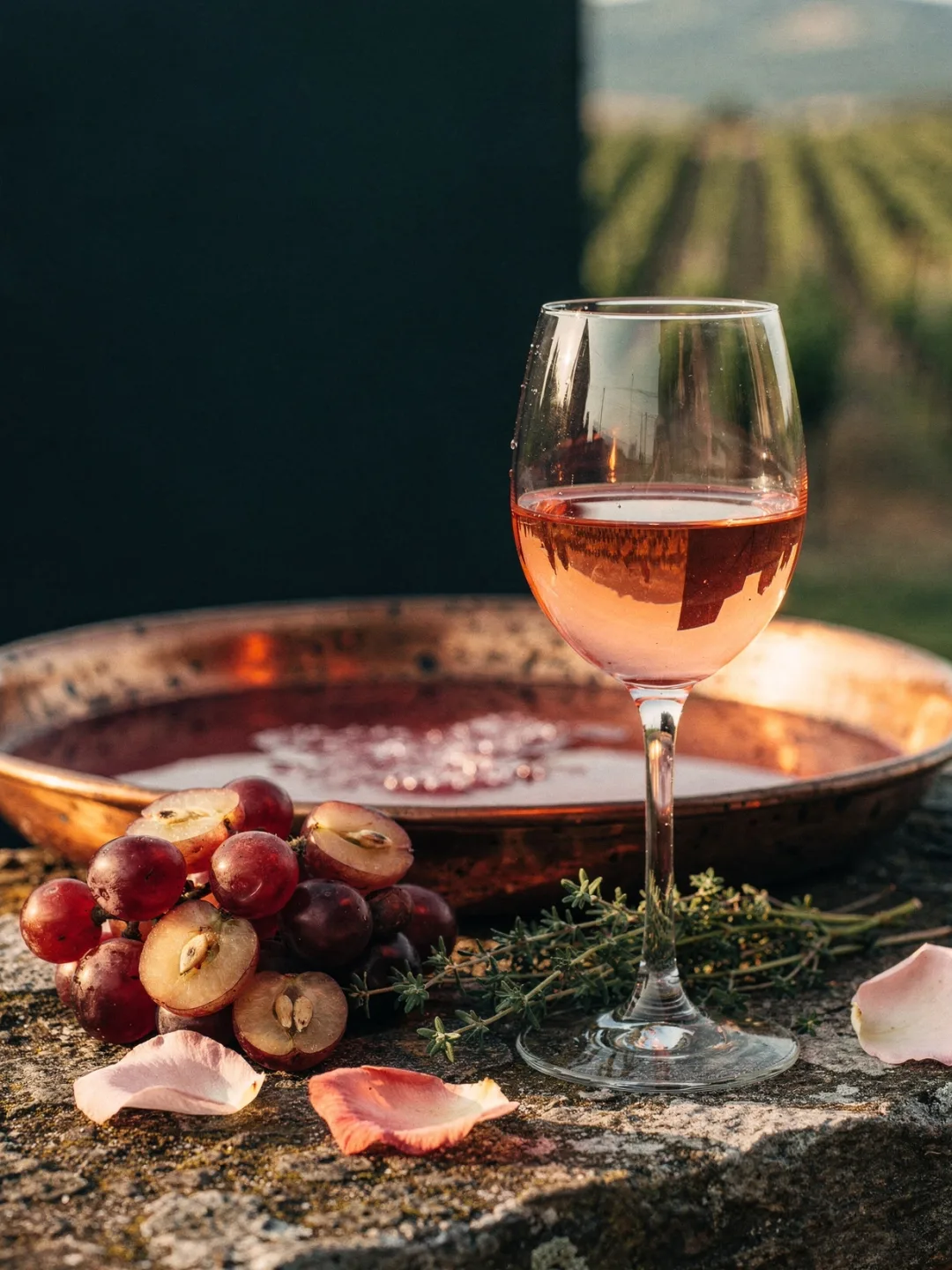
The most common method for pale, light rosé is direct pressing. Red grapes are lightly crushed for just a few hours before the juice is pressed off—just long enough for a hint of color to move from the skin into the must, but far shorter than for true red wine. Some producers in Provence press their grapes within mere minutes of harvest to achieve an especially delicate, almost translucent color.
This technique is what defines the pale, almost salmon-colored Provence style, now copied worldwide. The shorter the contact, the paler the color—and the less tannin ends up in the glass. This pale hue has become its own international selling point, quite apart from how much actual flavor lies behind it. Too much contact, though, quickly tips the result toward a light red rather than a true rosé.
Saignée: rosé as a byproduct
With the saignée method, literally "bleeding," a winemaker draws off part of the still-pale juice early during red winemaking, straight from the fermentation vessel. This drawn-off juice is then made into rosé, while the remaining red wine becomes denser and more concentrated because the ratio of skin to juice tightens. How much juice a winemaker draws off depends heavily on the desired outcome: even a few percentage points noticeably change both the rosé's color and the remaining red wine's density.
With this method, rosé is essentially a byproduct rather than a goal from the outset. Even so, some producers now deliberately make their rosé this way, especially when aiming for a bolder style. In some wine regions, saignée is even traditionally seen as a sign of a particularly ambitious vintage, since winemakers are consciously prioritizing concentration in the main red wine.
Why rosé is meant to be drunk young
Because of its brief skin contact, rosé contains very little tannin—the very compound that gives red wine its aging potential in the first place. Without that backbone, rosé loses its freshness and fruit faster over time than a powerful red wine. Most rosés are therefore meant to be enjoyed within the first or second year after harvest. There are exceptions that prove the rule: a handful of especially well-structured rosés made from thick-skinned varieties do age remarkably well over several years.
Typical grape varieties for rosé vary by region. Around the Mediterranean, it's often Grenache and Cinsault; in cooler German wine regions, it's usually Pinot Noir. Rosé is typically served well chilled, similar to white wine, which further underscores its light, refreshing character. It's precisely this easygoing, refreshing quality that has made rosé a beloved summer wine worldwide in recent years, far beyond its original regions of origin.