Concentrated sweetness
Sweet wine
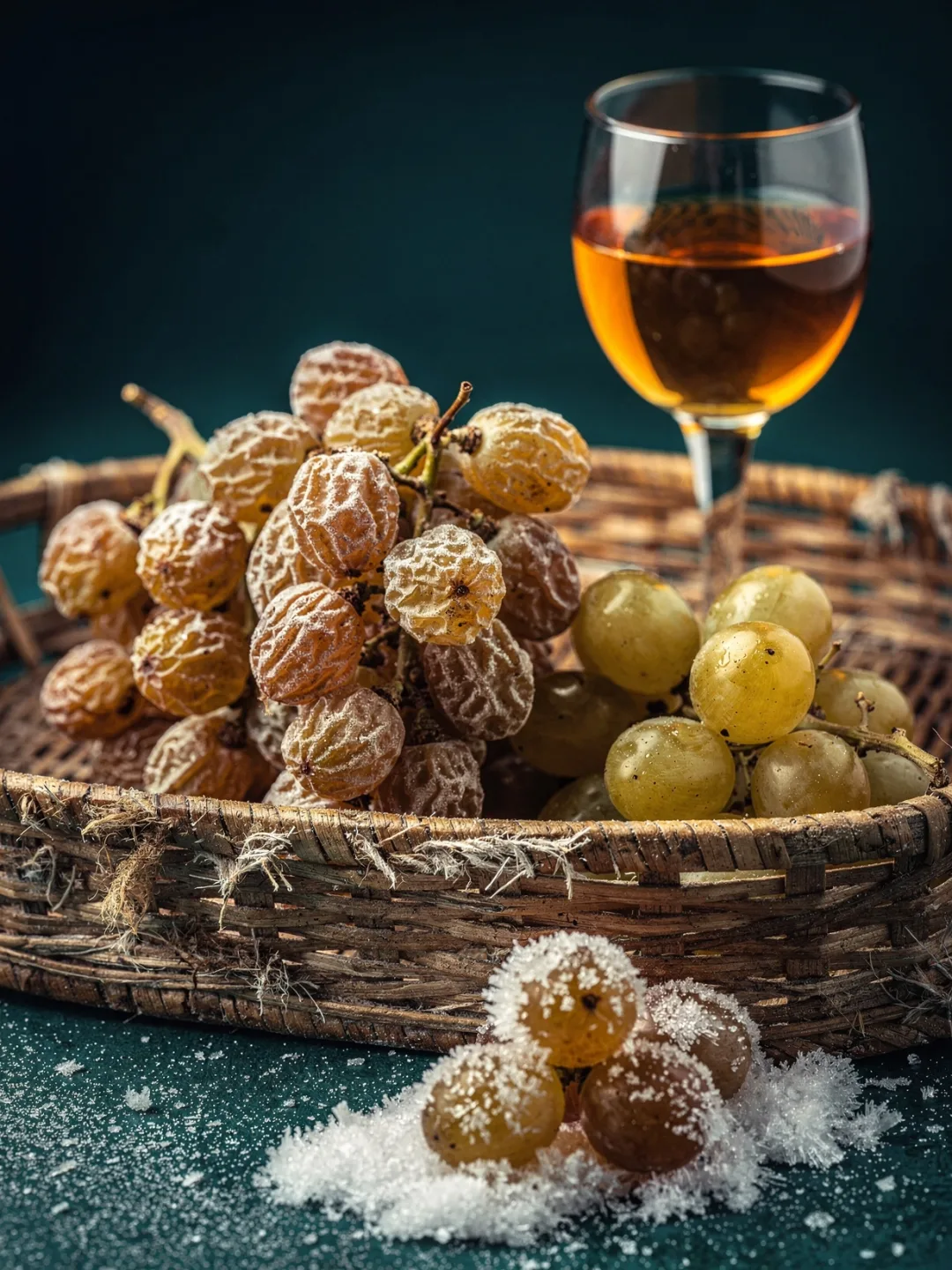
Sweet wine isn't made by adding sugar to a finished wine after the fact, but by making the grapes unusually sugar-rich before fermentation even begins. This station introduces the main paths to get there, from noble rot to frozen ice wine.
Noble rot: a useful mold
The mold Botrytis cinerea is normally feared as a destructive grape pest. But when it encounters ripe, healthy berries under just the right conditions, it behaves quite differently. Those conditions are damp mornings followed by dry, sunny afternoons. The mold then only perforates the berry skin without destroying the grape. Water evaporates through these tiny holes, while sugar and acidity remain behind, becoming ever more concentrated. Winemakers watch their vineyards almost daily during these critical weeks, because noble rot and its destructive cousin, grey rot, can go their separate ways within just a few days.
In this case, it's called noble rot rather than grey rot—grey rot being the feared, destructive relative of the very same fungus. This difference comes down purely to the luck of the weather. In poor years, winemakers may end up harvesting no noble-rot grapes at all. Famous examples include French Sauternes as well as German Beerenauslese and Trockenbeerenauslese. In especially favorable years, a vineyard can even be picked through multiple times in succession, since noble rot doesn't affect all the berries at once.
Ice wine: freezing instead of evaporating
For ice wine, grapes are deliberately left hanging on the vine well into early winter, often long after the normal harvest season has passed. They're only picked once frost sets in, usually around minus seven degrees Celsius or lower. Harvested by hand, they're pressed immediately while still frozen. Because a night with sufficiently hard frost doesn't reliably arrive every year, ice wine remains, year after year, one of the riskiest bets in all of winemaking.
During pressing, the frozen water stays behind in the press as ice, and only the highly concentrated, sugar-sweet juice trickles out. This makes ice wine rare and labor-intensive—an entire harvest literally hinges on the right cold snap arriving at exactly the right time. Germany, Austria, and the Canadian province of Ontario rank among the best-known sources. Some producers lose a large share of their potential harvest to hungry birds, which happen to appreciate these same late-ripening, extra-sweet grapes just as much as winemakers do.
Passito and Straw Wine: Drying Instead of Freezing
A third path skips weather luck in the vineyard entirely. After harvest, the grapes dry for several weeks on straw mats, wooden racks, or in ventilated rooms. Water evaporates from the berries, with no fungus or frost involved. The sugar concentrates in a similar way to noble rot. Depending on the desired concentration, this drying process takes anywhere from a few weeks to several months, during which the grapes can lose up to half their original weight.
Italian examples like Vin Santo illustrate this path especially clearly, as does the Passito style on Sicily and the islands. German Strohwein is named directly after this drying method. Some of these dried wines then age for years in barrel, which intensifies their aromas even further.
Why Acidity Is Decisive in Sweet Wine
However varied the paths to sweetness may be, without sufficient acidity, every one of them would quickly taste flabby and tiring. Only a strong backbone of acidity keeps the balance in check. It makes even very sweet wines taste refreshing rather than cloying. That's precisely why sweet wines with low acidity are quickly dismissed by connoisseurs as heavy-handed, no matter how much valuable sugar they actually contain.
This very interplay explains why so many of the world's great sweet wines come from relatively cool wine regions. There, grapes retain their acidity even at high ripeness. Served with dessert or dark chocolate, this acidity also acts as a counterweight to the pure sweetness on the plate. This balance of sweetness and acidity also explains why many sweet wines, despite their high sugar content, keep surprisingly well in an opened bottle in the fridge.