When a wine truly convinces
Balance & Quality
A wine can be technically flawless and still taste boring, and a wine with a small weakness can still be thrilling. Judging quality requires more than a single characteristic: balance, character, and depth all count together.
Balance: when nothing sticks out
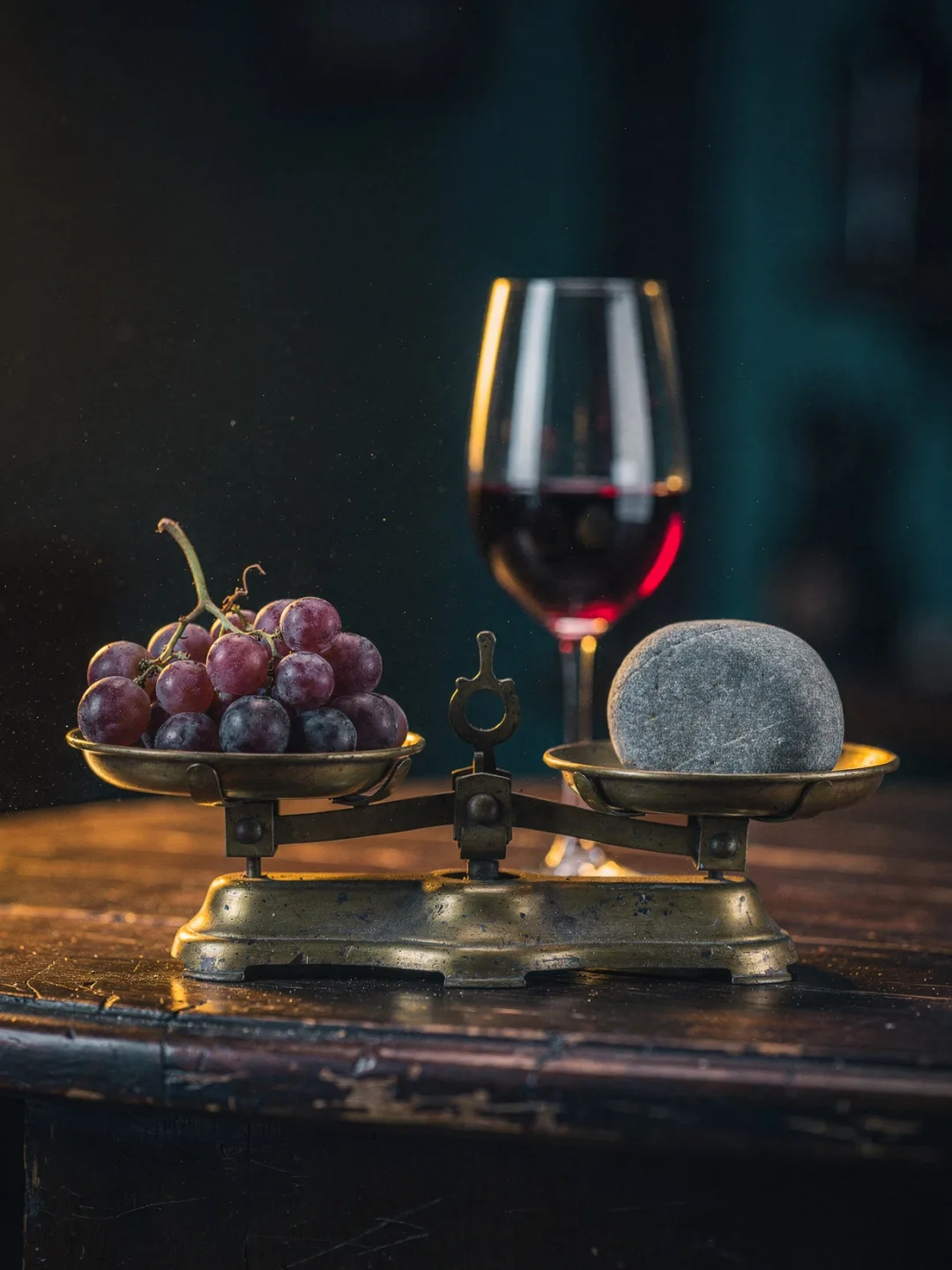
A wine is considered balanced when none of its characteristics overshadows the others. Acidity, tannin, alcohol, sweetness, and fruit ideally pull together rather than drowning each other out. A wine that's too acidic comes across as sharp and unpleasantly thin. One with too much tannin feels like it's drying out the mouth, without enough fruit to counterbalance it. Too much alcohol burns in the throat, and too much residual sugar without sufficient acidity quickly tastes cloying rather than fresh.
Balance doesn't mean that all characteristics need to be equally strong. A powerful red wine from a warm region needs noticeably more acidity and tannin than a delicate white wine to still come across as balanced. What matters is the relationship between the parts, not a fixed target value for each individual characteristic.
Typicity: staying true to itself
A second criterion asks whether a wine shows what it's actually supposed to be. Experts call this typicity. A Sauvignon Blanc that tastes of green apple and gooseberry fulfills its grape variety. One that remains dull and neutral may be technically clean in its fermentation, but reveals little of what makes its grape distinctive.
Typicity can also relate to origin. A wine that reveals the particularities of its soil or climate, such as a mineral note from stony ground or ripe, warm fruit from a sun-drenched vineyard, is considered by many tasters to be more valuable than a wine that could have been made anywhere in the world. This assessment isn't a law of nature, but it's a benchmark that many wine competitions still use today.
Complexity instead of monotony
Another criterion is how many different impressions a wine delivers and how much they change in the glass. A simple wine shows the same, clear aromatic direction from the first sip to the last, perhaps just citrus fruit. A complex wine, by contrast, shifts: fruit first, then a spicy note, later perhaps an earthy or toasty tone that only emerges after a few minutes of air contact.
Simplicity is no flaw here. An uncomplicated summer wine that tastes fresh and clean fulfills its purpose just as well as a multilayered wine meant for long contemplation, just a different purpose. Complexity becomes a mark of quality above all when a wine promises exactly that, whether through its price or its appellation. What matters then is simply whether it delivers on that promise.
Quality isn't a price tag
A high price or an elaborate label say surprisingly little about the actual quality in the glass. Some expensive wines are mainly well-known, not necessarily particularly well made. Some inexpensive bottle from an unremarkable site, on the other hand, can win over technically skilled tasters in a direct comparison. Anyone who really wants to assess quality relies on what the eye, nose, and palate actually report, not on what's printed on the bottle.
In the end, though, there's still room for personal taste. A technically flawless but somehow cold and impersonal wine doesn't have to appeal to anyone just because it meets every criterion. Quality describes how well a wine is made; taste describes whether you personally like it, and these two questions are allowed to have different answers.
Concentration and the hollow middle
One final quality marker concerns the density of the flavor itself, independent of sweetness, acidity, or alcohol: concentration. Some wines seem promising on the first sip, then suddenly lose substance in the middle of the palate. At the end, some fruit or tannin reappears after all. Connoisseurs call this dip the hollow middle, a sign of too little extract or excessive dilution, for instance from overwatering in the vineyard.
A concentrated wine, on the other hand, stays evenly dense from start to finish, even if it's overall rather light and delicate in structure. Concentration, then, has nothing to do with power or alcohol content. It's about how completely the flavor carries across the whole palate without thinning out anywhere along the way.