The short answer
Choose your wine based on three things: your own taste, the food, and the occasion. Keep four characteristics separate: sweetness, acidity, tannins, and body. Tannins are the compounds from grape skins and seeds that make your mouth feel dry. Body describes how heavy a wine feels in your mouth. Once you know these four terms, you can shop with purpose. Price and a shiny label, on the other hand, tell you very little.
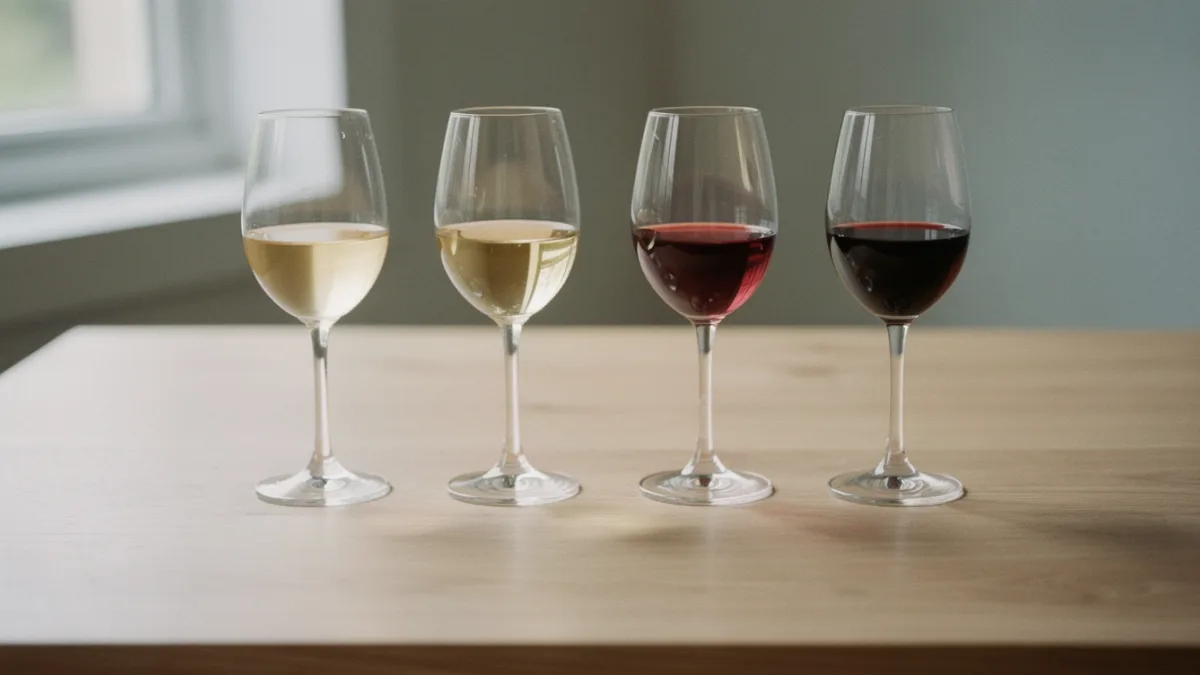
Which wine suits you? Four characteristics are all you need
You don't need vintages or famous vineyards to get started. Instead, think about drinks you already enjoy. Do you like something fresh and citrusy? Should a drink taste sweet? Should it be light, or really fill your mouth? Does a dry, puckery feeling on your gums bother you? Observations like these will get you further than searching for the “best” wine. There is no such thing as the best wine—only the one that tastes best to you.
Also think of a wine you didn't enjoy. Try to describe exactly what bothered you. In everyday speech, “too dry” can mean very different things: not sweet enough, too acidic, or too much tannin. Each of these complaints points you toward a different bottle at the store. You don't need technical jargon for this. A sentence like “fruity, but not sweet, and not rough in the mouth” is more than enough.
These four characteristics mix together in every glass. A wine can taste fresh and still leave your mouth feeling dry. Another can feel full-bodied without tasting sweet. So pay close attention while tasting. Does something pucker against your gums? That's tannin. Does your mouth start to water? That's acidity at work. Does a sweet impression linger on your tongue? That comes from residual sugar left in the wine. And if the wine feels heavy in your mouth, that's what experts call its body.
| Characteristic | How you'll notice it | How to ask about it |
|---|---|---|
| Sweetness | A noticeable sweet taste on the tongue | Dry, or with a touch of residual sweetness? |
| Acidity | Freshness that gets your mouth watering | Lively and fresh, or softer in impression? |
| Tannins | A dry, puckering sensation in the mouth | Low in tannin, or deliberately bold? |
| Body | Light or full-bodied in the mouth | A light companion, or a substantial wine? |
Four directions to explore
There's one key lesson from this overview: the grape variety alone doesn't tell you how a wine will taste. Grape variety simply means the type of grape used, such as Riesling. Origin, ripeness, sweetness, and winemaking choices all shape the final result significantly. "Winemaking" refers to the work done in the cellar after fermentation. So always read the description on the specific bottle, or ask for a small taste. When comparing two wines, keep as many factors the same as possible: the same glass, the same temperature, the same evening.
Start wherever you like. Red wine isn't mandatory homework for advanced drinkers. A wine with a touch of sweetness isn't some beginner stage you need to outgrow either. Your taste is what matters—nobody else's. The overview above is mainly there to help you ask the right questions. With it, you can phrase a request that anyone at the wine shop will understand.
A recommendation that misses the mark isn't a failure—it's information. Take note of which of the four characteristics was too much or too little. Next time, adjust just that one factor. If you change the grape variety, origin, and sweetness all at once, you'll end up with a completely different wine. Afterward, nobody will know what actually caused the difference.
| You enjoy… | A possible direction | What else to check when buying |
|---|---|---|
| Lively freshness | A fresh Riesling or Sauvignon Blanc | Ask about sweetness separately; aroma doesn't mean sugar |
| Understated aromas and a smooth impression | A well-described Weißburgunder (Pinot Blanc) or Grauburgunder (Pinot Gris) | The acidity and oak influence of the specific bottle |
| Red fruit with little roughness in the mouth | A light, fruit-forward Spätburgunder (Pinot Noir) |
Dry, fruity, mild: the most common misunderstandings
"Dry" is a statement about sweetness—nothing more. A dry wine can still have a powerful aroma of peach or ripe berries. Yet it will still taste barely sweet at all. The reverse holds true as well: an off-dry wine doesn't automatically have low acidity. Sweetness can mask acidity, but that doesn't mean the acidity is gone.
"Mild" is a stretchy word in the wine trade. Ask what's actually meant: low acidity, low tannin, a smooth mouthfeel, or noticeable sweetness? With "off-dry" too, it's worth asking just how sweet the wine really tastes. A concrete description will serve you far better than a marketing term on the front label.
"Fruity" describes the aroma, not the sugar content. In conversation, the two often get mixed up—and that's exactly where disappointment in the glass comes from. So say what you expect in the mouth: noticeable sweetness, or none at all. That way, you can still end up with a wine that smells clearly of fruit yet stays lean and dry on the palate.
Wine and food: start by looking at the sauce
Fish doesn't automatically call for white wine, and meat doesn't automatically call for red. A delicately steamed fish and a hearty piece of meat with a spicy sauce are two completely different challenges. So focus on the boldest element on the plate. That's often the sauce—but sometimes it's roasted flavors, sweetness, acidity, or spice. The main ingredient comes second.
The examples below show what a pairing really depends on, and they're meant for comparison. Try it this way: a small sip, a bite, another small sip. Does the wine taste bitter, overly acidic, or suddenly thin afterward? Then the pairing probably isn't right for you. Your own impression matters more than any pairing chart in a book.
Judge a pairing while you're eating, not beforehand. A wine that seems edgy on its own can turn out rounder next to the dish. A soft wine can seem flat by comparison. If several dishes are on the table, go by whichever plate you're eating the most of. The rest usually falls into place on its own.
| Dish or preparation | A possible starting point | What to watch for |
|---|---|---|
| Pasta with tomato sauce | A fresh, fruit-forward wine with matching intensity | Also taste for tomato acidity and very firm tannins |
| Mushrooms or a light cream sauce | A slightly fuller white wine, or possibly a restrained red | Compare the sauce, not just the main ingredient |
| Seared or grilled hard | A structured wine matched to the seasoning | Consider roasted flavors and any sweet or spicy marinade |
| Spicy dishes | Low tannin, restrained alcohol warmth; possibly some sweetness | Bold, high-alcohol wines can intensify the sense of spiciness |
| Sweet dessert | A companion that's sweet enough to match | A dry wine can taste especially sour next to it |
At the shop or restaurant: how to ask the right questions
Three pieces of information are enough for good advice: your taste preference, the food or occasion, and your budget. For example: “I'm looking for a fresh white wine with no noticeable sweetness, to go with pasta in tomato sauce. I don't want it to taste oaky, and it shouldn't be expensive.” A photo of a bottle you've enjoyed before can help too.
At a restaurant, you can ask for a small taste if the wine is sold by the glass. Ask beforehand about the pour size and the price per glass. At a shop, a single bottle is enough to get to know something new. A whole case of an unfamiliar wine is a gamble. And a high price tag is no guarantee it will match your personal taste.
If nobody has time to talk you through it, the back label or shelf tag can help. Look there for information about sweetness, acidity, and oak aging. If all you find is marketing language, feel free to leave that bottle on the shelf. Also keep a note of the names of wines you've enjoyed. That list will be your best preparation for next time you shop.
Everyday drinking, guests, or a gift: think about the occasion
On an ordinary evening, something that suits you and the food is all you need. You don't need a rare bottle with a grand backstory for that. When hosting guests, it's worth asking a quick question beforehand: do they even want wine, and do they have a preferred style? Water and a non-alcoholic option should be just as visible on the table.
When it comes to gifts, the recipient's known preference matters more than fancy packaging. Ask about a favorite bottle or preferred style. If you don't know much about their taste, a flexible voucher is often the smarter choice. And don't buy an age-worthy wine out of habit—maybe it'll be opened right away, or maybe there's simply no good place to store it at home.
When hosting, think about how the evening will unfold. A bottle opened early and left standing for hours will taste different later than it did with the first glass. For a bigger group, two familiar, easy-drinking wines are more practical than five open bottles in completely different styles. Otherwise, by the end, nobody will remember which wine they actually liked.
Serving it right: temperature and glassware make a big difference
Temperature changes a wine more than most people expect. Too cold, and it barely shows any aroma. Too warm, and the alcohol and heaviness take over. The figures below show how differently each type of wine wants to be treated. The recommendation on the bottle always takes priority. It's also easier to chill a single glass back down than an entire bottle that's already sat out too long and warmed up.
A clean, odor-free wine glass is all you need to start. Pour just a little, so there's room above the wine for the aromas to gather. You don't need a different glass for every grape variety. When comparing two wines, use the same glass style both times—that way, the glass itself has less influence on the outcome.
You don't need a thermometer. White wine straight from the fridge usually comes out colder than ideal. Let it sit at room temperature and taste it now and then as the aroma opens up. Red wine from a warm room can go into the fridge briefly beforehand. You'll notice the difference in the glass faster than any label could ever explain it.
| Wine style | Starting range | Practical tip |
|---|---|---|
| Light white wine or rosé | About 46–50°F (8–10°C) | If the aroma seems muted, let it warm slightly and taste again |
| Full-bodied white wine | About 50–54°F (10–12°C) | Don't serve it so cold that the aroma barely comes through |
| Light red wine | About 54–57°F (12–14°C) | Try it lightly chilled |
| Full-bodied red wine | About 61–64°F (16–18°C) | Room temperature in summer is often too warm |
A small wine tasting at home
Pick two wines whose difference genuinely interests you—for example, the same grape variety at two sweetness levels, or two wines where only one has seen oak. If grape variety, temperature, sweetness, and age all change at once, you won't be able to tell afterward what actually caused the difference.
Smell first, and jot down a simple impression. Then take a small sip and separate the four characteristics: sweetness, freshness, dry/puckering sensation, and weight. Only read the detailed tasting notes after that—otherwise you'll just end up hunting for the aromas that are already listed there. At the end, decide: which one would you buy again, for what occasion, and why? You don't have to finish every taste.
Cover the labels, or have someone pour for you. That way you'll know whether you actually like the wine, or just your expectations of it. Water in between resets your palate. Write down what you notice in full sentences—a numerical score won't help you much next time you shop, but a note like “too rough” or “too sweet” will point you in the right direction immediately.
After opening: keep it cool and note your impressions
Reseal the bottle right after pouring. Store opened wines in the fridge, red included. Just take the red out again in good time before your next glass. How long an open wine stays enjoyable depends on the wine itself, the closure, and where you keep it. A fixed number of days would only obscure these differences.
Note down the opening date and the name of the bottle. If you only have a glass now and then, look into smaller bottles. Wine by the glass at a bar or restaurant is another good option. Next time you shop, a single sentence is enough: "Fresh, pleasant, worked well with the food, I'd buy it again." Over time this builds a sense of orientation, no expert knowledge required.
Where you store an open bottle matters more than which closure you use. Cool and dark is good. Next to the stove is not. If a wine tastes different on the second day, write that down too. Whether you like it better or worse tells you something about your own taste.
Your one-minute shopping checklist
First decide on a style and a budget. When food is involved, mention the dish along with its sauce. Clarify the sweetness you want, and if someone says "mild," ask what they mean by it. Buy a small amount to get acquainted. Afterward, jot down what you liked.
If you're still unsure, use the wine guide. It gives you a clear starting point for the conversation with staff. It isn't some objective ranking of the best wines. In the end, the decision comes down to your own taste.
What to do when a wine doesn't appeal to you
Before writing off a wine, check the circumstances. Was it too cold or too warm? Had it been open a long time? Did the food overpower it? Try the same bottle again the next day, at a different temperature and without food. Often the impression shifts noticeably. Then you'll see whether it's really the wine that doesn't suit you, or just the situation.
If the answer is still no, name the reason using one of four traits: too sweet, too acidic, too rough, or too heavy. With one of these words, someone at the shop can point you in the right direction. A vague "just not my wine," on the other hand, only leads to another random recommendation.
What you don't need when starting out
A clean glass, a fridge, and a few notes are enough. Decanters, aerators, vacuum pumps, and measuring devices can wait. A decanter, by the way, is really just a carafe for pouring wine into. Buy such things once you know which wines you drink regularly. Keeping a stock isn't necessary either. Someone who only has a glass occasionally learns more from individual, carefully tasted bottles than from a case in the hallway.
You don't need technical vocabulary either. Describe how the wine feels in your own words. What matters is sticking with the same words each time. That way your notes stay comparable over the months. Eventually you'll spot a pattern in them, and that's exactly what's missing when you shop today.