Aftertaste in seconds
Finish & Length
Even once the wine has been swallowed or spat out, the tasting isn't over yet. The finish reveals what remains of a wine and how long that impression actually lingers.
What happens in the finish
Right after the wine leaves the mouth—whether swallowed or spat out—an aftertaste remains: the finish. It often doesn't consist of the same aromas that were present in the mouth beforehand. A wine might taste primarily fruity on the palate. In the finish, it can suddenly reveal a spicy or mineral note that was hidden beneath the fruit before. This shift is exactly what makes the finish a distinct point of evaluation rather than merely a continuation of the previous impression.
Whether you swallow or spit out the wine at the end barely changes the finish, incidentally. Aromas travel through the throat to the nose regardless of whether the wine subsequently reaches the stomach. Only the warming, slightly burning sensation of alcohol in the throat is somewhat weaker when spitting, since less alcohol actually enters the body.
Counting seconds: the caudalie
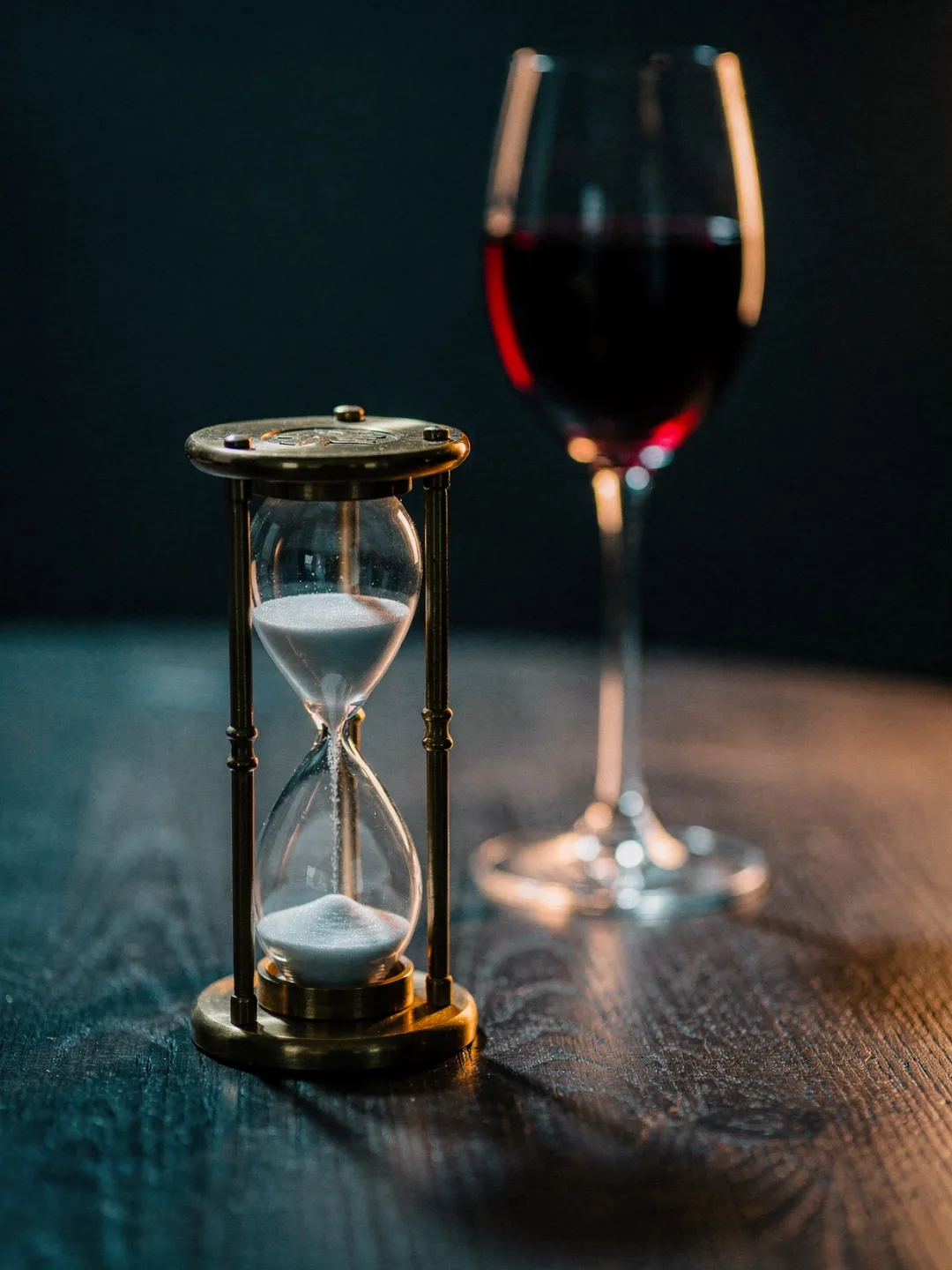
How long an impression lasts can even be expressed in numbers. French oenologists coined the term caudalie for this in the 1980s, derived from the Latin word for tail. One caudalie corresponds to one second of perceptible aftertaste. A simple, uncomplicated wine often lasts only two or three seconds before the flavor fades. An average wine usually manages five to six seconds. With great, concentrated wines, connoisseurs sometimes count ten seconds or more before the final impression fully fades away.
These numbers are a rough guide, not a competition for every extra second. Anyone who seriously wants to count should swallow or spit, then quietly observe how long the flavor and aroma linger in the throat. It's best done with a clock in view, since one's own perception of time tends to play tricks at this point. This is why length often appears as its own small scoring category on many tasting sheets, separate from aroma and flavor—because it actually measures something different: not how a wine tastes, but how long that impression simply lasts.
Length is not an end in itself
A long finish is considered a sign of concentration and quality, and often that's true. But length alone says nothing about whether the aftertaste is actually pleasant. A wine with too much alcohol can linger for minutes as a burning warmth in the throat without any aroma remaining, and a wine with green, underripe tannins sometimes leaves a long but unpleasantly bitter finish.
What matters, therefore, is always the combination of duration and quality of the aftertaste. A short but clean and coherent finish is always preferable to a long but flawed one. Anyone who only watches the clock without paying attention to the character of the aftertaste ends up measuring the wrong thing.
Deliberately assessing the finish
To truly capture the finish, a small trick helps: briefly exhale through the nose after the wine has left the mouth. This allows vapor and aromas to rise from the back of the throat into the nose—a pathway experts call retronasal olfaction. It often reveals aromas afterward that weren't noticeable at the front of the mouth.
Anyone listening closely will also pay attention to whether the character of the aftertaste changes. Some wines start out fruity and end up dusty and tannic, while others stay within the same aromatic direction from start to finish. A finish that evolves often feels more complex. A finish that breaks off abruptly, on the other hand, feels unfinished, even if the initial impression in the mouth was convincing.
Two kinds of length
Not every kind of length feels the same, because an aftertaste can stem from two different sources. One is aromatic: fruit and spice notes that linger in the throat. The other is structural—the dry sensation of tannin or the mouth-puckering effect of acidity, which often lasts longer than any aroma.
A sparkling wine, for instance, often loses its aromas fairly quickly because the carbonation refreshes and distracts the palate, but it frequently leaves behind a long, tingling sensation of acidity. A tannin-rich red wine, on the other hand, may have already faded in flavor while the mouth still feels dry minutes later. Anyone who distinguishes between these two kinds of length can describe a finish far more precisely than a simple second count ever could.