Glass, Light, Sequence
Preparation
Before the first drop reaches the tongue, a lot has already been decided. The glass on the shelf, the brightness in the room, and the order of the bottles all play a part. Anyone who understands these three points will taste noticeably more at every tasting, with no jargon required.
The Right Glass
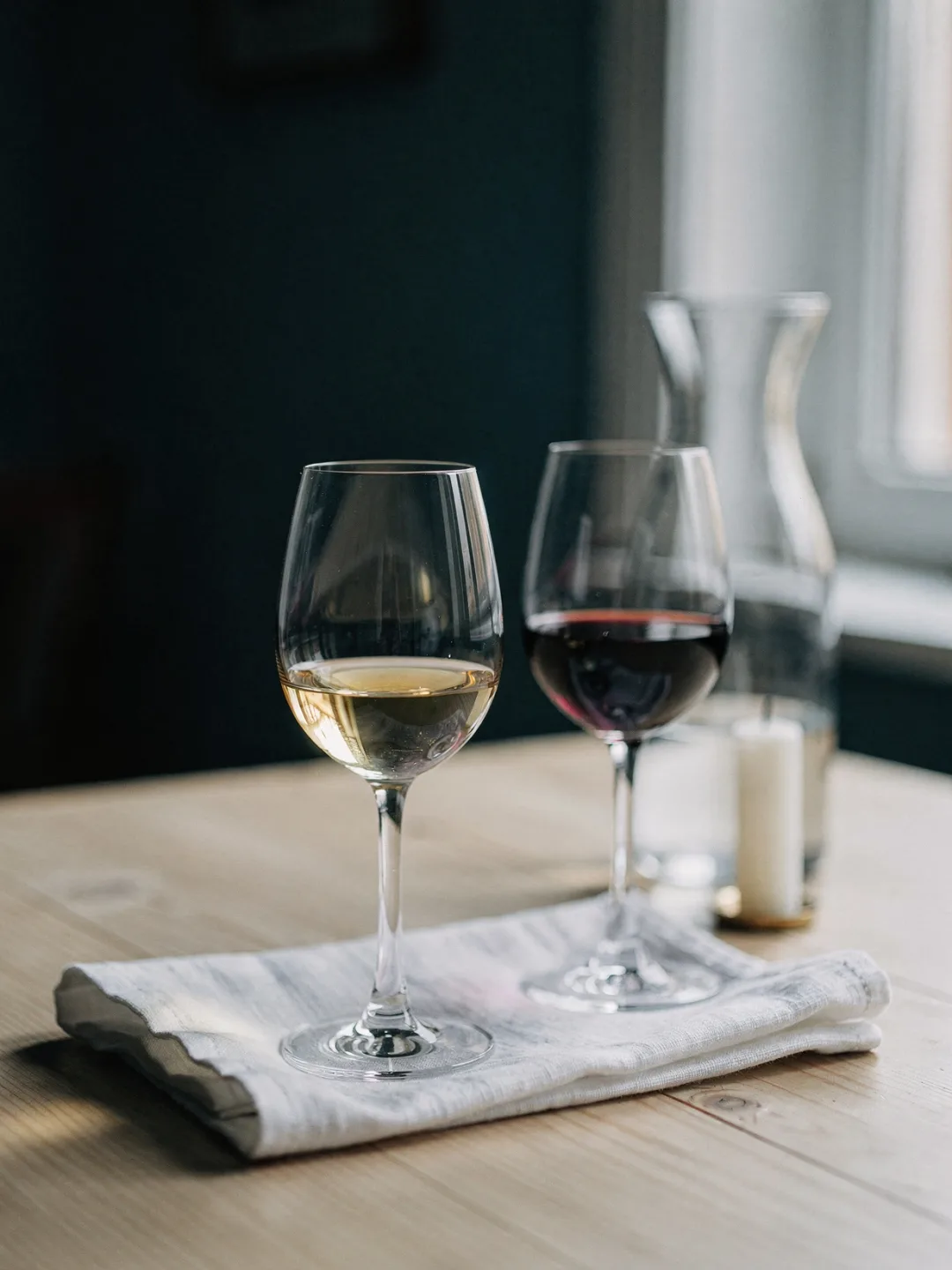
A wine glass is no accident of design. The shape now used worldwide for tastings goes back to a French institute, the Institut National des Appellations d'Origine, or INAO for short. Its glass has a bulbous bowl that narrows slightly toward the top. This narrowing keeps the aromas concentrated above the wine instead of letting them scatter into the room. In 1977 this shape became the international standard under the designation ISO 3591, though it had already been in use for years before that. The long stem isn't just a design detail; it protects the wine from your own hand, since body heat can change the temperature inside the bowl within just a few minutes.
For tasting itself, filling the glass to a fifth or a third of its capacity is enough. More wine in the glass means less air above it, and that air is exactly what you need to swirl the glass without spilling. Some training sessions even flip the idea on its head and taste from black, opaque glasses so that the nose alone decides what's in the glass. Such an exercise quickly reveals just how much the eye normally has to say. A clean glass matters just as much as the right shape. Traces of dish soap and scented dishwasher tabs cling to the surface and blend into every aroma that rises.
Light That Doesn't Deceive
The color of a wine reveals its age and sometimes its grape variety, but only under honest light. Daylight falling from the side onto a white surface shows color tones most reliably. A white sheet of paper or a light-colored tablecloth under the glass is all you need. Candlelight, yellow lamplight, or a colorful tablecloth distort the impression, because they already introduce their own color into the room.
The nose also needs a neutral environment. Perfume, freshly cut grass outside the window, or the smell of something frying in the kitchen linger in the nose for the whole tasting. They overpower the wine's subtler notes. Anyone tasting seriously avoids strong perfume beforehand and doesn't smoke in the minutes before, since both dull the olfactory cells for longer than most people realize.
The Right Order
When tasting several wines one after another, the sequence determines what actually comes through in the end. A tried-and-true rule places light wines before heavy ones, dry before sweet, and younger vintages before older ones. A powerful, tannic red wine numbs the palate for the next few minutes. A delicately aged wine tasted right after can then seem pale and flat, even though it isn't.
Exceptions quickly prove the rule. A very old, fragile wine can also be poured before a younger, more powerful one if it would otherwise get lost. At an official tasting, the organizer sets the order based on the character of each wine rather than strictly by vintage or color. At home, common sense is enough. Anyone who starts with the most powerful wine barely stands a chance with anything that follows.
The Body Is Part of the Equipment
The glass isn't the only piece of equipment at a tasting, because your own body counts too. Minty toothpaste or chewing gum just beforehand coats the tongue with coolness and sweetness. That changes how acidity and bitterness come across. A very empty stomach lets alcohol take effect faster and concentration fade sooner, while a very full stomach dampens the whole sense of taste.
A room that's neither cold nor overheated makes for the most relaxed tasting. Too much warmth lets alcohol vapors rise quickly out of the glass and tires the sense of smell, while too much cold leaves the nose barely able to perceive anything. Once you've paid attention to these small details, the next glass shows just how much depends on what's happening around the wine. The wine itself can influence only so much of that.
Even the time of day plays a role. Late morning, with a slight hunger and a well-rested mind, is when the nose works most reliably. In the evening after a long day, with tired senses and a full stomach, even clear differences between two wines sometimes barely register.