Basalt and bands
Soils
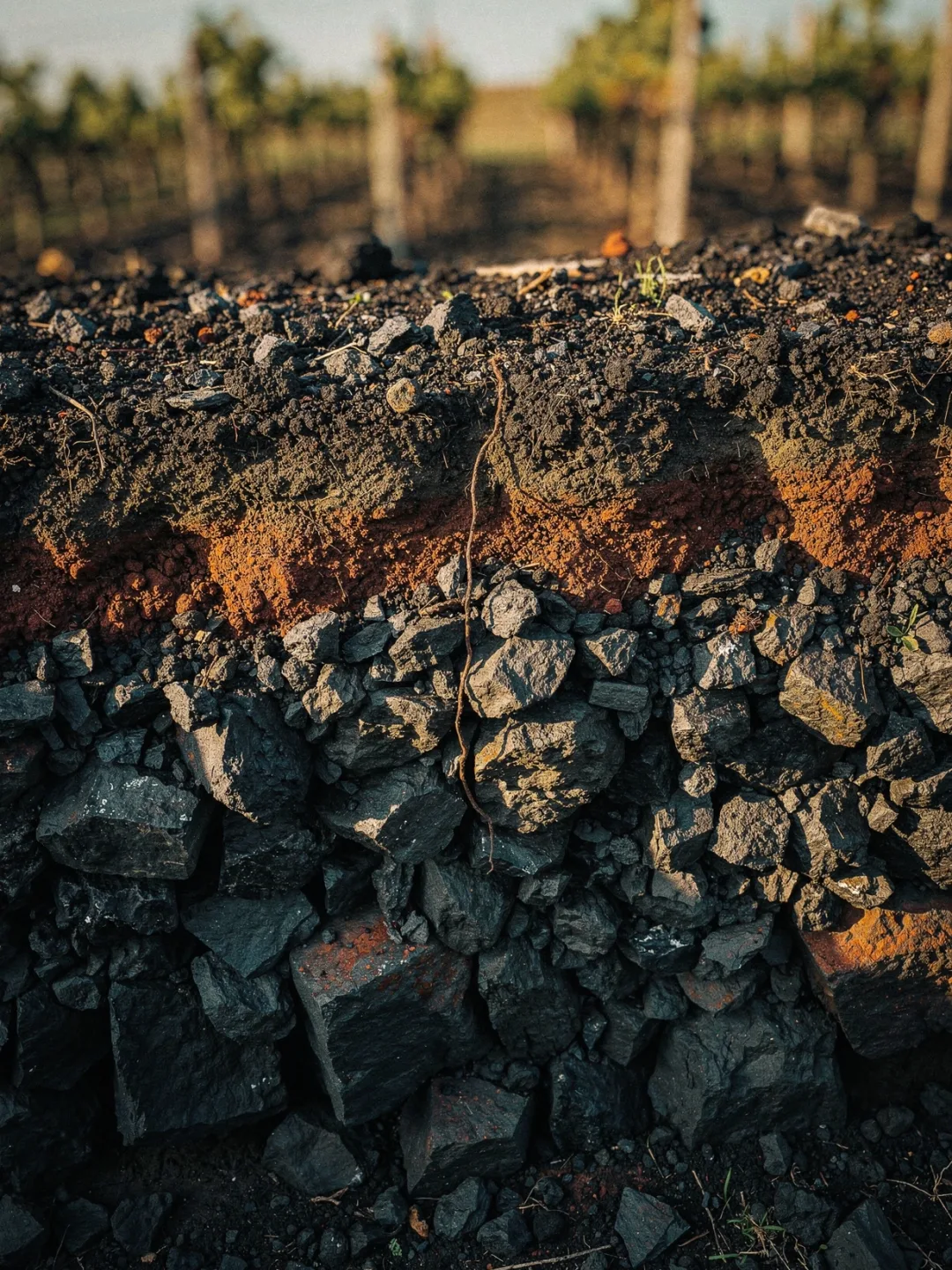
Dig a hole at the foot of Badacsony, and after just a handspan you'll hit hard, dark stone. The mountain is an extinct volcano; its basalt cap formed several million years ago from cooling lava, and today this stone forms the backbone of the entire vineyard.
Above the basalt lies a thin, often reddish-brown layer of weathered rock, loess, and clay. Iron from the basalt tints it, and water runs through the many small cracks within it. Roots must work their way straight through this hard material rather than simply sidestepping it with ease.
This labor exacts a price and delivers a reward in equal measure. Small, thick-skinned berries are the price, since the vine finds little water and pours its energy into its roots rather than lush growth — the reward is a wine with a noticeable salinity, one that tasters on Badacsony describe as almost reminiscent of seawater.
Not every soil around the lake is volcanic. In Balatonfüred-Csopak to the east, red sandstone lies beneath the vines. It dates back to the Permian period, more than two hundred and fifty million years old and rich in iron oxide. This very red earth gives the local Olaszrizling its distinctive, almost piercing acidity — a different rock, a different wine, the same lake.
A myth persists nonetheless. Wine tastes "mineral," so the story goes, because the root draws minerals directly from the basalt and passes them along. In reality, only tiny amounts reach the grape at all, and they're meaningless in terms of flavor. So what does the basalt actually do? It stores water, releases warmth, and forces the root to dig deeper. It's this detour that shapes the wine, not the rock itself.
A dark, thin layer of leaf litter, clay, and fine loess, tinted reddish in places by basalt iron.
The root: Fine roots catch the first rain here, but are exhausted after just a few dry days.