Salt and Acidity
Glassware
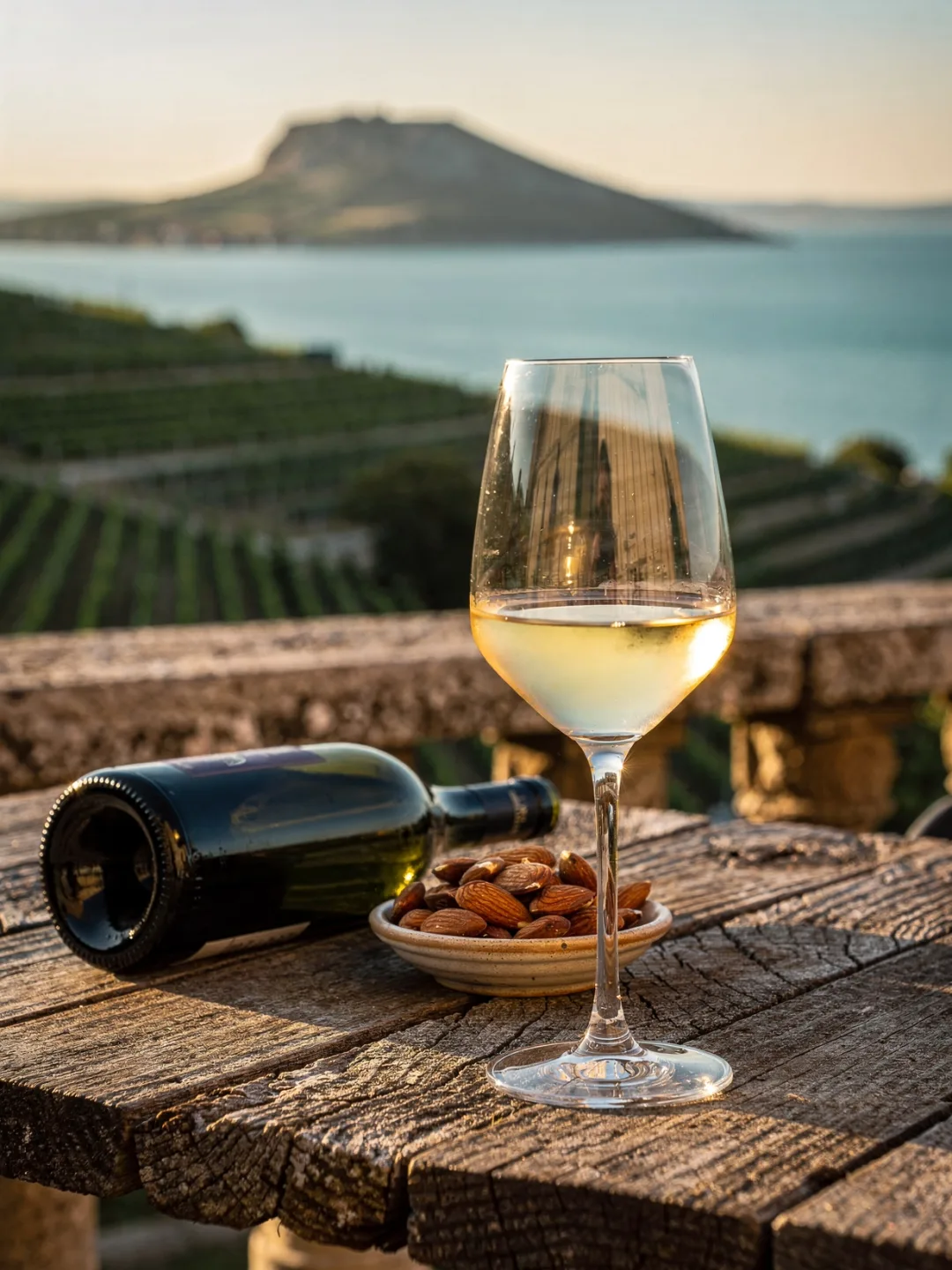
Open an Olaszrizling from Lake Balaton and two things stand out above all. There's a firm acidity, paired with a fine bitter note reminiscent of almond — keserűmandula in Hungarian, literally "bitter almond" — and a glass that's too wide spreads both across the tongue so much that the bitterness suddenly turns harsh instead of subtle.
A narrower, tulip-shaped white wine glass with a bowl that tapers slightly at the top works better. The tight opening concentrates the floral aroma. In a good Balatonfüred-Csopaki Olaszrizling, this often recalls mignonette, an unassuming garden flower with an intense scent. At the same time, the narrow opening holds onto the salty undertone that comes from the basalt and the red sandstone.
Kéknyelű needs more room. Its full body and almost tannic structure — unusual for a white wine — call for a slightly rounder bowl. This gives the wine air without losing its freshness, since too narrow a glass would press the heavier aromas together.
When it comes to temperature, the common mistake is serving white wine ice-cold across the board. Eight to ten degrees Celsius is enough for a young Olaszrizling, while an aged Kéknyelű only truly opens up at twelve to fourteen degrees — any colder, and it just tastes sour and closed off.
Hardly anyone needs a decanter at Lake Balaton. Most wines here are drunk young, before much sediment forms, and their aromas are already open. Within just a few minutes in the glass, they show themselves fully. Pour to the widest point of the bowl, no higher, so there's still room above the wine for the aroma to develop.