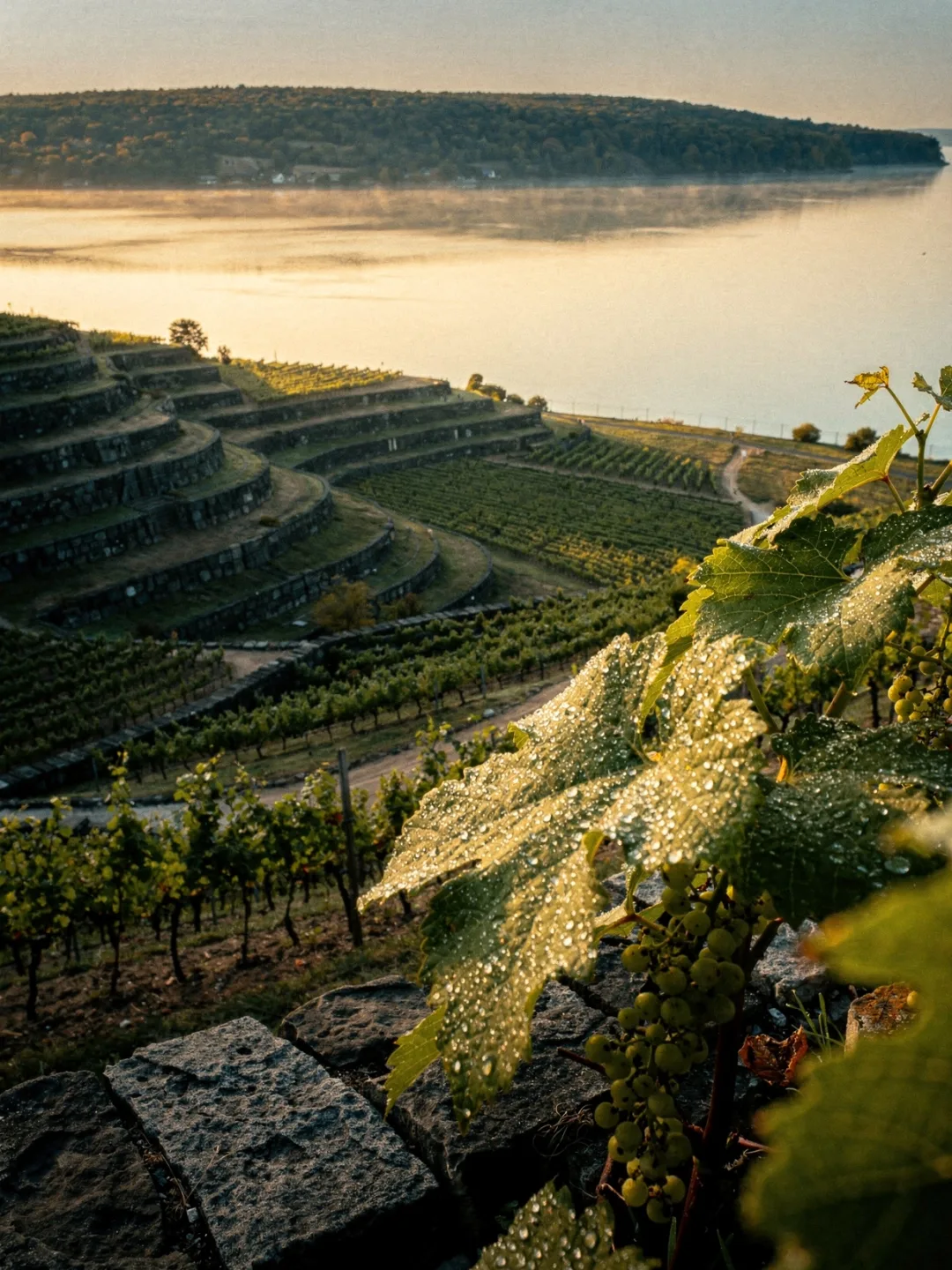
Water, wind, warmth
Climate
Lake Balaton stretches 77 kilometers long, but is only three meters deep on average — and it's exactly this combination that transforms the climate along its shores. The vast, shallow expanse of water stores heat in summer and releases it slowly through winter. As a result, summers along the shore turn out milder and winters less harsh than just a few kilometers further inland.
That same expanse of water also throws its light back. The north-facing slopes of Badacsony technically lie in shadow from the sun. Even so, extra light reaches them from below, reflected off the lake's surface. This lets grapes ripen there that would stand little chance on a comparable north-facing slope without a lake nearby.
The Bakony range shields the area from the north. It blocks cold north and west winds. In doing so, it creates its own microclimate around the lake, one that feels milder than its location in the heart of Central Europe would suggest — winemakers speak of an almost Mediterranean fringe along the northern shore.
Around 640 millimeters of rainfall fall here each year. Add to that a good 2,000 hours of sunshine and an average annual temperature of about eleven degrees Celsius, and together these define Badacsony's climate. The vineyards themselves climb up the basalt cones to around 250 meters in elevation. Beyond that, the soil grows too thin and the wind too harsh.
The forested peaks of the basalt hills cool the nights further still. Between a hot August day and a cool night at the foot of Badacsony, there's often a striking difference — and it's exactly this shift that locks in the acidity in the grapes, even as the berries keep storing sugar through the day.