Steel Tank and Barrel
Production
For a long time, nearly every white wine around Lake Balaton aged in large old wooden barrels. There was barely an alternative. Since the 1990s, many producers have instead turned to temperature-controlled stainless steel tanks, which protect the wine from oxygen — what winemakers call reductive winemaking, since it keeps as little air as possible in contact with the must.
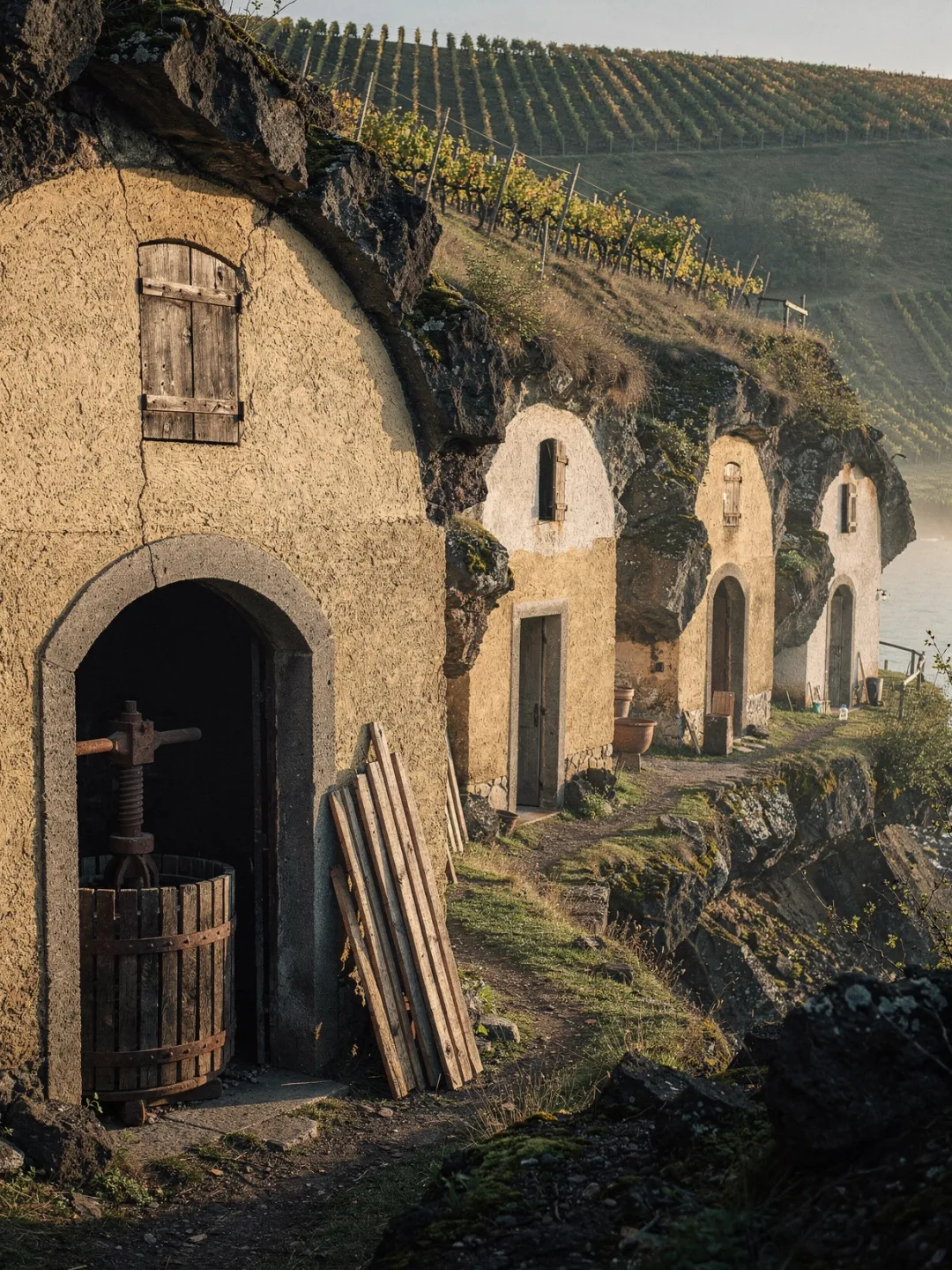
For Kéknyelű and Szürkebarát, however, the wooden barrel often remains the first choice. Both varieties handle the slow oxygen exchange through the staves well, and their full body turns rounder in barrel, while the same treatment would quickly overwhelm a delicate Olaszrizling.
Anyone wanting to name their wine after one of the basalt hills has to follow strict rules. No more than 7.5 tonnes of grapes per hectare may be harvested for such a mountain wine, and it must also age for at least nine months, three of them in barrel, before it can be sold. Harvest more or bottle earlier, and the mountain's name can't go on the label.
In Balatonfüred-Csopak, a group of winemakers goes even further. Since 2017, a voluntary set of rules called the Csopaki Kódex has committed them to organic viticulture. On top of that comes stricter assessment by their own panel of experts, rather than the usual tasting committee — tougher standards than any state law requires.
Not every production tradition around the lake revolves around still wine. In the small town of Sümeg in the Balaton Highlands, Hungary's very first sparkling wine was created in 1806 — eighty years before Törley began bottling in Budapest. It was made using the same method as Champagne: the wine ferments a second time directly inside the sealed bottle, trapping its own carbon dioxide.